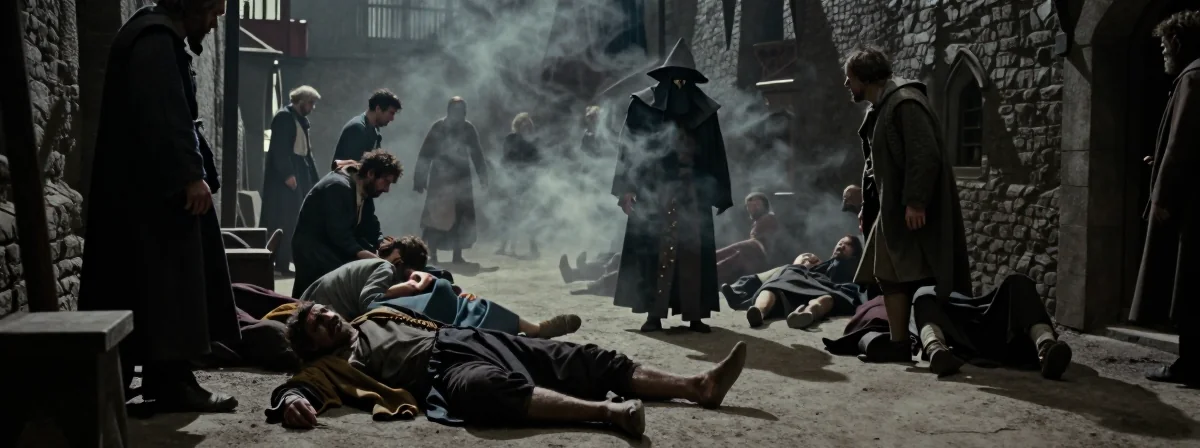
Some days, you wake up and realize the world is just a slightly more complicated version of the last one—only with better Wi-Fi. Take the Black Death. Yeah, I know, fun topic for a Tuesday, but stick with me. It turns out our ancestors were dealing with the same kind of global connectivity issues we are now—just with less Zoom and more… well, death. It’s like the Silk Road was the original version of that one friend who always brings drama to the party. No? Just me?
Let’s Talk About It
The Silk Road Was Basically the Middle Ages’ Version of Instagram Influencers Spreading the Flu
Imagine a trade route that’s not just sparse enough to let a bacterium like Yersinia pestis hang out in nomadic communities, but dense enough during trading seasons to turn those communities into, well, disease vectors. It’s like the perfect storm—except instead of storm clouds, you’ve got fleas and rodents. The book Justinian’s Flea by William Rosen does a great job of painting this picture: the plague wasn’t just a one-and-done thing; it was a recurring guest star in history, showing up like that one relative who always shows up unannounced.
Pro tip: If you see a flea on your trade route, maybe just… don’t shake hands.The Mongols Were Basically the Nomads Who Avoided the Party Because They Knew the Host Was a Jerk
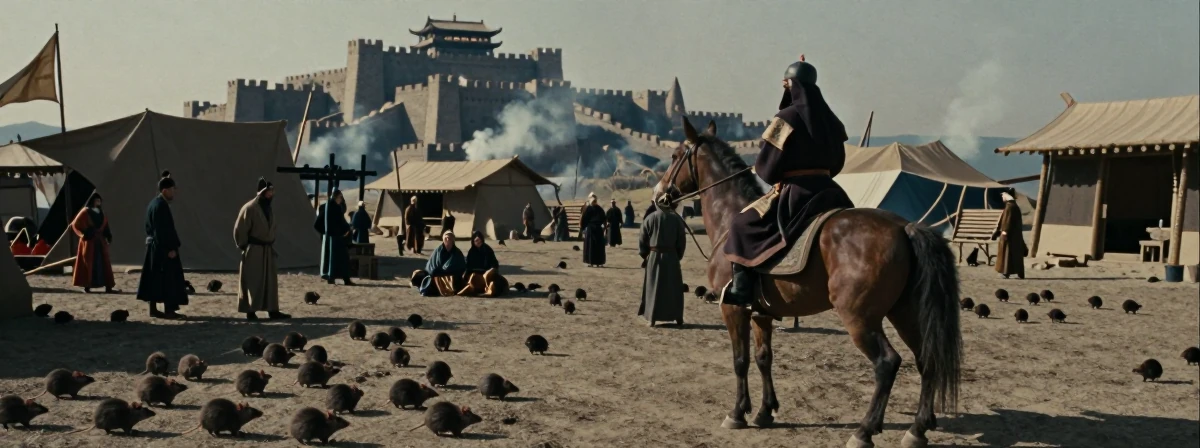
Here’s the thing about the Mongols: they were pastoralists, which means their population density was about as high as a ghost town during a zombie apocalypse. Fleas and rats? Not really their scene. They didn’t live in permanent settlements, so no rats to host the fleas, no fleas to host the plague. It’s like they had the ultimate “plague-proof” lifestyle—until they decided to siege Caffa and suddenly realized, “Oh crap, we’re not immune.” Spoiler: they weren’t. And yes, throwing infected bodies into a city counts as a very medieval form of biological warfare. Shhh, don’t tell anyone.
- The Black Death Wasn’t Just a One-Time Thing—It Was the Original “Viral” Outbreak

Remember how we talked about the Plague of Justinian? Yeah, that was also caused by Yersinia pestis. The bacterium is basically the ultimate comeback kid—it shows up, causes chaos, disappears for a bit, and then BAM, it’s back. The Black Death in the 1340s wasn’t just a random outbreak; it was the same bacterium doing its thing again. It’s like that one song that keeps getting remixed and somehow still sucks. The difference? This time, it hit Europe harder than a bad hangover after a week-long bender.
Europe Was Basically the Unlucky Party Guest Who Showed Up Right When the Plague Started Spreading
Why did Europe get hit so hard? One theory is that a famine right before the Black Death left people already weakened—like showing up to a fight with one hand tied behind your back. Another theory? The Arabs, Turks, Persians, and Asians had some level of immunity because the plague had been circulating in those areas longer. It’s like when you’ve already had the flu once, so the second time around, you’re like, “Eh, I’ve seen this movie before.” Europe, on the other hand, was like, “What’s a pandemic? Is it like a really intense game of Monopoly?”The Mongols Finally Got Their Comeuppance—Because Even They Couldn’t Dodge the Plague Forever
Remember how the Mongols were basically immune? Yeah, that was a lie. Once they started participating in grain trade—because, you know, sieges get hungry—they exposed themselves to the bacterium. It’s like they finally decided to join the party, and the party was like, “Welcome! Here, have this plague.” The Mongol Empire’s decline? You can blame the plague for that, too. It’s like the universe finally getting revenge on the people who always win—because karma, apparently, is a thing, even in the Middle Ages.The Number of Pandemics That Didn’t Happen Is Probably More Scary Than the Ones That Did
Think about it: how many times did the stars align just right for a disease to become a pandemic? The Black Death was basically the perfect storm—trade routes, population density, the right strain of bacteria. But what about all the other times? The ones where one little thing was off, and the disease fizzled out? It’s like the universe playing Russian roulette with humanity, and we’re just along for the ride. The fact that the Black Death happened at all? That’s the real horror story.
So there you have it: the Black Death wasn’t just a random disaster—it was the result of globalization, bad luck, and a bacterium that knew how to play the long game. Next time you complain about slow Wi-Fi, just remember: at least you’re not carrying fleas. Right?