The numbers on the digital sign at the gas station seem to scream at you. One dollar, then two, then three. It feels personal. It feels like a direct attack on your wallet, orchestrated by some unseen villain in a boardroom somewhere. The instinct is to point a finger at the nearest oil company executive and scream about greed. It’s a satisfying, visceral reaction. But the reality of the price at the pump is far more complex than a simple story of corporate malice. It is a tangled web of logistics, refining limitations, and global economics that operates with the cold precision of a machine, leaving the consumer as just another passenger on the ride.
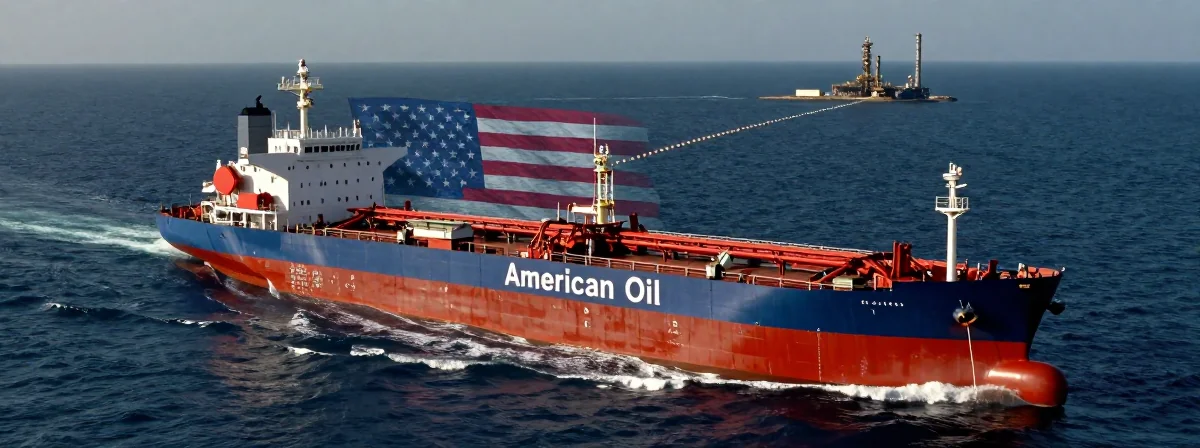
The first thing to understand is that “American oil” is largely a myth. It sounds patriotic to say the country produces its own fuel, but the reality is a fragmented market owned by private corporations. Unlike Norway, which nationalizes its oil wealth to fund social programs, the United States operates on a model where the resource is owned by shareholders, not the state. These corporations are beholden to the bottom line, not the American people. When they can sell a barrel for a higher price overseas, they will. They have no loyalty to the domestic consumer, and the market is designed to ensure they don’t have to.
This brings us to the invisible price tag attached to every barrel: insurance. This is where the narrative shifts from simple economics to high-stakes logistics. In the first week of a geopolitical flare-up, the market doesn’t just worry about the oil; it worries about the boat carrying it. Lloyd’s of London, the legendary underwriter of the world, has refused to issue coverage for vessels transiting volatile waters. This isn’t just bureaucracy; it’s a risk assessment. Premiums have skyrocketed, jumping by over 400%. That cost doesn’t vanish into the ether; it is baked into the price of the fuel. When a tanker is a floating liability, the market charges a premium to insure against the unthinkable.
Then there is the physical journey itself. A significant portion of the world’s oil supply passes through the Strait of Hormuz, a chokepoint so narrow and strategic that it controls the flow of 25% of global oil. When threats arise from that region, the supply chain doesn’t just slow down; it reroutes. Those alternative routes are longer, more expensive, and require more fuel to traverse. The logistical friction of moving oil across the ocean, when the sea itself feels dangerous, drives up costs that are inevitably recovered at the pump.
Even if the shipping routes were safe, the crude oil itself is not a uniform product. The United States pumps light, sweet crude, which is excellent for making gasoline but hard to refine. Our refineries, however, were built decades ago to process heavy crude from the Middle East. It’s a mismatch. We produce the wrong type of oil for our own infrastructure. To keep the refineries running, we have to sell our light crude on the open market and turn around and buy the heavy crude we can actually process. This constant buying and selling, this dance of inventory management, keeps us tethered to the global market regardless of how much we produce.
This leads to the concept of fungibility. Oil is not like a loaf of bread sitting on a shelf at a local store. It is a fungible commodity traded globally. If the global price of Brent crude rises from $65 to $100 per barrel, an American refinery sells its oil at that higher rate. It doesn’t matter that the oil was drilled in Texas or North Dakota. It doesn’t matter that the refinery is sitting next to a power station. The price is set by the global market, much like gold. If the price of gold goes up, you don’t sell your bar to the neighbor for cheap just because you know them. You sell at market rate.
The system is designed to maximize profit, which is the fundamental goal of a private corporation. When a crisis hits, the market reacts, and the corporations ride that wave. The consumer has no choice but to pay. It is a harsh reality, but understanding the machinery behind the price tag reveals that the culprit isn’t just a single villain, but a complex, interconnected system where logistics, insurance premiums, and refining constraints all conspire to keep the price high. It is a global market, and in that market, everyone is playing for themselves.