
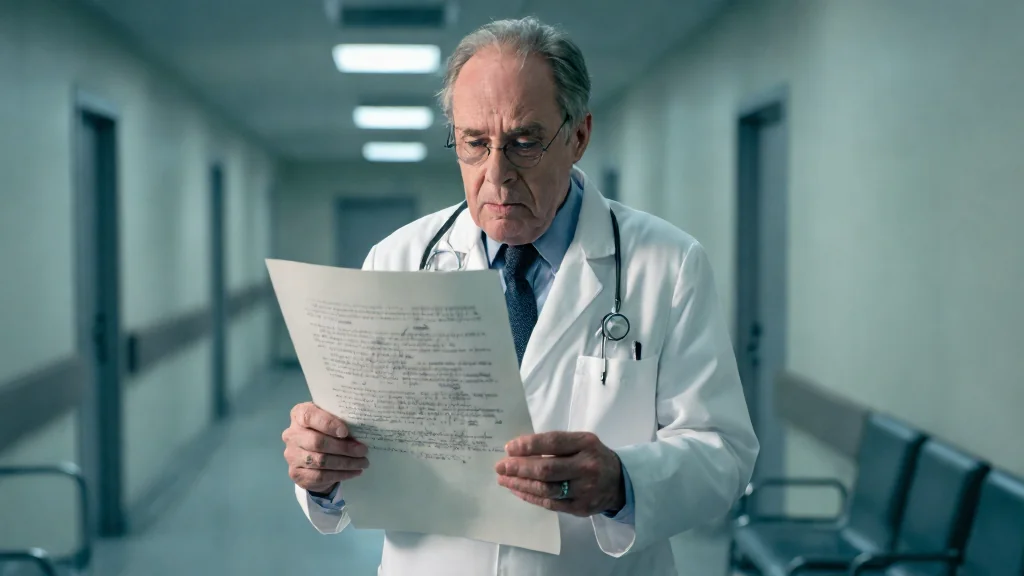
Most people walk into a clinic hoping to be treated like a child who doesn’t know anything, while doctors secretly hope you’re a colleague who knows everything. The truth is, the best care happens somewhere in the messy middle where you have to decide exactly how much you’re willing to pretend you don’t know.
You think you’re there for a diagnosis, but you’re actually there for a negotiation of power, vocabulary, and trust.
Following the Trail
The High-Context Trap When you walk in with medical jargon in your pocket, you might think you’re leveling the playing field, but you’re often just creating a high-context culture where the doctor assumes you understand the subtext. If you walk in with an AKI, you don’t want to hear “you have a kidney injury”; you want to know the creatinine levels and the theory behind the cause. But be careful—there’s a fine line between being a “sophisticated historian” and the patient who thinks they know everything because their aunt is a nurse.
The Strategic Amnesia Some doctors actually hide their credentials from their own children’s pediatricians because they know that if they drop the “doctor” title, they get the full, unfiltered explanation. They want to be treated like any other parent, fearing that their medical background will make them too nonchalant or that the doctor will skip the basics out of fear of insulting them. It’s a deliberate strategy: if you pretend you don’t know, you force the system to explain the obvious, ensuring nothing is left to assumption.
The “Group Project” Dynamic When two doctors meet in a consultation, the interaction shifts from a lecture to a collaborative group project where they hash things out together. One doctor might need an ultrasound, and the other teaches them the specific bits they don’t know, stripping away the defensive barriers that usually exist between strangers. This is the ideal scenario where the patient and provider become peers, debating options and pros and cons rather than just receiving orders.
The Placebo of the Exam Room Growing up with physician grandparents meant that every ache was met with a “secret” medicine from the bathroom cabinet, which turned out to be nothing more than a placebo cup of Tylenol. It wasn’t about the cure; it was about the ritual that made you feel better, a trick that worked until you actually got sick enough to need a real prescription. The line between the comforting lie and the necessary truth is thinner than you think.
The Dumb Question Defense Even the most experienced physicians sometimes go to a specialist and refuse to mention their background so they can ask the “dumb” questions they should actually know. They need the other doctor to explain things like they are five, just to make sure the specialist doesn’t leave out a crucial detail because they assumed the patient was already up to speed. It’s a humility check that prevents the assumption of competence from creating a blind spot in your care.
The Handwriting Hypothesis You might stare at a prescription and wonder if you’re reading a medical code or a joke about “Rumbbleberal,” but the real danger isn’t the illegible scrawl—it’s the computer-generated script that lets you Google the pill name and catastrophize before you even swallow it. We’ve traded the mystery of handwriting for the anxiety of instant, unfiltered information that turns a simple dose into a health crisis in your head.
The Specialty Blind Spot A doctor who is an expert in one field often walks into a dermatology office and shuts up, realizing they know nothing about the skin. They stop the “shop talk” and accept that their expertise doesn’t transfer to the new terrain, forcing them to listen like a complete novice. The worst patients aren’t the ones who know too little; they’re the ones with just enough knowledge to be dangerous, thinking they can diagnose a runny nose with a whole-body MRI.
The Collapse of Knowledge There is a moment when a surgeon sees their own scan and the flood of technical knowledge they usually rely on turns into a paralyzing wall of facts they can’t process. They stop hearing the doctor because they are too busy calculating survival rates and treatment timelines, realizing that knowing the mechanics of the disease doesn’t help you endure the fear of it. Sometimes the smartest thing you can do is let someone else be the doctor and focus entirely on being the patient.
The 30-Second History When a physician presents their own case, they can condense a lifetime of symptoms into a thirty-second history, allowing the doctor to skip the basics and jump straight to the management plan. It’s the fastest consultation you’ll ever have because the patient has already done the heavy lifting of organizing the chaos into a coherent narrative. But this efficiency is a double-edged sword; it works only when the patient knows exactly what to hide and what to reveal.
The Verdict
The goal isn’t to be the most knowledgeable person in the room, but to be the most honest participant in the exchange. You have to decide when to bring your expertise to the table and when to leave it at the door, because the best diagnosis often comes from the space where you admit you don’t know. Stop trying to be the doctor in your own care and start being the patient who asks the right questions.