
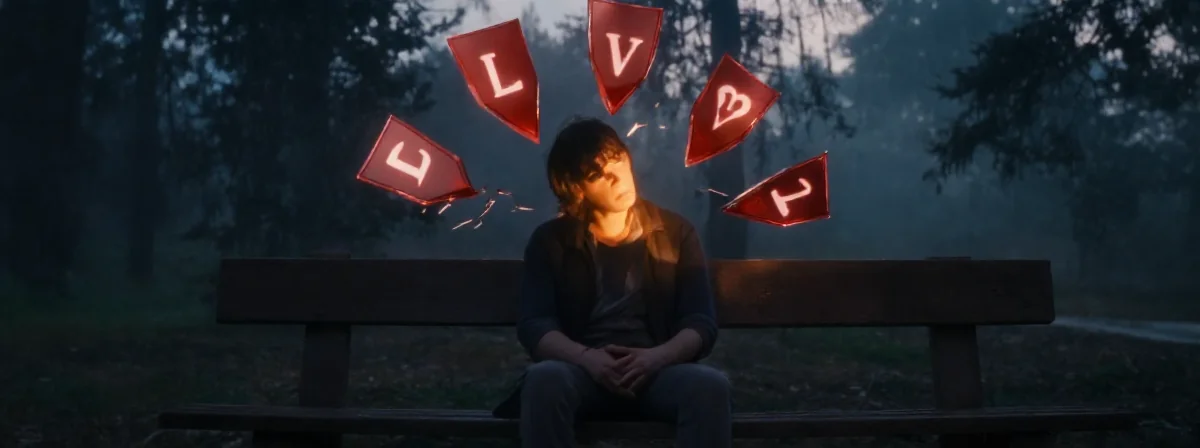
You’ve heard the phrase a thousand times: “Everything happens for a reason.” It sounds comforting, like a warm blanket on a cold night. But in the quiet hours of the night, when the noise of the world fades and you’re left alone with your thoughts, that phrase starts to feel heavy, almost suffocating. It implies a cosmic order, a celestial plan that justifies the pain, the cancer diagnoses, the heartbreak, and the failures.
It doesn’t work that way. The universe is indifferent. Sometimes things happen because of random chance, sometimes because of a chain reaction of poor decisions, and sometimes simply because the world is chaotic and cruel. Believing otherwise isn’t just a comforting delusion; it’s a trap that keeps you from taking ownership of your life.
We are raised on a diet of half-truths and outdated proverbs that promise safety but deliver confusion. We’re told to follow our passion, to never go to bed angry, to work hard and it will pay off. But when you step into the real world, when you try to invoice a client or navigate a toxic family dynamic, those sayings crumble like dry leaves. It’s time to strip away the gloss and look at the raw, unvarnished reality of growing up.
The Myth of Cosmic Order and the Reality of Randomness
The idea that “everything happens for a reason” is a convenient fiction we tell ourselves to cope with the terrifying randomness of existence. When someone gets cancer, no celestial being is testing their faith or preparing them for a greater purpose. The reason is biological, statistical, and often tragic. It’s not a lesson; it’s just an event.
Accepting this harsh truth isn’t about losing hope; it’s about reclaiming agency. If everything happens for a reason, then you are a passenger. But if things happen by chance or by consequence, then you are the driver. You have the power to choose your response, to make better decisions moving forward, and to stop waiting for a sign that will never come.
Determinism exists in the physical world, yes. But that doesn’t mean the universe has a plan for you. It means you are responsible for the chaos you create and the chaos you inherit. The moment you stop looking for a hidden meaning in your suffering is the moment you can start doing something to fix it.
Why Following Your Passion is a Trap for Your Wallet
There’s a persistent myth floating around that if you chase your passion, the money will follow. It’s a beautiful story, but it’s a terrible financial strategy. Passion is volatile. It fluctuates with your mood, your energy, and the market trends. Chasing it blindly often leads to burnout, financial instability, and a deep resentment toward the very thing you loved.
The smarter path is to chase your talents. Identify what you are actually good at, what you can monetize, and use that income to fund your passions on the side. When you turn a hobby into a job, you strip away the magic. Suddenly, it’s not about the art; it’s about the deadline, the client’s demands, and the stress of making rent.
You don’t need to love your career to have a good life. You need a career that pays you enough to live comfortably so you can pursue the things you actually love when the sun goes down. The luckiest people aren’t the ones who found their “calling”; they’re the ones who found a tolerable job that funds their real life.
The Brutal Math of Self-Worth and Professional Billing
You set the ceiling for how the world treats you. If you value yourself low, everyone else will too. This is the hardest lesson for young professionals to learn, especially when you’re just starting out and nervous about asking for money.
There’s a specific moment in a career when you realize that your invoice isn’t just a piece of paper; it’s a statement of your identity. Handing over a personal invoice feels vulnerable, almost shameful. But billing under a company name, a DBA, changes the dynamic. It signals that you are a business, not a beggar.
I remember being nineteen, terrified, handing a hand-crafted invoice to a client. He scowled, told me to double the numbers, and sent me away. That moment didn’t break me; it taught me. He didn’t know it then, but he was the one who helped me understand my value. If you don’t demand your worth, no one else will. People will see you exactly as you value yourself, and if you undervalue your work, they will exploit it.
The Danger of “Time Heals All Wounds” and the Reality of Trauma
Society loves to say that “time heals all wounds,” as if the passage of days alone is a magical cure. This is a lie that prevents people from seeking the help they desperately need. Time doesn’t heal anything on its own; effort does. Support does. Healing is an active process, not a passive waiting game.
Then there’s the toxic positivity of “what doesn’t kill you makes you stronger.” It’s a dangerous lie. Trauma is terrible. It leaves scars, it causes PTSD, and it often leaves you weaker, more fragile, and more guarded than you were before. Sometimes, surviving a tragedy doesn’t make you stronger; it just makes you a survivor of something that should never have happened.
We need to stop romanticizing suffering. Pain isn’t a teacher; it’s a signal that something is wrong. It’s the body screaming that you are in danger or that a boundary has been crossed. Ignoring that signal to “be stronger” only leads to deeper damage.
The Weaponization of Family and the Art of Letting Go
“Blood is thicker than water.” It’s a phrase weaponized to keep people trapped in abusive cycles. It’s used to justify family members treating you like garbage and expecting absolution without change. It’s a lie.
It is perfectly fine, and sometimes necessary, for family members to become people you are related to but not part of your life. You can love someone from a distance. You can honor your history without honoring their behavior. The best decision you can make is often the one that means letting go of people who were once important but have become toxic.
True loyalty isn’t blind obedience to biology; it’s loyalty to your own well-being. If a relationship drains you, hurts you, or stunts your growth, you have the right to sever the tie. You don’t owe anyone your peace just because they share your DNA.
Knowing When to Quit is a Skill, Not a Failure
We’re taught that “if at first you don’t succeed, try, try again.” But we rarely teach the inverse: knowing when to quit. Quitting isn’t giving up; it’s a strategic pivot. Sometimes, you’re just working on a bad idea. Sometimes, the market has changed. Sometimes, the cost of continuing is too high.
Knowing when to stop is a skill that takes practice. You have to try things to learn what works, but you also have to be brave enough to walk away from what doesn’t. Don’t feel bad about finding a new goal. Don’t feel guilty about abandoning a path that leads nowhere.
Hard work only pays off if it’s directed correctly. You can work extremely hard on the wrong thing and end up exactly where you started, just more exhausted. Direction matters way more than effort. If you’re pushing a boulder up a hill that’s actually a valley, you’re not building character; you’re wasting your life.
The Power of Words and the Myth of the “One True Love”
Words are not just sounds; they are weapons. “Words can never hurt me” is a delusion that leaves you vulnerable. Language starts wars, it ends relationships, and it builds empires. Never underestimate the power of a well-placed sentence or a cruel one.
And then there’s the advice that “love comes when you aren’t looking for it.” While it sounds poetic, it’s terrible practical advice. You can’t just wait for magic to happen. You have to put yourself out there. You have to try. For many, the relationships they’ve built were the result of actively seeking them, not stumbling into them by accident.
Expecting love to find you while you sit still is a recipe for loneliness. Love requires action, vulnerability, and the willingness to be seen. It’s not a lottery ticket; it’s a garden that needs tending.
Reframing the Narrative: You Are the Author
The proverbs we grew up with were meant to simplify a complex world, but they often oversimplify it to the point of distortion. They tell us to ignore pain, to trust in a plan we can’t see, and to sacrifice our value for the sake of “passion.” But the real world doesn’t care about your feelings or your clichés.
The shift happens when you stop listening to the noise and start listening to your own intuition. It happens when you realize that you are the author of your own story, not a character in someone else’s script. You can choose to value your work, to heal actively, to set boundaries with family, and to work hard in the right direction.
The truth is messy, unromantic, and often painful. But it’s also the only truth that sets you free. Once you stop waiting for the universe to fix things and start fixing them yourself, the weight lifts. You don’t need a reason for everything to happen. You just need the courage to handle what does.