
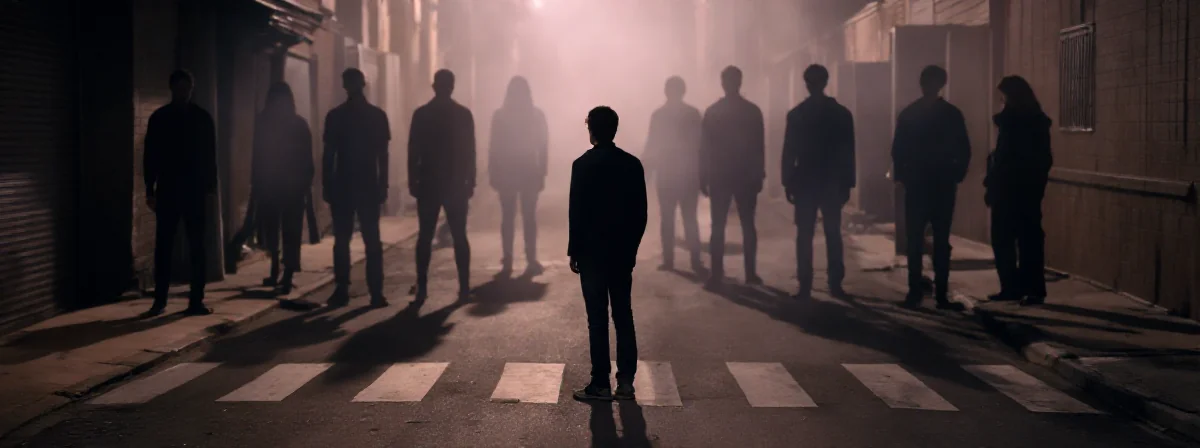
You’ve probably felt that sudden knot in your stomach when walking into a room. It’s not just anxiety; it’s your brain running a high-speed simulation of danger based on thousands of micro-patterns you’ve seen before, all happening faster than your conscious mind can articulate. That “gut feeling” is actually your brain pattern matching faster than you can explain, and for most of us, ignoring it is the most expensive mistake we make.
We spend our lives waiting for receipts, for proof, for someone to hand us a permission slip to act on what we already know deep down. We tell ourselves to “wait and see” when the data is already screaming a warning. But the cost of waiting isn’t just missed opportunities; it’s often the difference between a healthy life and a tragedy, a thriving career and a dead-end, a happy family and a broken home.
Consider the story of a man who ignored a subtle shift in his wife’s health because he didn’t have “receipts” yet. By the time the medical evidence was undeniable, the cancer had run its course. That isn’t just a sad story; it’s a case study in the danger of dismissing intuition. Every day, people are trading their future well-being for the comfort of “waiting until it’s certain,” only to find out that certainty often arrives too late.
Is Your Intuition Actually a Survival Mechanism?
That feeling of unease you get when meeting someone new isn’t just a mood swing; it’s your subconscious processing a thousand non-verbal cues in milliseconds. Evolutionarily, this system was designed to keep us alive by spotting predators or untrustworthy allies before they could strike. When you feel someone is “off,” your brain is likely detecting micro-inconsistencies in their behavior that your conscious mind hasn’t caught up to yet.
Think of your intuition like a smoke alarm. It doesn’t tell you the exact cause of the fire or how big the blaze is; it just screams “Danger!” to get you out of the building. Yet, we often treat these alarms like faulty wiring, trying to rationalize them away until the fire is already out of control. We wait for the “receipts”—the explicit confirmation—before we act, but in many critical moments, waiting for proof is exactly what gets you hurt.
The most tragic examples of this happen in health and relationships. A woman’s body might be screaming that something is wrong with her cycle, but if she waits for a doctor to confirm it with a biopsy before acting, the window for early intervention closes. Similarly, a relationship might be slowly rotting from the inside out, and the “hope” that it will fix itself is often just a strategy for denial. The hardest pill to swallow is realizing that hope isn’t a strategy. If the foundation is cracked, no amount of waiting will glue it back together.
Why Waiting for the “Perfect Time” Is a Trap
We live in a culture that glorifies the “perfect plan.” We want to save enough money, get the perfect degree, or find the perfect partner before we make a move. But this quest for perfection often turns into a paralysis of analysis. The reality is that the perfect time doesn’t exist; it’s a myth we tell ourselves to avoid the risk of failure.
Take the story of someone who stayed in a job for a decade, making decent money, only to miss the window to pivot to a remote career during a global crisis. They thought, “I’ll wait until things settle down.” But the crisis didn’t settle; it changed the rules entirely. By the time they decided to act, the landscape had shifted, and they were left with health issues and a career that no longer fit their life. The regret of “what if I had quit sooner” is a heavy burden, one that could have been avoided by recognizing that safety is often an illusion.
This applies to finances, too. The idea of “investing in your future” often traps people in a 30-year contract with a mortgage, stripping away their freedom to take risks or travel. They bought a pile of bricks thinking they were buying security, only to find they had built a gilded cage. The real investment is in your freedom, not your assets. When you prioritize the security of a house over the security of your own time and health, you’ve lost the game before you even started.
The Cost of Ignoring Your Body’s Signals
Your body is the most sophisticated machine you own, yet we treat it like a rental car we can push until the engine blows. We ignore the burning pressure in our heads, the ringing ears, the gastrointestinal chaos, and the abdominal pain, telling ourselves it’s just stress. But these are not minor inconveniences; they are the machine screaming for attention.
When a friend of mine ignored the strange symptoms that appeared during an infection, he spent four years in a cycle of medical dismissal and pain. He was a healthy 30-year-old who lost his ability to work and his quality of life. The tragedy isn’t just the illness; it’s the realization that he could have avoided the worst of it if he had listened to his body earlier and made the hard choice to change his environment.
Doctors are human, and sometimes they miss the nuances of a patient’s story. If you feel something is wrong, don’t wait for a diagnosis to validate your pain. Get a second opinion. Get a specialist. Push for answers. The time you spend fighting for your health is the time you get back for your life. Ignoring the warning signs of a seizure disorder, a hormonal imbalance, or a mental health crisis doesn’t make the problem go away; it just makes the eventual crash harder to survive.
The Hidden Dangers of Emotional and Financial Dependence
We often think that love means staying together no matter what, or that family means unconditional financial support. But sometimes, the most loving thing you can do is cut the cord. Staying in a sexless, unhappy marriage for years, hoping it will magically fix itself, is a recipe for mutual destruction. It’s not just about the relationship; it’s about the erosion of your own identity and mental health.
Financially, the same logic applies. Giving money to friends, family, or workers without boundaries often leads to resentment and a lack of appreciation. Once the money is gone, the memory of your generosity fades, and the dynamic shifts. It’s better to build your own independence and teach others to do the same than to create a cycle of dependency that drains your resources and your spirit.
There’s a reason those people make you uncomfortable. It’s not you; it’s the mismatch in values or energy. When you feel a persistent sense of unease around someone, it’s often a sign that they are draining your battery. Running away from that energy isn’t cowardice; it’s self-preservation. You can’t pour from an empty cup, and you can’t build a healthy life on a foundation of toxic relationships.
The Regret of “Later” and the Power of “Now”
The most common thread in stories of regret is the word “later.” “I’ll quit later,” “I’ll see the doctor later,” “I’ll leave the relationship later.” But “later” is a slippery slope that leads to a life you never actually lived. The person who waited to quit their job during the pandemic lost their health and their career trajectory. The person who waited to buy Bitcoin missed the early growth. The person who waited to take pictures with their family missed the moments forever.
The lesson isn’t to be reckless; it’s to be proactive. If you see a question like this on a forum, and you feel a pull to act, listen to it. If you see a red flag in a relationship, address it immediately. If you see a health issue, get it checked. The cost of action is often high, but the cost of inaction is usually catastrophic.
You don’t have to listen to what other people want for you. You can do whatever you want. Make your own decisions. It all works out, but only if you are the one steering the ship. The person who told themselves to “get off their ass and get moving” didn’t just change their habits; they changed their destiny. The person who realized they were “traumatized, not worthless” and started regulating their nervous system didn’t just heal; they reclaimed their life.
Reframing the Future: Freedom Over Certainty
The ultimate truth isn’t about finding the perfect job, the perfect partner, or the perfect investment. It’s about realizing that certainty is an illusion and that freedom is the only true currency. Buying a house isn’t buying freedom; it’s buying a mortgage. Staying in a job for security isn’t security; it’s a cage. The real wealth is the ability to walk away, to move, to change, and to live on your own terms.
The people who regret the most are the ones who waited for permission to live. They waited for the data, for the perfect moment, for the world to align. But the world never aligns perfectly. The only way to win is to act on the best information you have right now, even if it’s just a gut feeling. Trust that feeling. Trust your body. Trust your instincts.
If you could go back and tell your younger self one thing, it wouldn’t be “buy Bitcoin” or “don’t get married.” It would be “Listen to yourself.” Because the person who knows you best is you, and the voice that knows the truth is the one you’ve been ignoring. Don’t wait for the receipts. Don’t wait for the perfect time. Just start. The only thing that matters is that you’re alive, you’re moving, and you’re finally listening to the wisdom you’ve had all along.