
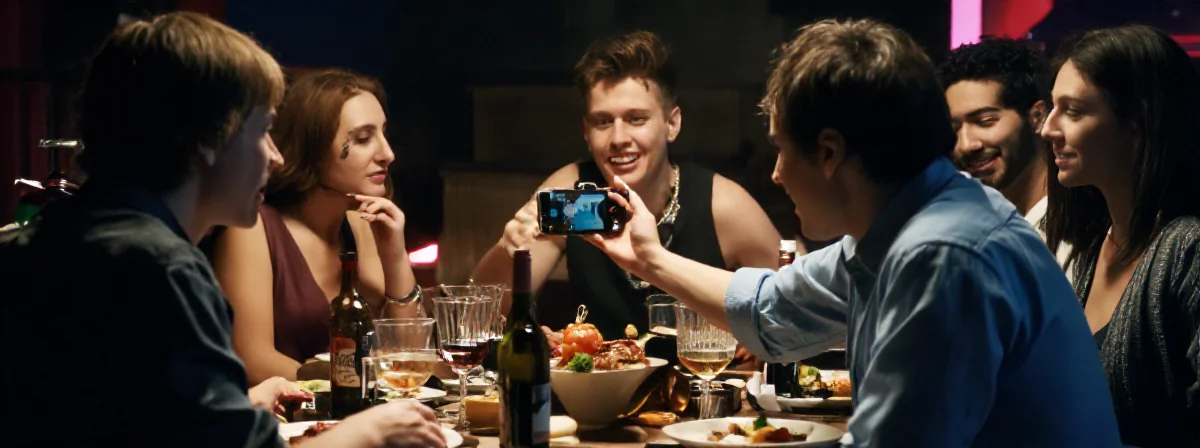
You know that feeling when someone walks into a room and the entire vibe shifts from “chill” to “oh no”? It’s like a sudden drop in temperature, and you’re left wondering if you should run or just endure the awkwardness. It happens more than you think, and it’s usually someone completely unaware that they’re the villain in someone else’s story.
We’re living in an era where “just being honest” is often code for being an absolute jerk, and “business” is the ultimate shield for emotional negligence. From family gatherings that turn into psychological warfare to strangers deciding they know your life better than you do, the social contract is fraying at the edges. It’s exhausting trying to navigate a world where people think they have a free pass to disrespect your boundaries, your time, or your very existence.
The worst part isn’t even the loud stuff. It’s the subtle, creeping violations that make you question your own sanity. Why does everyone think they can bring two random strangers to your birthday? Why do people insist on praying for you when you’ve told them you’re disabled? These aren’t just “pet peeves.” They are massive red flags signaling a complete lack of empathy. It’s time to call out the behavior that’s been normalized as “just how people are.”
Why “Just Business” Is the Most Toxic Excuse in the Book
Let’s get one thing straight: there is no such thing as “just business” when it comes to human decency. When someone uses that phrase to justify ignoring your feelings, trampling on your boundaries, or treating you like a number, they’re admitting they have zero empathy. It’s a classic deflection tactic. They’re telling you that their pursuit of profit or convenience is more important than your basic humanity, and that’s a massive green flag for a sociopath.
Think about the people who bring random strangers to your family dinners. They don’t care that you’ve never met them. They don’t care that the dynamic of the group changes instantly, leaving you feeling isolated. They just want to pad their numbers or make a scene. It’s not socializing; it’s social aggression. And when you try to address it, they hit you with the “it’s just business” or “you’re too sensitive” line. That’s not a conversation; that’s a shutdown.
This mentality thrives in a society that rewards the loud and the ruthless while punishing the empathetic. In the past, people with these traits would have been exiled from the tribe. Now? They’re the ones climbing the corporate ladder and dominating the group chat. They have free reign to sin themselves stupid because there are no consequences for their lack of soul. You don’t need to be “the weird one” for recognizing that treating people like objects is wrong. You’re just the only one brave enough to say it out loud.
The Unsolicited “Help” That Feels Like an Attack
There is a specific brand of toxicity that comes wrapped in a bow of “wellness” or “faith.” It’s the people who see a disability and immediately assume you need a miracle cure. You’re legally blind, or you use a wheelchair, and suddenly someone is offering to pray for you. It’s not helpful; it’s condescending. It implies that your life isn’t valid unless you’re “fixed” by a higher power.
The irony is palpable. When you tell these people you don’t want their prayers, they get offended. They think you’re ungrateful. But the reality is, you’re just tired of being a spectacle. You’re tired of people treating your existence as a project for their charity. One disabled person even stood up, walked a few wobbly steps, and yelled “I’m HEALED!” just to shut down a Karen in a waiting room. That’s the kind of power you get when you stop playing along with their delusions.
It’s the same with the “God only gives special kids to special parents” crowd. If you’re a parent of a child with disabilities, you know the weight of that statement. It’s a guilt trip disguised as a compliment. It’s a way of saying, “Your struggle is a test of your worth,” which is a horrific way to view parenthood. You don’t need their validation. You don’t need their prayers. You need them to stop making your life about their spiritual journey.
The Digital Footprint That’s Stealing Your Kids’ Future
We’re raising a generation of children who have no say in their own digital legacy. Parents are posting their kids’ entire lives online—happy moments, embarrassing tantrums, everything—to entertain a bunch of strangers on Instagram. They think it’s cute. They think it’s bonding. But they’re ignoring the fact that these digital footprints have real, tangible consequences.
Imagine your child grows up and sees every embarrassing moment of their life indexed by search engines. Imagine potential employers or college admissions officers digging through years of cringe-worthy content. The security risks alone are terrifying. Deepfakes, identity theft, and self-esteem issues are the price we’re paying for our parents’ thirst for likes. It’s a violation of consent that starts the moment they’re born.
And it’s not just the photos. It’s the parents who force their kids to give hugs or kisses to family members they