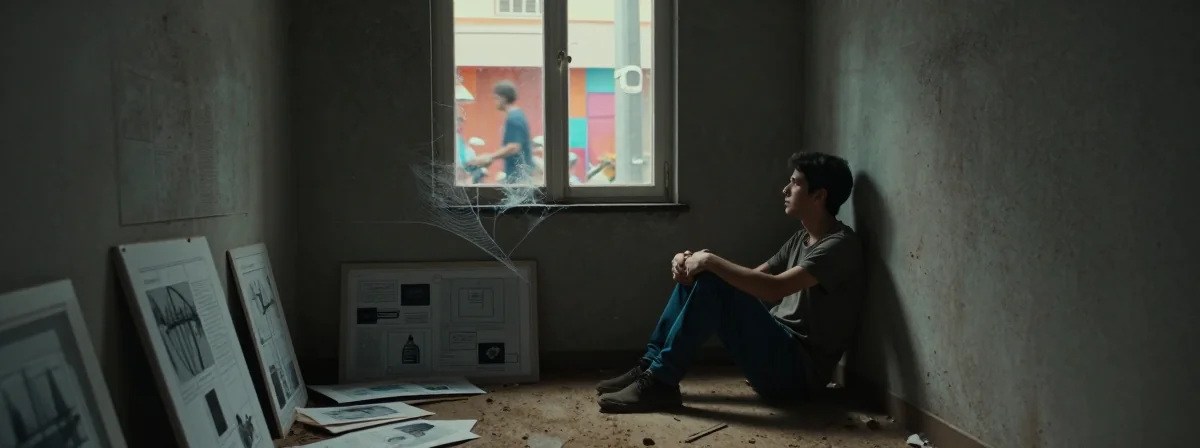
The coffee had gone cold an hour ago, but you didn’t notice. You were too busy staring at the cursor blinking on the screen, a rhythmic heartbeat mocking your inability to type the words. It was a decision that needed making—a career pivot, a difficult conversation, a move to a new city. The logic was there, the pros and cons list was meticulously color-coded, but still, you sat frozen in the amber light of the afternoon. And then, the thought that always saves you, the thought that feels like wisdom but acts like a cage, drifted through your mind: Let’s just wait and see.
It feels like the prudent choice. It feels like patience. But often, that four-word phrase is nothing more than a beautifully wrapped excuse to stay exactly where you are. We tell ourselves we are waiting for clarity, for the market to stabilize, for the stars to align. In reality, we are waiting because the alternative—stepping into the unknown—is terrifying. We treat our lives like a novel we are reading, waiting for the plot to resolve itself, forgetting that we are supposed to be the ones holding the pen.
The tragedy of “wait and see” is that it masquerades as a strategy. It sounds professional. It sounds measured. But if you look back at the chapters of your life you are least proud of, you won’t find them filled with reckless mistakes or bold failures. You will find them filled with long, gray stretches of waiting. You will find the moments you chose comfort over growth, disguised as caution.
Why We Mistake Stagnation for Stability
There is a specific kind of gravity that holds us in place. It feels safe. It feels like the ground beneath your feet is solid, even if it’s actually a ledge crumbling slowly into the sea. When you say “let’s wait and see,” you are trying to protect yourself from the pain of a wrong turn. You are trying to optimize your life for the absence of regret.
But here is the counterintuitive truth about human psychology: we regret the things we didn’t do far more than the things we did. The sting of a failed project fades; the ghost of the unwritten book, the unspoken love, the untraveled path haunts you forever. By waiting for the perfect moment, you are inadvertently choosing the path of greatest risk—the risk of looking back and realizing you never really lived at all. You aren’t preserving your future; you are slowly starving it.
The Illusion of Perfect Information
We often treat decisions like math problems. We believe that if we just gather enough data, if we just wait one more week or read one more report, the answer will become obvious. We think successful people act because they have certainty. They don’t. They act because they have tolerance for ambiguity.
Sitting in that state of “wait and see” is an addiction to information that will never arrive. Life does not provide a PDF with the correct answers highlighted. The market changes, people change, and the variables are infinite. If you are waiting for a time when you are 100% sure, you are waiting for a time that does not exist. The difference between you and the people who are getting what they want isn’t that they know something you don’t. It’s that they learned to walk through the fog while you are still standing at the edge, waiting for it to clear.
The Slow Erosion of Confidence
Every time you choose to wait when you know deep down you should move, you tell yourself a subtle, damaging story. You tell yourself that you are not capable of handling the consequences of your own actions. You erode your trust in yourself.
Imagine a friend who constantly told you they would meet you for dinner, but at the last minute always texted, “Let’s wait and see if I’m feeling up to it.” How long would you keep that friend? Not long. Yet, we treat ourselves this way constantly. We break our own promises to start the business, to run the marathon, to have the hard conversation. Over time, this creates a profound sense of powerlessness. You stop believing you have agency over your life, and you become a spectator in your own movie, waiting for someone else to yell “Cut.”
When “Waiting” Becomes “Hiding”
Sometimes, the pause is necessary. A strategic pause can be the difference between a rash disaster and a calculated triumph. But you have to be honest with yourself about the difference between pausing to reload and pausing because you are afraid to fire.
If you are waiting to see if your motivation returns, it won’t. Motivation is a guest; it doesn’t move in. If you are waiting to see if the fear goes away, it won’t. Fear only grows in the dark. “Let’s wait and see” is often just a bunker we build to hide from the judgment of others or the possibility of failure. It is a hiding spot that slowly shrinks until the walls are pressing against your chest and you have nowhere left to go.
Stepping Off the Ledge
The resolution to this paralysis isn’t to leap blindly. It is to recognize that the cost of inaction is higher than the cost of failure. When you find yourself whispering “let’s wait and see,” treat it as a warning light on a dashboard. It is a signal that you are scared, and that is okay. Fear is not a stop sign; it is a compass.
You don’t need to see the whole staircase to take the first step. You don’t need to know how the book ends to write the first sentence. The clarity you are waiting for does not come before the action; it comes during the action. The moment you move, the fog lifts. The moment you commit, the universe shifts. You stop waiting to see what happens, and you finally start deciding.