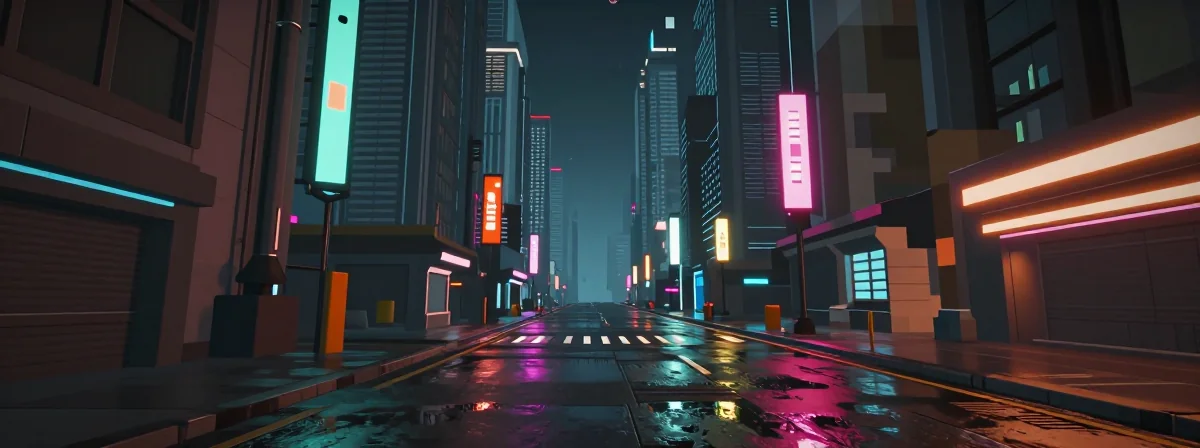
There is a specific kind of heartbreak that comes from booting up a highly anticipated title, only to be greeted by visuals that look like a deep-fried mess. You see the screenshots, you watch the trailers, and the hype builds for a lush, immersive world. Then you hit play on a 4K gameplay video, and the foliage looks like a smeary, pixelated disaster. It is jarring, ugly, and frankly, confusing. We live in an era of 8K textures and real-time ray tracing, so why do so many modern games look bizarrely low-res when viewed through the world’s most popular streaming platform?
The disconnect isn’t happening on your GPU. The issue lies in the pipeline between the developer’s screen and your eyes. For years now, video compression algorithms have been waging a silent war against high-fidelity game design, and the complexity of modern foliage is often the first casualty. What you are seeing isn’t necessarily bad optimization by the developers; it is a fundamental mismatch between cutting-edge rendering techniques and aging streaming compression standards.
Consider the leap in foliage technology we have seen since around 2015. Game engines moved from simple billboards to complex, wind-swept geometry with thousands of individual leaves and sub-surface scattering. It is beautiful when you are sitting in front of the monitor, but it creates a nightmare for video encoders. When you look at a dense forest in a game like Skyrim with a heavy mod list or a title utilizing Unreal Engine’s Nanite, you are looking at millions of tiny, high-contrast details moving independently. That is exactly the kind of visual data that destroys streaming bitrates.
Why High-Fidelity Foliage Breaks the Stream
Video compression works by predicting motion and saving only the changes between frames. It is a brilliant system for a talking head or a slow pan, but it falls apart when faced with chaotic, high-frequency detail. Modern foliage is essentially visual noise to a compressor. Every leaf fluttering in the wind requires data, and when the bitrate isn’t high enough to handle that information, the algorithm panics. Instead of rendering crisp edges, it starts averaging the pixels, turning a intricate tree into a muddy, green blob of artifacting.
This phenomenon creates that “deep-fried” aesthetic where fine textures dissolve into blocky messes the moment movement enters the frame. It is particularly noticeable in open-world games where the draw distance is massive. You might have a stunning mountain range in the background, but the bush in the foreground looks like it is melting. It is not just annoying; it actively breaks the aesthetic immersion the designers worked so hard to achieve. The artistic intent is being lost in translation, replaced by digital smear.
The Bitrate Illusion and the 8K Myth
There has been a persistent theory circulating that uploading in 8K and viewing in 1080p can bypass these compression limits. The logic seems sound—higher source resolution should mean more data for the downscaled stream, right? Unfortunately, that is not how modern streaming platforms handle their pipelines. The platform’s encoder will often ignore the high-resolution source data and simply switch to a pre-existing lower bitrate stream to save bandwidth, rendering the extra effort useless.
Even when the platform does respect the higher resolution, the problem persists because bitrate is the bottleneck, not resolution. You can have a 16K video file, but if it is compressed at 10Mbps, the fine details in the foliage will still be destroyed. The obsession with resolution numbers is distracting from the real metric that matters: data rate. We are chasing pixel counts while starving the actual visual information that makes those pixels worth looking at. It is like putting high-octane fuel in a car with a clogged fuel filter—the potential is there, but the delivery system is choking.
Ghosting, Smearing, and the BVH Confusion
Sometimes, the visual degradation is so severe it looks like a rendering error. You might see ghosting effects or strange smearing around moving objects and assume the game engine has a bug with its Bounding Volume Hierarchy (BVH) structure or occlusion culling. It is a reasonable assumption—seeing a character move and leave a trail of visual artifacts behind them looks like a failure in the game’s code. However, more often than not, this is purely a compression artifact known as ghosting, caused by the video stream struggling to reconcile fast motion with a low data budget.
It is a gross look, honestly. Seeing a “next-gen” game reduced to a smeary, artifact-ridden video does a massive disservice to the art team. When a game looks like a “remaster mod” from five years ago, it is usually not the game’s fault. It is the stream aggressively mangling the image to fit it through the internet pipe. This creates a false narrative about the game’s performance and visual quality. Viewers judge the optimization based on a corrupted version of the product.
Nanite and the New Standard of Detail
We are on the precipice of a new era with technologies like Nanite in Unreal Engine, which allows for cinematic-quality geometry to be rendered in real-time. Nanite foliage is incredibly dense and detailed, offering a level of realism we have never had before. But this detail is the enemy of current streaming codecs. The more intricate the geometry, the harder the encoder has to work to preserve it. As we move forward, the gap between what is rendered on a local machine and what is seen on a streaming platform is only going to widen.
This creates a bizarre paradox where games are looking better than ever, but footage of them looks worse. The fidelity is there, but the transmission method is regressive. We are trying to view 2026-level graphics through a 2015-era compression lens. It is frustrating for designers who pour their soul into minute details—like the way light filters through a leaf—only to see that detail averaged out into a blurry green square by the time it reaches the audience.
The Reality Check: You Have to Play to Believe
Ultimately, you cannot trust a compressed video stream to give you the truth about a game’s visual fidelity. The “smear” you see on screen is a lie told by bandwidth limitations. If you want to see the BVH structure working correctly, if you want to see the ghosting disappear and the textures resolve into crisp reality, you have to experience the engine running locally. The beauty of modern design is fragile; it does not survive the transition to low-bitrate streaming intact.
The takeaway here is not that streaming is useless, but that it has become a poor representative of high-end visual art. We need to adjust our expectations and stop judging graphical fidelity based on a distorted mirror. The technology is beautiful, the performance is there, but the window we are looking through is dirty. Until streaming infrastructure catches up with rendering technology, the only way to truly appreciate the artistry is to run it yourself.