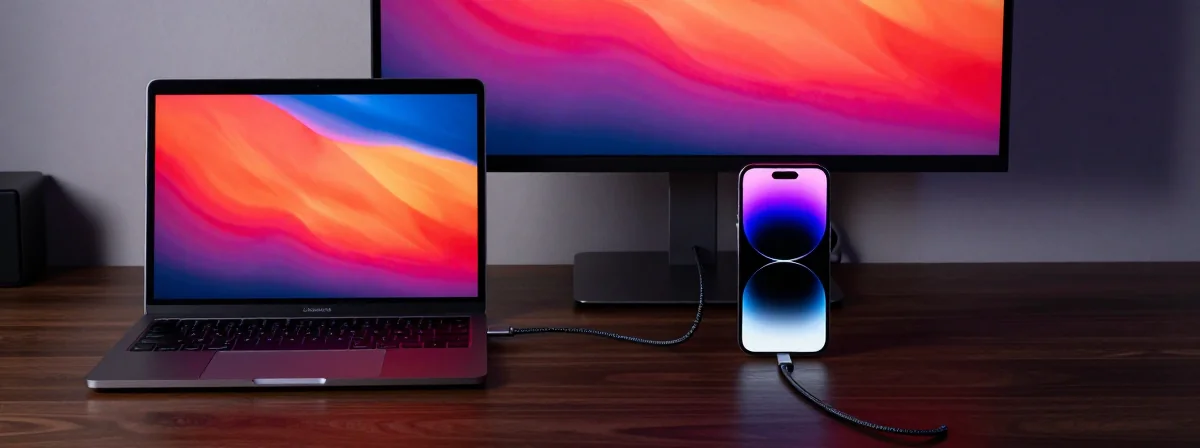
We are standing at the precipice of a massive shift in how we compute, where the boundaries between our pocket devices and our workstations are blurring faster than ever. Everyone wants to know if the phone in their pocket can finally replace the laptop on the desk, not just for mirroring a video, but for genuine productivity. It’s not just about screen real estate anymore; it’s about the seamless flow of digital life across any form factor.
Here is the thing nobody’s talking about: the hardware is already there, waiting for the software to catch up.
The Cutting Edge
SIDE A The iPhone 15 and newer models finally embraced USB-C, unlocking native DisplayPort support that makes connecting to a monitor beautifully simple. You can plug directly into an Apple Studio Display or any modern screen, and the image pops up instantly—no dongles required. It’s perfect for sharing videos or mirroring your workflow for a room to see, leveraging the immense power of the A-series chips in a snap.
SIDE B On the other side, we have the MacBook and iPad running iPadOS, which treat external monitors as true extensions of the workspace, not just mirrors. This changes everything for productivity, allowing you to keep your tools on one screen and your content on another, effectively turning a portable device into a full command center. It’s the standard we’ve come to expect from modern computing, where the OS manages multiple windows and distinct workspaces with grace.
THE REAL DIFFERENCE Here is what most people miss: this isn’t a hardware limitation, it’s a strategic choice by Apple to segment their operating systems. The A-series processors inside your iPhone are technically capable of driving an extended desktop just like an iPad, but iOS is artificially capped to mirror-only functionality. We’ve seen jailbreaks unlock this potential in the past, proving the silicon is ready—it’s just waiting for the software to catch up to our vision.
THE VERDICT If you need to get serious work done today, the MacBook is still your only viable option for a multi-screen desktop experience. But if you’re looking at where the world is going, the iPhone is the dark horse ready to gallop; we just need Apple to flip the switch on extended desktop support to unleash its full potential.
The Future Looks Bright
We are inching closer to a single-device future where your phone docks and becomes your entire computer. Imagine the convenience of carrying your whole digital life in your pocket and simply plugging into a hub to access a desktop environment whenever inspiration strikes. The technology is here, the silicon is ready, and it is only a matter of time before software innovation bridges that final gap.