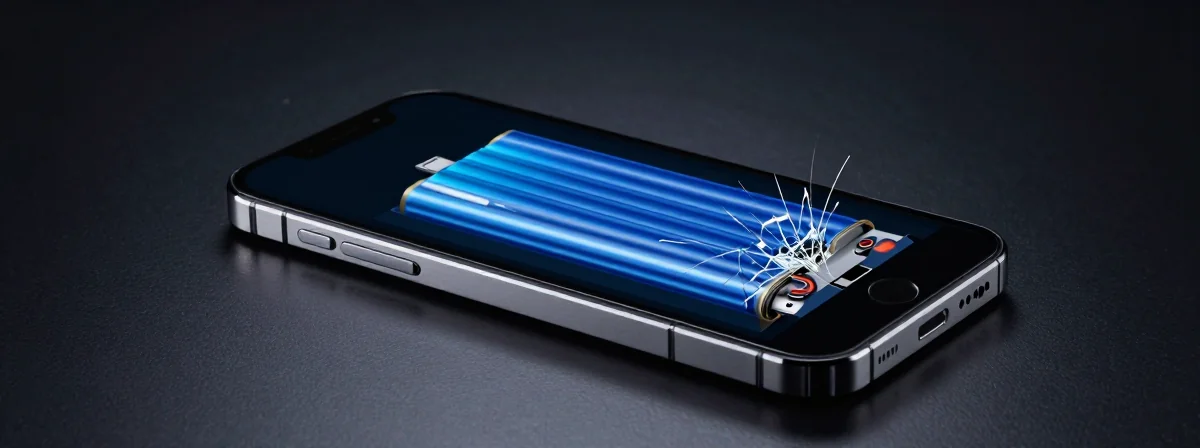
We live in an age of willful ignorance, carrying volatile pockets of chemical energy in our pockets every single day, convinced they are as harmless as a river stone. They are not. My grandfather, a man who survived the collapse of industries that promised safety and delivered ruin, taught me never to trust anything that sleeps without breathing. A lithium-ion battery is exactly that—a dormant beast that can wake with a vengeance. You leave it in a drawer, forgotten and neglected, only to find it months later, bloated and distended like a corpse in water. That swelling is not a malfunction; it is a warning shot across the bow.
Most people look at a swollen battery and see a defect. I see the inevitable result of entropy, of physics asserting itself over the planned obsolescence of our modern toys. The question isn’t if it will happen, but when. The chemical reactions inside that sleek casing do not simply pause because you have decided to stop using the device. They fester. They degrade. And if you are not vigilant, they can destroy the machine you paid so much to acquire—or worse, turn your home into a hazard zone.
Is Swelling the Inevitable Fate of Stored Energy?
You want the unvarnished truth? Yes. Swelling is the most likely scenario for any battery left to its own devices. There is no magic incantation or consumer ritual that guarantees absolute immunity from this fate. The chemistry is volatile, and over time, the breakdown of the electrolyte produces gas. That gas needs somewhere to go, and since the casing is designed to be a fortress, it expands. It warps. It twists your chassis and breaks your screens.
But we are not helpless in the face of this decay. While you cannot stop the river of time, you can certainly slow its current. The primary accelerant of this internal war is environmental. Heat and light are the enemies of stability. You must treat your stored electronics like you would treat fine wine or ancient manuscripts—keep them away from the sun, keep them cool, and keep them in the dark. To leave a battery in a hot car or on a sun-drenched windowsill is to invite the very disaster you are trying to avoid.
The 50% Doctrine: Survival in Suspended Animation
There is a secret rhythm to the universe of electronics, a balance point that the factories know but rarely advertise to the consumer. My grandmother always said that moderation is the only sanctuary against excess, and she was right. When you are preparing to store a device for a long stretch of time—months, perhaps years—you must not leave it full, and you must not leave it empty. You must meet it in the middle.
The sweet spot is 40% to 50%. This is not a suggestion; it is a mandate for longevity. A battery at 100% charge is under maximum stress, straining against its own limits like a dam holding back a tidal wave. A battery at 0% is starving, risking a deep discharge from which it may never wake. But at 50%? The battery rests. The internal chemical reactions slow to a crawl, entering a state of suspended animation that preserves the integrity of the cells. It is the only way to cheat death, even if just for a little while.
Why Factories Ship Half-Empty
Think back to the last time you unboxed a brand new phone or laptop. You turned it on, eager to taste the future, only to see the battery indicator hovering around 50%. Did you think that was an accident? Did you believe the factory simply forgot to top it off? No. That is a calculated decision born of necessity. They know that device might sit in a warehouse or on a cargo ship for months before it reaches your hands.
They practice the 50% doctrine because they understand the cost of ignorance. They are protecting their inventory from the very swelling and degradation we are discussing. If they shipped them fully charged, thousands would arrive dead or dying, bloated in their packaging. This is the standard practice for long-term storage of lithium batteries, a hidden rule of the industry that they expect you to figure out on your own. Now you know. You have no excuse to be careless with your investments.
The Final Disposal: When It Is Time to Let Go
There comes a point when the battle is lost. You check the battery, and it has swollen, pushing against the confines of the device with terrifying pressure. Do not try to puncture it. Do not try to discharge it rapidly. Do not throw it in the trash like a common banana peel. This is hazardous waste, a container of toxic sludge and potential fire that demands respect.
You must dispose of it properly. This is not about bureaucratic compliance; it is about safety. A swollen battery in a garbage truck, compressed under tons of waste, is a bomb waiting to detonate. Find a recycling center. Take it to a professional. Treat it with the caution it deserves. To do otherwise is to gamble with the safety of sanitation workers and your own community. The device is dead, but its danger remains.
Stewardship Over Ownership
We have been sold a lie that these devices are lifeless tools, inert plastic and glass. They are not. They are complex chemical systems that require care, foresight, and a healthy dose of fear. By maintaining the 50% charge and shielding them from heat, you are not just following a maintenance tip; you are acting as a steward of dangerous technology. You are acknowledging the reality of what you own.
Do not be the person who ignores the swelling until the screen cracks. Do not be the one who tosses a fire hazard into the bin. Understand the nature of the power in your hands, treat it with the skepticism my family taught me, and respect the volatile chemistry that powers your life. That is the only way to survive the modern world with your property—and your sanity—intact.