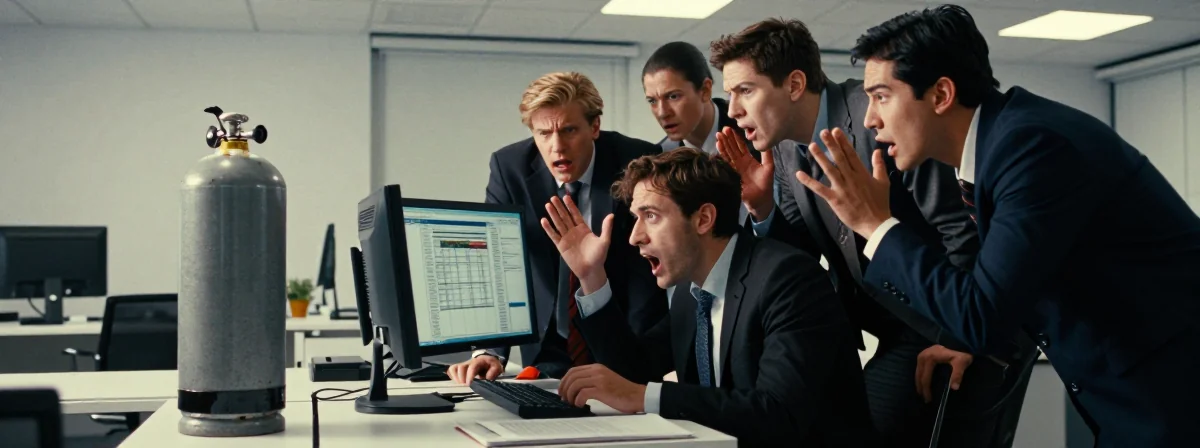
People keep asking me why the tech world sometimes acts like a bunch of chickens with their heads cut off over stuff like helium. You hear “only six months left!” and suddenly it’s the end of civilization as we know it—because, you know, our phones might float away or something. Here’s the thing nobody’s talking about: the real comparison isn’t between having helium and not having helium. It’s between having a panic attack and having a plan.
Let me break it down.
The Good Stuff
SIDE A: THE PANIC MODE This is the “sky is falling” approach. Someone reads a headline—doesn’t even bother with the article—and decides we’re all doomed because Korea gets helium from the Strait of Hormuz, and maybe, just maybe, some geopolitical nonsense could disrupt that specific pipeline. What does it do well? It creates drama. It gets clicks. Who is it for? People who thrive on anxiety and think the world is conspiring against their perfectly good iPhone. It plays on the fear that we’re running out, ignoring the fact that we’ve been “running out” for decades, and geologists keep finding more, plus we’ve got centuries worth locked away. It’s like yelling “fire” in a crowded theater when someone just dropped a popcorn kernel.
SIDE B: THE PLANNING MODE This is the “let’s actually read the article and think” approach. It acknowledges that yes, a specific supply chain could be disrupted, but no, the Earth isn’t suddenly helium-depleted. What does it do well? It keeps things in perspective. It recognizes that geopolitics impacts supply chains—that’s not new. Who is it for? People who actually work in industries that use helium (like making semiconductors, not just floating party balloons) and need to ensure continuity. It understands that six months isn’t the end; it’s a deadline to find another supplier, like Russia or the US, which conveniently have plenty. It’s the difference between screaming and making a phone call to a backup vendor.
THE REAL DIFFERENCE Here’s what most people miss: The actual helium shortage isn’t the problem right now. The problem is the dependency on a single, politically volatile region for a critical resource. It’s like building your dream house on quicksand—eventually, you’re going to sink, but the real issue isn’t the sand; it’s that you didn’t build on solid ground in the first place. The panic mode focuses on the symptom (potential disruption), while the planning mode addresses the cause (bad supply chain diversification). After years watching this industry, I can tell you the real battle isn’t about how much helium is left in the ground—it’s about how quickly we can untangle ourselves from supply chains that turn into Gordian knots at the slightest geopolitical sneeze. And let’s be real, building a new extraction facility is like trying to bake a soufflé during a hurricane—expensive, complicated, and prone to spectacular failure if the winds change.
THE VERDICT From experience, if your business can’t survive a regional supply disruption without throwing a hissy fit, you’re doing it wrong. If you’re making critical tech that relies on helium, planning is your only option. Panic achieves nothing but higher blood pressure. If you’re a country like Australia sitting on untapped reserves, maybe don’t rush to build expensive facilities based on a Middle East conflict that might fizzle out before you even turn the first shovel of dirt. You’ll end up flooding the market and bankrupting yourself. Here’s my take: Diversify your suppliers like your life depends on it—because in the tech world, it kinda does. Don’t wait for the headline screaming “HELIUM CRISIS!” Find your backup plan before you need it, because the universe has a nasty habit of waiting until you’re completely unprepared to throw a curveball.
Until Next Time
So next time you see a headline about some “imminent shortage,” take a breath. Ask yourself: Is this a real global shortage, or is it just one supply line getting tangled? More often than not, it’s the latter—and that’s a problem we can actually solve, if we stop the panic and start the planning. Now, if you’ll excuse me, I need to go check my backup helium supplier list. You never know when a balloon emergency might strike.