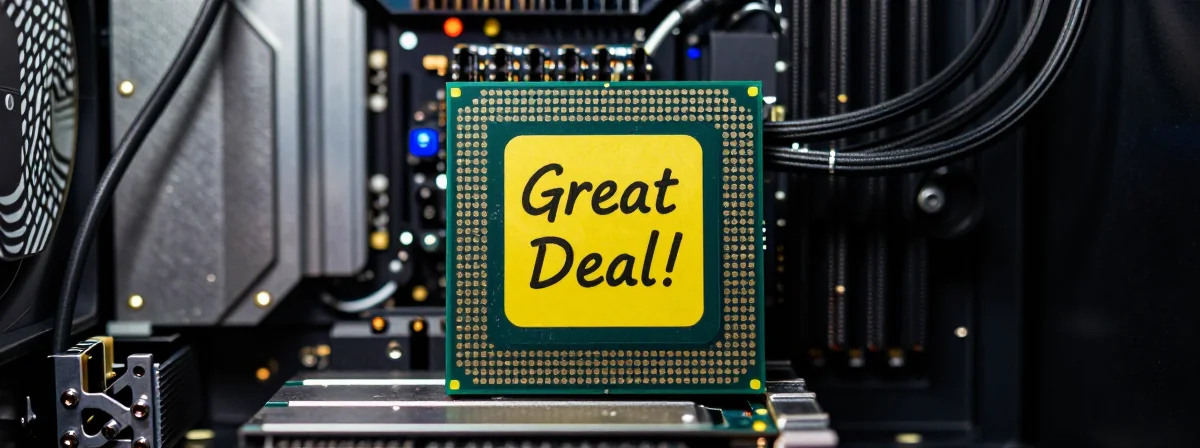
Something’s off about the latest CPU deals… and it’s not just the usual tech market shenanigans. I’ve been watching this space for years, and the pattern here is too suspicious to ignore. They’re pushing these processor bundles with one hand while jacking up memory prices with the other. What are they hiding in this seemingly convenient timing? Could it be that simple, or is there something more sinister at play?
The numbers don’t add up right. We’re seeing processors like the 265K drop to $229, which sounds like a steal until you realize that’s only part of the equation. The real catch? You need that 32GB of DDR5 memory they conveniently “recommend” alongside it. And what’s the price tag on that essential component these days? Around $400. Suddenly that “deal” looks less appealing when your total investment jumps to $700 just for the core components.
Why Do We Need 32GB DDR5 Now? It Feels Like Yesterday We Were Happy With 16GB
Remember when 16GB was considered overkill for most users? Now they’re practically shaming us for not having 32GB. The narrative shift has been subtle but deliberate. These new processors supposedly “require” the higher capacity to perform optimally. But who’s defining “optimal”? And why does it conveniently align with memory manufacturers’ inventory strategies?
The timing is too perfect. As these CPU deals surface, memory prices skyrocket. Is this mere coincidence, or a coordinated effort to maximize profits across the entire tech ecosystem? When the 265KF is being sold for $229, but you need to spend nearly double that on memory just to make it work as advertised, something smells fishy. They’re selling you the bait, but keeping the hook where you’ll feel it most.
The Memory-Markup Manipulation: Are They Forcing Us To Buy More Than We Need?
Let’s be honest: for many applications, 16GB still works just fine. But try building a system with these new processors using less than 32GB DDR5, and you’ll feel the pressure. The system might run, but the narrative is that you’re “missing out” on performance. Who sets these performance benchmarks? Who benefits when we all upgrade to higher memory configurations?
I’ve seen the benchmarks, and while there are gains with more memory, they’re often overstated. The real story is how these memory requirements have become a gatekeeping mechanism. Want to experience the “full potential” of these new processors? Better cough up for that expensive DDR5. It’s almost like they’re creating artificial barriers to entry, then selling the keys at premium prices.
What’s The Real Cost Of “Deals” That Force You To Buy More Components?
When a CPU is priced attractively but requires specific, expensive memory to perform as advertised, is it really a deal? Take the 270K Plus at £200—it sounds great until you realize it’s positioned as a competitor to the 285K that’s only £200 more. But here’s the catch: the 285K might perform better, but only if you’re willing to invest in the matching memory configuration.
This isn’t just about memory, either. We’re seeing similar patterns with motherboards and other components. The ecosystem is designed to extract maximum value at every touchpoint. When you see a CPU priced at $300, remember that’s just the beginning. The total system cost quickly balloons when you factor in the “recommended” components that suddenly become essential.
Are These “Deals” Just A Smoke Screen For Something Bigger?
Could these CPU pricing strategies be part of a larger market manipulation? I’ve noticed how these deals surface when memory manufacturers need to clear inventory or when new architectures are about to launch. It creates a false urgency—buy now before prices go back up or before the next generation makes these obsolete.
The timing is always suspicious. When the 265K was $429 a year ago and now it’s $259, who benefits from this price drop? Is it truly a market correction, or is it a calculated move to drive adoption before something changes? The fact that these processors are being positioned as upgrades for existing socket users while being too expensive for new builds suggests a deliberate strategy to lock people into current platforms.
Why Is TSMC N3B Node Suddenly So “Cheap”? Or Are They Just Passing Savings Elsewhere?
The narrative suggests that the TSMC N3B node is what’s making these processors affordable. But if the manufacturing costs have truly decreased, why aren’t the savings being passed along more broadly? Why does the memory component still carry such a premium? Could it be that the “savings” are being strategically allocated to create the illusion of deals while maintaining profit margins elsewhere in the ecosystem?
I’ve seen how chip manufacturers play these games. They’ll highlight one component’s cost reduction while quietly increasing prices elsewhere. The end result is the same—maximum profit with the appearance of value. When they tell you that the processor is cheaper because of improved manufacturing, but don’t mention memory prices simultaneously rising, the math doesn’t add up.
Is This Just Intel Trying To Salvage Margins On Older Architecture?
The whispers suggest these deals are about clearing inventory or leveraging slightly improved yields to raise average selling prices. It sounds like corporate speak, but what does it mean for us? It means we’re being offered “deals” on products that might be slightly improved versions of existing chips, not necessarily groundbreaking new technology.
When they position these as “no-brainers” for existing socket users but “white elephants” for new builds, they’re segmenting the market deliberately. They want to maximize sales from each segment without cannibalizing their higher-end offerings. It’s a sophisticated dance of pricing and positioning that keeps us chasing incremental upgrades while the real innovations remain just out of reach.
What Happens When You Look Beyond The “Deals” At The Complete System Cost?
Let’s do the math: $300 for a 24-core CPU sounds appealing until you add $400 for memory and another $300 for a motherboard. Suddenly you’re at $1000, and that’s before peripherals, storage, and everything else. Who’s benefiting from this tiered pricing structure? It certainly isn’t the consumer who feels they’re getting a “deal” only to discover the hidden costs.
The real conspiracy might be how these components are priced to create a psychological anchor. The CPU price is highlighted as the “deal,” while the memory and other components are presented as standard market prices. But when combined, the total cost often exceeds what you might pay for a more complete system with last generation’s technology.
The Final Question: Are We Being Manipulated Into Upgrading More Frequently Than Necessary?
When you see deals like the 245K with a bundled 1TB NVMe for $199, it’s tempting. But is this just creating a cycle of consumption where we’re encouraged to upgrade more frequently than we need to? The narrative of “better performance” and “future-proofing” creates a sense of urgency that may not be justified by actual needs.
I’ve built systems that still perform admirably years later. The pressure to constantly upgrade comes not from necessity but from marketing that creates artificial benchmarks and requirements. When DDR5 prices skyrocket while CPU prices drop, it feels like a coordinated effort to keep us spending on components we might not truly need.
The real deal isn’t the CPU price alone—it’s the complete system value. And when you look at the total cost and consider whether you truly need the latest specifications, the “deals” start to look less appealing. The conspiracy might not be in any single component, but in how they’re all connected to extract maximum value from our tech budgets. What are they hiding in this ecosystem of deals and requirements? Maybe the answer is simpler than we think—they’re just playing us for profit.