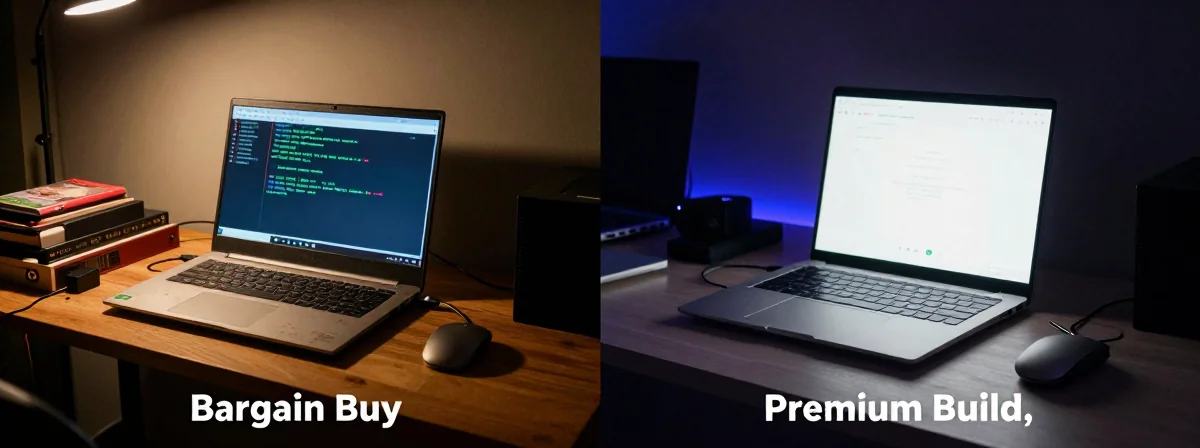
People keep asking me how to spot a genuine tech bargain versus a potential money pit. That 500-dollar laptop that has everyone saying “damn, that’s a steal” raises a critical question: what are you really getting? Here’s the thing nobody’s talking about—the difference between a true deal and a hidden compromise.
The memory alone on some premium laptops costs that much—but memory isn’t everything. Let me break it down.
The Facts
SIDE A: The Budget Bargain That sub-500 laptop represents a fascinating engineering challenge: how do you deliver basic functionality at an ultra-low price? These machines excel at core tasks—web browsing, document editing, and light multimedia. They’re perfect for students, secondary users, or anyone who needs a tool for specific tasks without breaking the bank. The discussion points hint at why they’re so cheap: sometimes it’s excess inventory, other times it’s stripped features, but rarely is it “too good to be true” without a reason. I’ve seen these laptops deliver solid performance for their intended use cases, especially after a quick cleanup of bloatware.
SIDE B: The Premium Build Laptops that cost twice or three times as much offer something different—they’re built to last. The memory, processing power, and build quality are all there for a reason. These machines handle multitasking, resource-heavy applications, and longevity far better. They’re for professionals, creatives, and anyone who needs reliability day in and day out. The fact that people point out the RAM alone costing 500 dollars reveals an important truth: premium components are expensive for a reason. These laptops don’t just perform better—they maintain their performance over years of use.
THE REAL DIFFERENCE Here’s what most people miss when they see that “fell off the truck” deal: the hidden costs that emerge after purchase. I’ve watched budget laptops struggle with heat management within months, seen their storage degrade, and watched their keyboards wear out. The thing nobody talks about is maintenance—those “updates to maintain it” comments reveal the truth. Premium laptops require far less ongoing effort. After years of using both, I’ve learned that the real value isn’t just the initial price—it’s the total cost of ownership, including your time and frustration. That OEM trialware everyone uninstalls? It’s just the tip of the iceberg of compromises made to hit that low price point.
THE VERDICT From experience, if you’re a casual user who only needs email and web browsing, that 500-dollar laptop might be perfect—just be prepared to replace it in 2-3 years. But if you do any serious work, need reliability, or want something that ages gracefully, you’re better off saving up for a premium model. Here’s my take: the “steal” only matters if it aligns with your actual needs. Don’t be seduced by the price alone—consider what you’re really paying for in the long run.
The Bottom Line
That amazing deal people are marveling at comes with an expiration date. The real question isn’t just “how much did you pay?” but “what are you paying for every day after that?” When you factor in your time, your frustration, and your future needs, the math often changes dramatically. Remember this when you see that next “too good to be true” offer—sometimes the smartest purchase is the one that costs more upfront but delivers value for years to come.