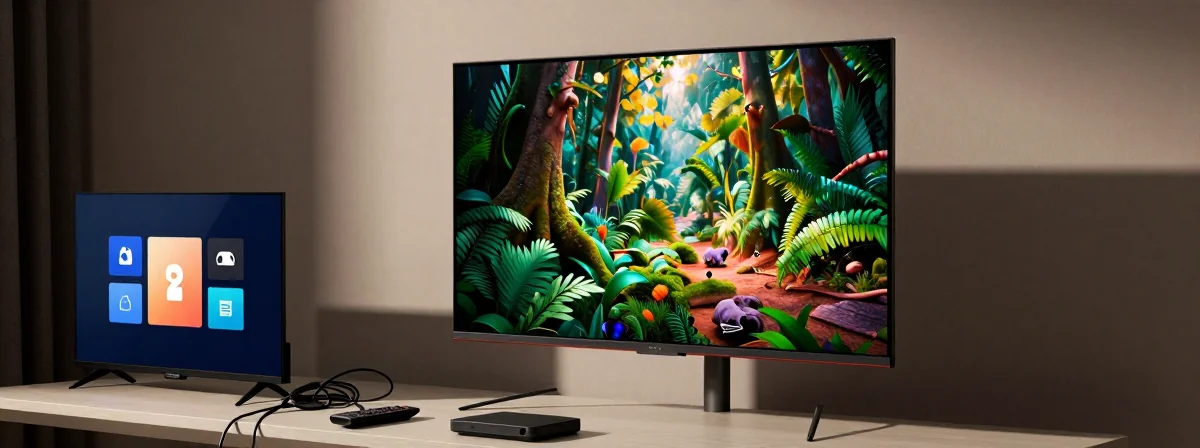
People keep asking me why their new TV suddenly runs like molasses or shows ads they never agreed to. I’ve seen this pattern play out for years now—the honeymoon phase with “smart” features quickly turning into buyer’s remorse. Here’s the thing nobody’s talking about: most people don’t actually need their TV to be “smart” at all.
What You Need to Know
SIDE A: SMART TVs (WITH INTERNET CONNECTIONS) These devices promise convenience—built-in apps, voice control, and automatic updates. They work well for some use cases, especially for casual users who want everything in one box. My neighbor loves his Samsung TV because he can control it with his phone and doesn’t need extra gadgets. The convenience is real for those who don’t mind trading some privacy for ease of use. Manufacturers love them because they can push ads, collect data, and create subscription ecosystems that keep customers locked in.
SIDE B: DUMB MONITORS (WITH EXTERNAL STREAMING DEVICES) A basic display that does one thing well—show visuals. You connect it to a separate streaming device like an Apple TV, Roku, or even a game console. This approach gives you the best of both worlds: a high-quality display without the bloatware and privacy concerns. I’ve been using this setup for years, and it’s never let me down. The TV itself becomes just a display, while the dedicated streaming device handles all the smart functionality. You get better performance, fewer updates, and complete control over what software runs on your screen.
THE REAL DIFFERENCE Here’s what most people miss: the manufacturers aren’t building TVs—they’re building data collection platforms with screens attached. After years of using both approaches, I’ve seen how these “smart” features gradually erode the user experience. The thing nobody talks about is how these TVs are designed to fail gracefully into ad-supported mode. They start with basic functionality, then through updates, they become more intrusive, collecting more data, and showing more ads—while simultaneously degrading performance. The dumb monitor approach cuts this cycle off at the pass entirely.
THE VERDICT If you’re looking for a display that just works without the privacy concerns, go with a dumb monitor plus an external streaming device. If you’re someone who wants the absolute simplest setup and doesn’t mind trading some privacy for convenience, a smart TV might work—but be prepared to deal with updates, ads, and performance issues. From experience, the best approach is to treat your TV as a monitor and add smart capabilities only through devices you control completely. Here’s my take: unless you’re technologically disengaged and need the simplest possible solution, the monitor-plus-streamer approach is the clear winner for anyone who values performance and privacy.
The final truth is simple: your TV should display content, not collect data about you. If you want smart features, add them yourself—don’t let the manufacturer force them on you. Your viewing experience will be better for it, and so will your privacy.