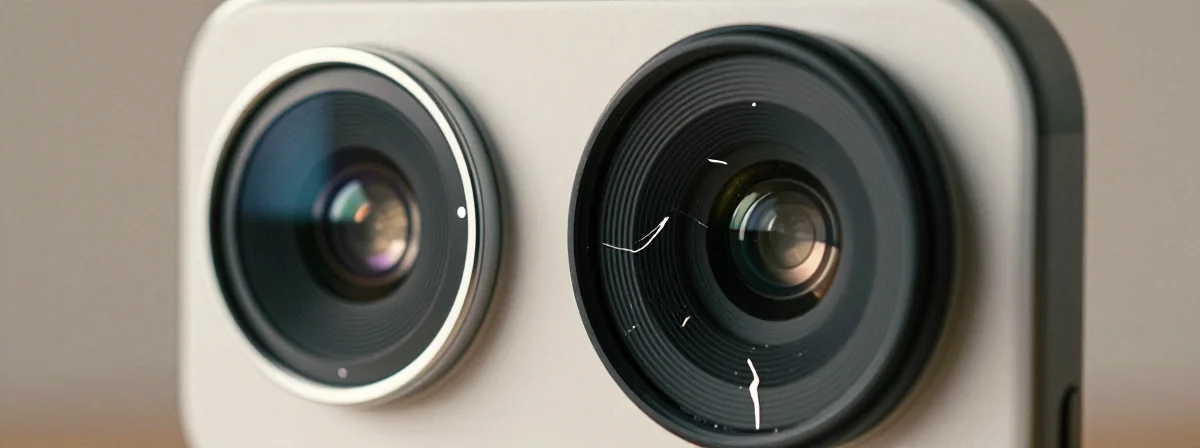
People keep asking me why some phones end up with cracked lenses while others hold up better over time. I’ve seen it firsthand—phones that look like they survived a war zone versus those that still look brand new after years of use.
Here’s the thing nobody’s talking about—the way we treat our devices reveals more about their true durability than any spec sheet ever could.
The Lesson
SIDE A Phones with easily damaged lenses often excel in raw performance when they’re new. They capture stunning photos in ideal conditions and handle demanding apps with ease. These devices are for people who prioritize peak performance over long-term resilience. The cracked and scratched lenses mentioned in the discussion show how quickly that advantage fades when real-world use enters the picture.
SIDE B Phones built with durability in mind may not always have the most cutting-edge specs, but they stand the test of time. Their lenses resist scratches and fogging, maintaining optical quality through daily use. These devices are for those who value consistency over momentary brilliance. The fogged lens in the discussion points to a failure in sealing or material quality that durable designs avoid.
THE REAL DIFFERENCE Here’s what most people miss—the difference isn’t just about materials, but about design philosophy. After years of using both types, I’ve noticed that durable phones often sacrifice marginal performance gains to implement robust protection. They use slightly thicker glass, better sealing, and sometimes even simpler lens configurations that are less prone to failure. The fogged lens in the discussion isn’t just a random accident; it’s often a symptom of corners cut in moisture protection for the sake of thinner design.
THE VERDICT From experience, if you’re someone who treats your phone as a tool rather than a precious object, go with the durable option. If you’re meticulous about phone care and want the absolute best camera performance when you need it, the high-performance model might be worth the risk. Here’s my take: for most people, the small compromises in peak performance are more than worth it for the peace of mind that comes with a phone that can actually survive real life.
Carrying This Forward
Consider how you actually use your devices—not how you imagine using them. The phone that looks best on paper often disappoints when it fails in the one scenario you actually encounter. Next time you’re choosing a device, look at the repairability and durability reviews rather than just the camera benchmarks. Your future self will thank you for it.