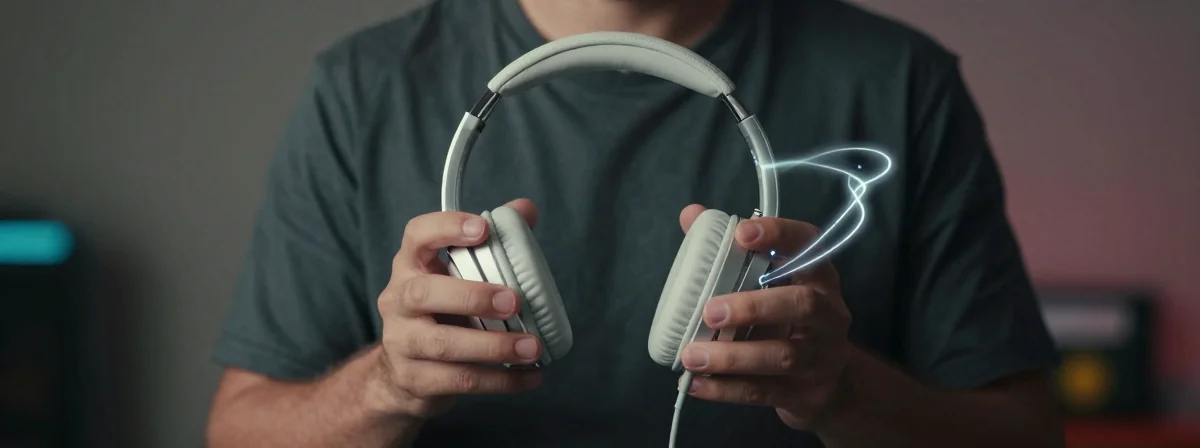
You know that feeling when a tech trend from the early 2010s suddenly makes a comeback? Like when flip phones started trending again, but this time it’s wired headphones. No, seriously—walk into any electronics store, and you’ll see them: the humble, tangle-prone earbuds with cords. They’re not just surviving; they’re thriving. But why? It’s not just about nostalgia—it’s about practicality, and maybe a little bit of rebellion against the wireless world.
The truth is, wired headphones never truly died. They just went underground, waiting for the perfect moment to resurface. Much like a classic gaming console making a comeback, these headphones offer something that wireless tech can’t: reliability, sound quality, and zero battery anxiety. Let’s break down why this retro revival is more than just a trend.
Why Are People Going Back to Wires? It’s Not Just Sentimentality
Think about the last time your wireless earbuds died mid-call. Or how about the time you lost one and spent $150 replacing it? Wired headphones don’t have those problems. They’re the dependable workhorse of the audio world—no charging, no pairing, no disappearing acts. It’s like choosing a wired controller over Bluetooth: sometimes, the simplest solution is the best.
The nostalgia factor definitely plays a role. Millennials grew up with these things, and seeing them return feels like a blast from the past. But the real reason? Performance. Wired headphones deliver uncompressed audio, which means cleaner sound without Bluetooth’s compression artifacts. It’s like comparing a FLAC file to an MP3—subtle but noticeable, especially in noisy environments.
The Unbeatable Mic Quality: A Hidden Advantage
Ever been on a Zoom call with someone using wireless earbuds? The background noise, the muffled audio—it’s like listening through a tin can. Wired headphones, especially older models like the classic Apple EarPods, have mics that are surprisingly robust. The trick? Positioning. If you angle the mic toward your mouth, it cuts out noise like a pro. It’s the difference between a glitchy VoIP call and one that sounds like you’re in the same room.
This is why so many professionals and even call centers are sticking with wired options. When your job depends on clear audio, wireless just isn’t reliable enough. It’s like choosing a wired internet connection over Wi-Fi for gaming—latency and interference are dealbreakers.
The Tangle Problem: A Small Price for Big Gains
Okay, we can’t ignore the elephant in the room: tangled wires. It’s the one complaint that keeps people from going back. But here’s the thing—modern cases and organizers (think dedicated sheaths or even just a simple clip) make tangles almost obsolete. It’s like complaining about a gaming console’s power brick in 2026: yeah, it’s there, but you’ve learned to live with it because the benefits outweigh the inconvenience.
And let’s be real—most of us have a designated spot for our headphones anyway. The trade-off? No battery life worries, no connection drops, and audio that just works. It’s the ultimate “set it and forget it” tech.
Noise Cancellation Isn’t Everything: The Case for Open Audio
Wireless earbuds often tout noise cancellation as a selling point, but is that always what you want? Sometimes, you need to hear your surroundings—like when you’re walking in traffic or working in a collaborative space. Wired headphones, especially older in-ear models, offer a more natural sound profile. They don’t block out the world entirely, which can actually be a benefit.
It’s like choosing an open-world game over a linear one. Sometimes, you need the freedom to hear what’s happening around you. Wired headphones give you that balance without the risk of Bluetooth interference or battery drain.
The Retro Aesthetic: When Function Meets Fashion
Let’s talk about style. Retro is back, and that includes tech. Wired headphones fit perfectly into the “retro-dressing” trend, much like vintage gaming consoles or cassette players. They’re a statement piece that says, “I value reliability over gimmicks.” It’s the same mindset that drives people to buy mechanical keyboards or CRT monitors for gaming—nostalgia, yes, but also a preference for tangible quality.
Millennials and Gen Z are driving this trend, but it’s not just about looking cool. It’s about rejecting the disposable nature of modern tech. A pair of wired headphones can last for years, maybe even a decade, with no replacement costs. It’s sustainability in action.
The Final Verdict: Wired Isn’t Dead, It’s Just Smarter
So, what’s the bottom line? Wired headphones aren’t making a comeback because we miss the 2010s. They’re coming back because they solve problems that wireless tech still struggles with. No charging, no pairing, no dropped connections, and often better audio quality. It’s the same reason people still use mechanical switches or prefer SSDs over cloud storage—simplicity and performance win every time.
If you’re still skeptical, try this: keep a pair in your work bag for calls. You might find yourself reaching for them more often than you think. Sometimes, the best tech is the one you don’t have to think about.