
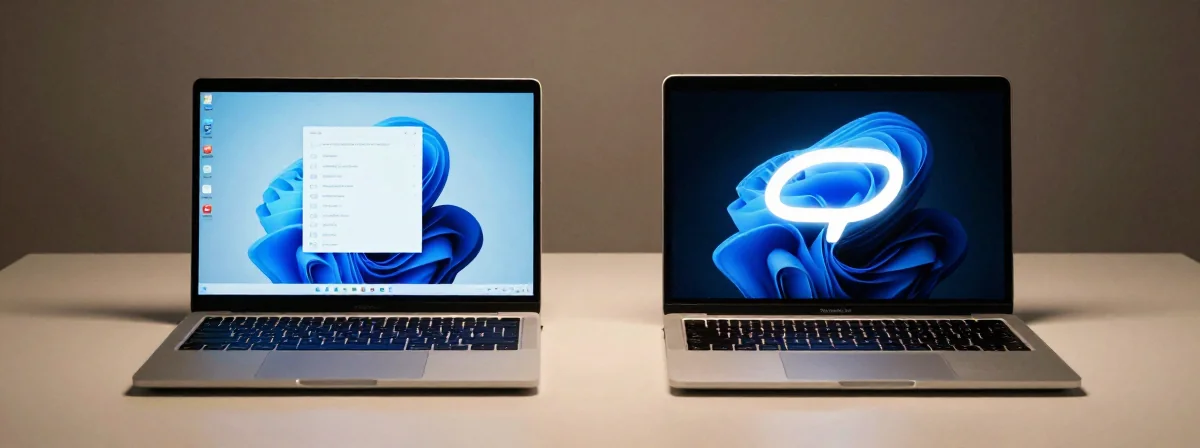
People keep asking me why anyone would still buy a Windows laptop when the Macbook Neo exists. I’ve used both for years now—Windows machines from every tier, and the Neo since it launched. Here’s the thing nobody’s talking about: this isn’t just about specs or price. It’s about what you’re really getting, and what the industry isn’t telling you.
The Truth They’re Hiding
SIDE A: WINDOWS LAPTOPS Windows machines at the $600 price point are a minefield. You might get a decent CPU and plenty of storage on paper, but the reality is often cheap plastic construction, screens that look like they’re from 2010, and constant software nagging. The build quality is so inconsistent that even laptops three times the price often feel flimsy—cheap hinges, deck flex, PCBs that double as structural support. And don’t get me started on the display: 1366x768 TN panels in 2026 are real, and they’re being sold at premium prices. The ecosystem is riddled with ads, forced updates, and cloud integration that confuses even tech-savvy users—let alone your 83-year-old boss who still doesn’t understand why their documents exist in the cloud.
SIDE B: MACBOOK NEO The Neo represents a revolution in this price segment. It’s the first laptop to deliver premium materials, a great trackpad, and a display that doesn’t insult your eyes—all for under $600. There are no fans on the bottom, so it doesn’t suffocate when you use it on a bed or couch. The aluminum unibody feels leagues above anything else in this category, and the keyboard and trackpad are actually usable. It runs macOS, which, despite its learning curve for Windows refugees, offers a smoother, less intrusive experience. The consistency is what kills: no gotchas, no compromises that feel like bait-and-switch. It’s the laptop that makes you question why Windows OEMs have been coasting on brand recognition alone for so long.
THE REAL DIFFERENCE Here’s what most people miss: the Neo isn’t just “good for the price”—it’s consistently good. Windows laptops at this price are designed to trick you. You might see a $600 machine with 16GB RAM and a 1TB SSD, but the RAM is slow, the screen is dim, and the build quality screams “replace me in a year.” The Neo, by contrast, takes the guesswork out of budget buying. It’s the first time a sub-$600 laptop doesn’t feel like a compromise in ways that matter. And the ecosystem matters too—Apple’s dominance means people are already familiar with iOS, and the transition to macOS is far easier than wrestling with Windows 11’s constant changes. The industry has been lying to us: they’ve been selling plastic above $3000 and expecting us to believe they’ll suddenly care about sub-$700 builds. They won’t—unless forced to.
THE VERDICT If you’re doing basic tasks—browsing, streaming, light work—go with the Neo. It’s the clear winner for consistency and long-term satisfaction. If you need Windows for specific software or legacy compatibility, you’re stuck with the Windows ecosystem, but don’t expect much from the $600 tier. From experience, the only Windows laptops worth considering are ThinkPads—and even those come at a premium because businesses have no other choice. The Neo isn’t just a laptop; it’s a statement that consumers won’t tolerate cheap plastic and shoddy software forever.
The Truth Is Out There
The Neo isn’t just another laptop—it’s a wake-up call to an industry that’s been coasting on inertia. Traditional OEMs can’t compete because they’ve been selling us the same compromises for years. If you want something that actually lasts and works without constant frustration, the choice is clear. Don’t let the marketing fool you: the Neo is the real deal, and it’s the reason Windows OEMs are finally feeling the pressure. Now you know.