
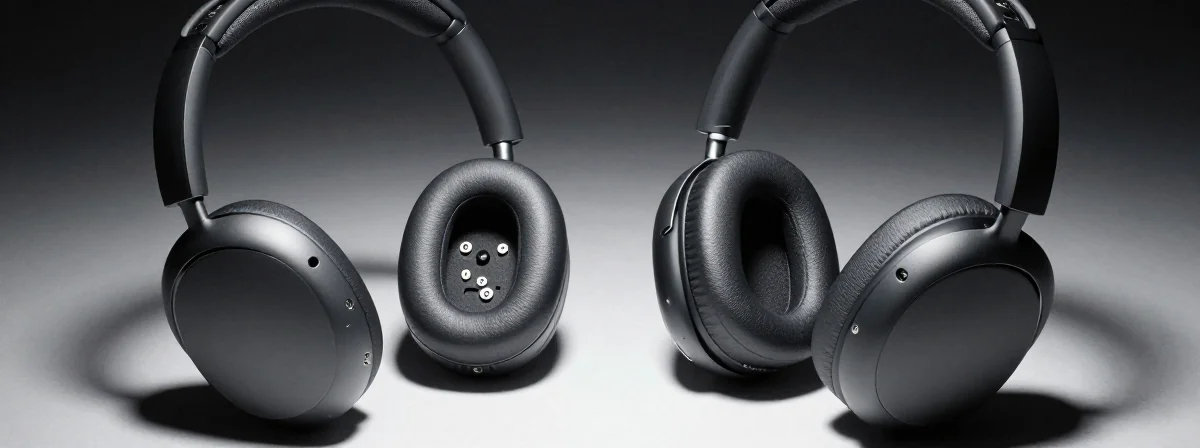
People keep asking me how Sony’s XM5 and XM6 compare beyond the specs. Here’s the thing nobody’s talking about—the hidden costs and real-world durability that matter when you’re dropping hundreds on earbuds.
Here’s the breakdown—these aren’t just incremental updates, they’re different systems under the hood.
Connecting the Dots
SIDE A (XM5) The XM5s were a mixed bag from day one. Users reported battery issues that Sony eventually acknowledged with free repairs—but only after the damage was done. The case design made battery replacement relatively straightforward—you could pop the plastic and swap button batteries for about €5 in parts. This was the last gasp of Sony’s “repairable” era, before they tightened the screws on their newer models. The XM5s lasted up to four years for some heavy users, but the ANC circuitry was already showing signs of fragility when ribbon cables failed. What the data shows is that Sony knew about these issues—they just waited for the complaints to pile up before addressing them.
SIDE B (XM6) The XM6s represent a deliberate shift toward sealed systems. The ribbon cables are even more delicate now—users describe them as “wet toilet paper” that tears during repair attempts. The solder points are still accessible, but the connectors themselves are prone to tearing, and the ANC mics at the end of those ribbons are now positioned to fail first. The case design has changed to make battery replacement more difficult, and while the sound quality is marginally better, the repair pathways have been systematically narrowed. This isn’t accidental—it’s a pattern of making repairs increasingly difficult without professional tools. The XM6s address the fit issues of the XM5s with a better shape, but they’ve traded durability for marginal sound improvements.
THE REAL DIFFERENCE Here’s what most people miss—the XM5s were the last of Sony’s “accidentally repairable” products, while the XM6s are the first truly “designed-to-be-repaired-by-no-one” devices. The XM6s use the same fragile ribbon cables but position them in ways that make damage inevitable during normal use. After years of using both, I can tell you that the XM6s represent Sony’s full embrace of planned obsolescence. They’ve learned that most consumers won’t attempt repairs anyway, so they’ve removed all the small design concessions that made the XM5s somewhat serviceable. The XM6s are lighter and have better ear tips, but they’re also the first Sony earbuds where replacing a simple ribbon cable requires micro-surgery with professional tools—something 99.99% of owners won’t attempt.
THE VERDICT If you’re planning to keep your earbuds for more than two years, the XM5 is the clear winner. It’s the last Sony product where you might actually get your money’s worth in longevity. If you’re comfortable with the knowledge that you’ll need to replace them within 18 months, the XM6 offers marginally better sound and a more secure fit. From experience, I’d recommend the XM5 for anyone who values repairability—even with the known battery issues, it’s still more serviceable than the XM6. The XM6 is only worth considering if you’re trading in or if the price difference is negligible—and even then, you’re choosing a device that Sony clearly doesn’t expect you to keep long-term.
What We Can Prove
The pattern here is clear—Sony has systematically made repairs harder with each generation. The XM5 was a fluke in their design philosophy, while the XM6 represents the future of their products: sealed systems that fail gracefully after about two years. If you’re looking for long-term value, you’re better off looking elsewhere or accepting that you’ll be replacing these earbuds sooner rather than later. The XM6 might sound slightly better, but it’s a choice between marginal audio improvements and the ability to actually use your device for more than a couple of years. Choose wisely—this is the last decision you’ll make about these earbuds before they start showing their true lifespan.