
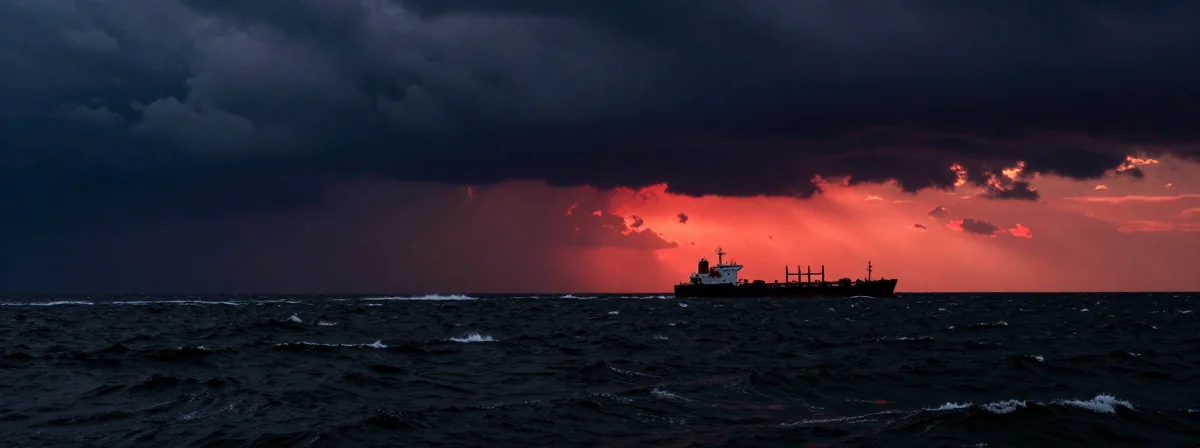
The 1973 oil embargo was a six-month nightmare that left the world reeling for a decade. But here’s the terrifying part: Today, we’re far more vulnerable. The Gulf now supplies nearly 15% of global oil—up from 7-9%—and our dependence on it has reached a critical point. Imagine every flight, shipment, and factory suddenly grinding to a halt. That’s not science fiction—it’s a realistic scenario if the Strait of Hormuz closes. Let’s break down why this matters more than ever.
The 1973 crisis taught us that even a temporary disruption can trigger stagflation, political chaos, and debt crises. But today’s world is exponentially more fragile. Air travel has grown tenfold, international shipping is the backbone of global trade, and industrial uses for oil byproducts—like helium for chip manufacturing and nitrogen for fertilizers—have multiplied. A closure today wouldn’t just raise gas prices; it would unravel the global economy.
Why the 1973 Crisis Was a Warning, Not a Final Lesson
In 1973, the Gulf was already the world’s largest oil source, but the embargo was primarily a political move against the U.S. The pain spread globally because oil is a commodity, but the real damage was felt in the West. Today? Developing nations are on the front line. India is already struggling with cooking gas shortages, while the Philippines, Vietnam, and Thailand are 73-96% dependent on Gulf hydrocarbons. If these nations default on dollar-denominated debts, European banks—already exposed—could face collapse. This isn’t just inflation; it’s systemic risk.
Think of it like a house of cards. In 1973, the cards were fewer and sturdier. Now, they’re stacked higher, weaker, and interlocked with global debt. A single blow could bring the whole thing down.
The Hidden Vulnerability: Industrial Civilization Runs on Oil Byproducts
We often think of oil as fuel, but its byproducts are just as critical. Helium, a byproduct of natural gas, is essential for semiconductor manufacturing. Sulfur is used in fertilizer production, and nitrogen-based fertilizers feed 30% of the world’s population. A disruption isn’t just about gas prices—it’s about the very foundations of modern life.
Consider this: If the Strait of Hormuz closes, everything from your smartphone to your next meal could become scarce. The 1973 crisis was a shock; today, it would be a cardiac arrest for global civilization.
Developing Nations Are the First to Fall—and They Drag Everyone Down
The 1973 crisis saw coups in Ethiopia, Greece, Thailand, and Argentina. Today, nations like Pakistan—a nuclear-armed state already teetering on collapse—could tip into chaos. If Gulf oil flows stop, fertilizer prices spike, and food becomes scarce, radical groups gain power. The domino effect isn’t just economic; it’s geopolitical.
And here’s the kicker: If countries default on their dollar debts, European banks (which hold massive exposure) could crater. It’s a feedback loop of doom, and we’re already seeing the first ripples.
The Rich Will Adapt; Everyone Else Will Suffer
While the wealthy can weather price shocks, the rest of us are vulnerable. Higher costs for shipping, energy, and manufacturing mean everything from tourism to entertainment gets cut. Wages stagnate, jobs disappear, and debt becomes impossible to service. The 1973 crisis was painful, but today’s version could be terminal for middle-class stability.
This isn’t about “them” vs. “us.” It’s about systemic fragility. When the system breaks, the rich find alternatives; the rest scramble for basics.
The Return of Coal? A Short-Term Fix, Long-Term Nightmare
If oil supply chains break, the world will look for alternatives—fast. We’re already seeing coal prices spike 18% as nations seek quick fixes. But coal is a step backward, not forward. It’s dirty, inefficient, and delays the transition to renewables. Meanwhile, renewable infrastructure—batteries, pumped storage, taller wind turbines—is being built, but it’s not ready at scale.
The irony? We’re racing toward a future we know is coming (renewables) while clinging to a present we can’t sustain.
The Military Gamble: Iran, China, and the Strait of Hormuz
Here’s where it gets dangerous. If Iran decides to go “scorched earth” and destroy Gulf oil infrastructure, recovery could take decades. But there’s a wild card: China. Iran exports 90% of its oil to China. If the U.S. pushes too hard, China could step in, turning a regional crisis into a global standoff.
The deployment of U.S. marines near Kharg Island—Iran’s main export terminal—signals a high-stakes gamble. A miscalculation could lock in decades of instability.
The Final Truth: We’re Not Prepared—But We Can Still Adapt
The 1973 crisis was a blip. Today’s potential disruption is a tsunami. Yet, there’s a silver lining: We know what’s coming. Renewable energy investments are surging, and nations are diversifying supply chains. The question isn’t if we’ll transition—it’s whether we’ll do it before the system breaks.
The next few years will test our resilience like never before. Will we repeat the mistakes of the past, or will we finally build a future that doesn’t depend on fragile chokepoints? The choice isn’t just economic; it’s existential.