
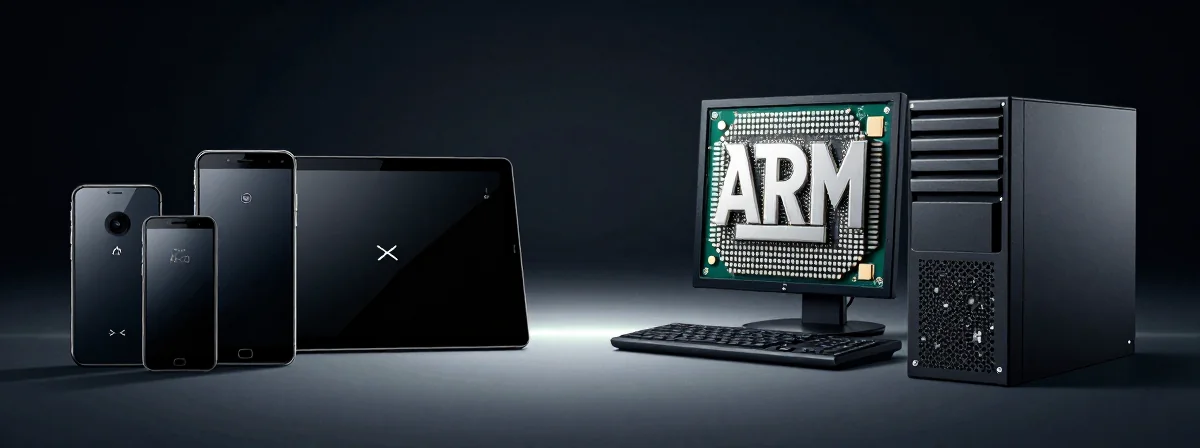
People keep asking me why the x86 vs ARM debate is heating up so fast. The new X2 Elite release has x86 feeling like it’s in a bloodbath—and honestly, the performance gaps are making headlines. Here’s the thing nobody’s talking about: this isn’t just about benchmarks; it’s about two fundamentally different philosophies of computing. Let me break it down.
Take Action
SIDE A: x86 (Intel/AMD) x86 chips are built for brute force and versatility. They dedicate massive die space to features like AVX512—powerful for specific workloads like scientific computing or video rendering. The decoder is complex, handling variable-length instructions, but they compensate with uOp caches that store frequent instructions. This makes x86 strong in traditional server workloads and legacy compatibility. If you’re running demanding professional software that needs every instruction set under the sun, x86 still has the edge. It’s the workhorse that can handle almost anything you throw at it.
SIDE B: ARM (Apple, Qualcomm) ARM chips are all about efficiency and modern performance. They use fixed-length instructions, making decoders simpler and faster. The latest ARM designs, like Apple’s M5 and Qualcomm’s X2, focus on single-core performance and power efficiency. They’re built from the ground up for mobile and modern workloads, which is why they’re crushing x86 in benchmarks that reflect everyday tasks. If you prioritize battery life, snappy performance for web browsing and creative apps, and a clean architecture, ARM is where it’s at. Qualcomm’s chips, in particular, are proving they can beat Intel/AMD in CPU tasks while offering better efficiency.
THE REAL DIFFERENCE After years of using both, I’ve seen the pattern: x86 vendors have been scaling down high-power server designs for clients, while ARM vendors are scaling up efficient mobile designs. That’s why ARM chips feel so much faster for everyday tasks—they’re optimized for what people actually do. x86 chips, meanwhile, still carry the weight of legacy features and complex decoders that most users never touch. The memory consistency model is another hidden factor—ARM’s relaxed model can hurt multithreaded performance in some cases, but it saves power. x86’s strict model is great for consistency but demands more power. And let’s be real: most users don’t need 96 cores; they need a responsive device that doesn’t drain the battery in an hour.
THE VERDICT From experience, if you’re a professional running specialized workloads like video rendering or server tasks, stick with x86. You need that full instruction set and raw power. But if you’re a typical user—browsing, coding, creative work—ARM is the clear winner. It delivers the performance you need without the power penalty. Here’s my take: for most people, the ARM revolution isn’t just hype—it’s the future. x86 isn’t dead, but it needs to evolve beyond chasing benchmark numbers and focus on efficiency like ARM has.
Go Get It
Stop chasing benchmark numbers and think about what you actually do with your device. If your laptop chugs on battery power, that’s a real-world problem ARM solves beautifully. If you’re running a data center, x86 still has its place. But for the rest of us? The efficiency-focused approach of ARM is the way forward. Make your next upgrade choice based on real-world performance, not just specs—your future self will thank you.