
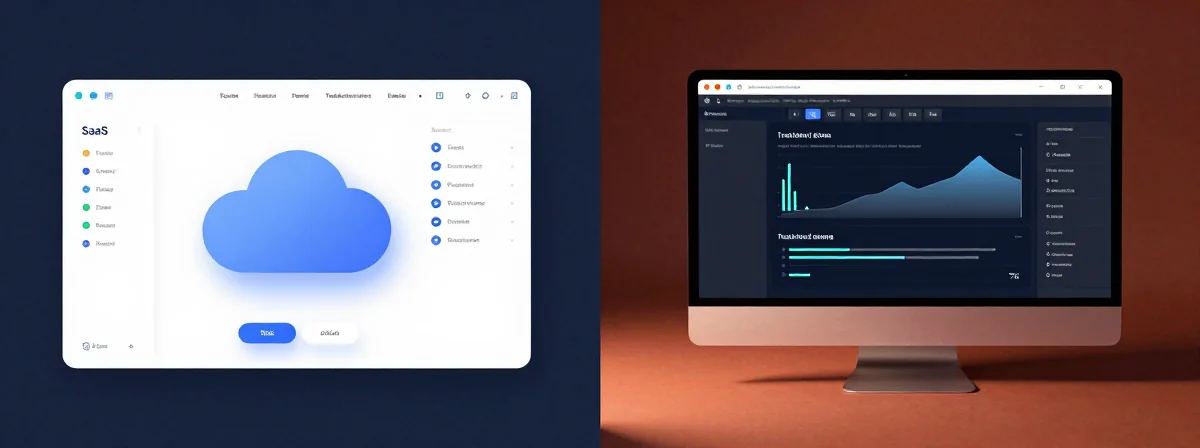
People keep asking me why their new software feels sluggish, even though it’s supposed to be cutting-edge. I’ve seen both sides of this debate up close—working with traditional release cycles and modern SaaS models. Here’s the thing nobody’s talking about: the way we build and test software today has fundamentally changed, and it’s impacting your daily tech experience.
What Actually Works
SIDE A: Traditional Software Traditional software still holds its own for users who need reliability above all else. You get clear release cycles—quarterly updates where every feature is tested to death. The code is optimized because developers had time to refine it, and QA teams could run full regression tests before deployment. This approach is perfect for businesses that can’t afford downtime or bugs—think enterprise systems where stability is non-negotiable. The tradeoff? You might wait longer for new features, but what you get works.
SIDE B: SaaS (Software as a Service) SaaS brings agility to the table, which is a huge win for teams that need to pivot quickly. Weekly updates mean new features arrive fast, and if something breaks, rolling back is easier than ever. Observability tools let developers monitor performance in real time, so they can fix issues without waiting for the next patch. This model suits startups and dynamic teams where speed matters more than perfection at launch. The downside? You’re often running beta-quality code in production, and the constant updates can lead to bloated, unoptimized systems over time.
THE REAL DIFFERENCE Here’s what most people miss: SaaS optimizes for the cloud, not your device. While traditional software focuses on minimizing your computer’s resource usage, SaaS providers care more about server-side efficiency because that’s where their costs lie. Your machine becomes a secondary concern—hence why apps like Spotify or Discord can chew through RAM without apology. The thing nobody talks about is that modern OSes are smart enough to handle this (they’ll swap memory when needed), but the constant pre-allocation of resources means you’re running more code than you actually use. It’s like having a car with an engine that’s always revving, even when you’re just idling.
THE VERDICT From experience, if you’re running critical systems or have limited hardware, stick with traditional software. You’ll appreciate the stability and optimized performance. But if you’re a team that needs to iterate quickly and can afford the bloat, SaaS is the clear winner for speed and flexibility. Here’s my take: for personal use, consider a hybrid approach—rely on SaaS for tools you use sporadically, but keep your core productivity apps traditional. That way, you get the best of both worlds.
None of this is about picking a side—it’s about understanding the tradeoffs so you can make tech choices that actually improve your life. Think about what you need most: speed or stability? The answer will tell you which path to take.