
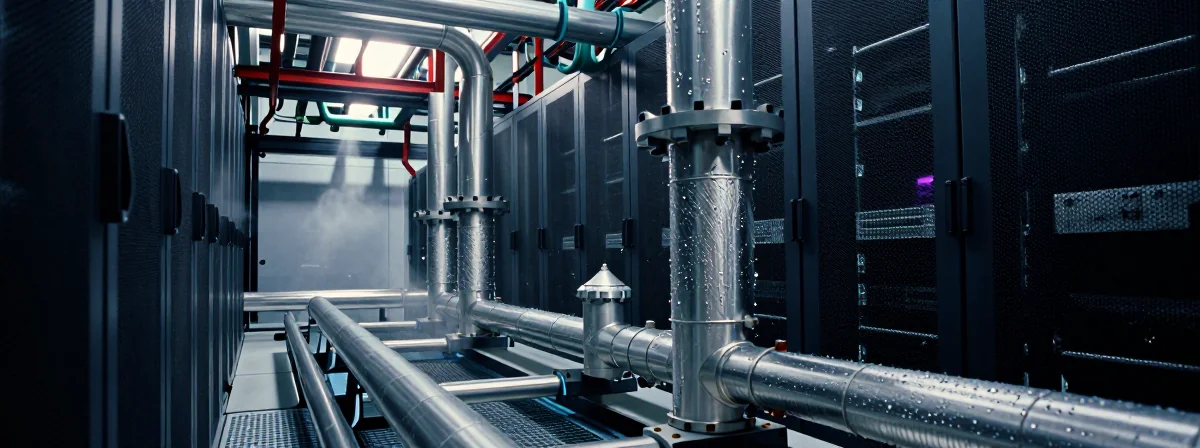
I’ve spent years inside the guts of data centers, watching engineers justify water waste with spreadsheets while rivers downstream run dry. The math they use is twisted: “It’s cheaper to refill than upgrade.” But they’re not just wasting water—they’re gambling with our future. And you’re paying the bill, whether you know it or not.
The truth is brutal: Most data centers aren’t using “closed-loop” systems at all. They’re running cooling towers that bleed millions of gallons daily—evaporation, drift, blowdown—while regulators look the other way. This isn’t a niche problem; it’s an industry-wide scandal hiding in plain sight.
Why Do Data Centers Still Use Water When There Are Better Options?
If you think “closed-loop” means no water loss, you’ve been lied to. The systems they call “closed” still leak like sieves. Cooling towers are the default because they’re cheap to build, not because they’re efficient. One major campus I worked on used them only after deciding it was “cheaper to replace water than install better tech.” The result? Five million gallons a day—enough to supply a town of 50,000 people.
Chillers and ground-source heat pumps exist, but they’re “too expensive” for the short-term profit model. The math only works if you ignore the long-term cost to communities. And since there are no water-use regulations forcing change, why would they? The water migrates, gets polluted, and takes years to cycle back—by then, it’s someone else’s problem.
The Power Problem: How Data Centers Are Strangling the Grid
Water isn’t the only issue. The power demand is obscene. One large data center can use as much electricity as 50,000 homes. I’ve seen substations built just to feed these monsters, funded by the companies that own them—meaning your local utility’s upgrades are often paid for by the same tech giants draining resources.
And don’t let them blame “AI.” Gaming might use more power per hour, but data centers run 24/7. One hour of cooling in a tower-cooled facility equals weeks of gaming. The difference? No one’s building new power plants for gamers.
The Gaming Comparison: A False Equivalence
Don’t let the industry pivot to “but gaming uses more!” That’s a distraction. Gaming studios use thousands of gallons a year—data centers use millions a day. Plus, gaming processing happens on your device, not in massive cooling systems that evaporate fresh water. The comparison is a lie, and anyone who makes it knows it.
The real waste is systemic. Tech companies optimize for profit, not sustainability. They’ll argue evaporation “returns to the water cycle,” but they ignore contamination and regional scarcity. When a data center drains a local aquifer, the water might come back in a decade—but will the community survive?
The Consumer Cost: How Your Choices Fuel the Crisis
Every time you use an AI tool, stream high-def video, or rely on cloud services, you’re complicit. The industry won’t change until demand changes. Ask yourself: Do you need that extra AI feature if it means draining a river? The choice isn’t just about convenience anymore—it’s about survival.
The Only Solution Is Regulation—And It’s Not Coming Soon
Tech moves faster than policy. By the time regulators catch up, the damage will be done. The real power lies with consumers. Demand transparency. Demand accountability. The water isn’t vanishing—it’s being stolen, drop by drop. And the clock is ticking.