
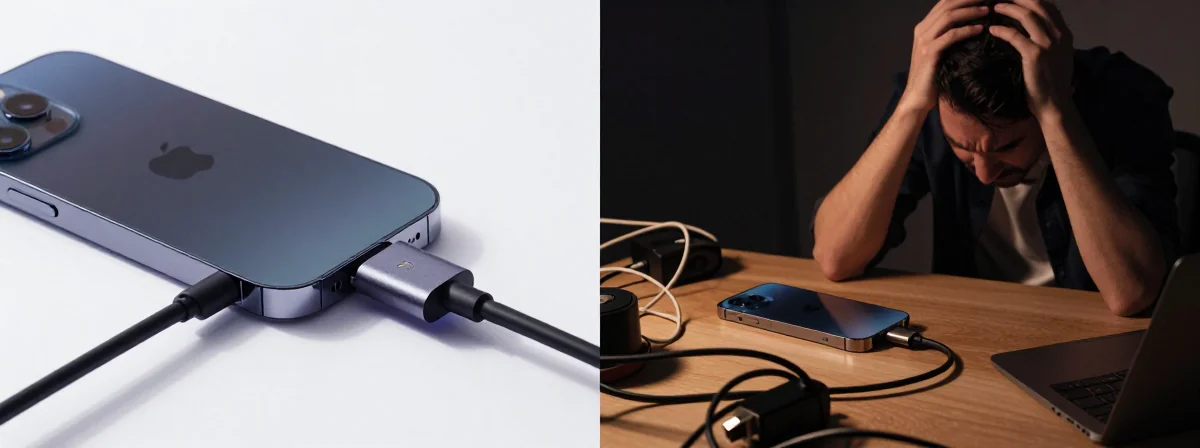
I’ve been asked more times than I can count about connecting iPhones to networks via Ethernet. The enthusiasm is understandable—after all, who wouldn’t want the reliability of a wired connection on their mobile device? Here’s the thing nobody’s talking about—the practical realities that make this setup more complicated than it appears.
Under the Hood
SIDE A: THE LIGHTNING TO ETHERNET ADAPTER Back in the 90s, connecting devices to networks was straightforward—plug and play was almost literal. Today, Apple’s Lightning to Ethernet adapter represents a similar concept but with modern complications. The adapter physically connects your iPhone to an Ethernet port, which is impressive in itself. I remember when adapters were bulky, unreliable beasts—this one is sleek and Apple-like. It works as advertised for establishing a physical connection, which is more than can be said for many modern tech solutions. The fact that it exists at all shows Apple acknowledges wired connections still have value in certain scenarios.
SIDE B: THE REAL-WORLD IMPLEMENTATION I remember when connecting devices meant checking physical connections first, then software settings second. With the iPhone Ethernet setup, it’s reversed—the physical connection is easy, but the software side is where most people get stuck. The discussion shows someone connected physically but couldn’t access the internet, which is the classic “it works but doesn’t work” scenario we used to see with early Wi-Fi implementations. Connecting to a PC as a workaround highlights how we’re essentially treating the iPhone as a peripheral rather than a peer device on the network—this isn’t how modern networking should work, but it’s the reality we have to deal with.
THE REAL DIFFERENCE Here’s what most people miss—the iPhone doesn’t have native Ethernet stack support in the way computers do. When I first saw this setup, I immediately thought of the early days of USB networking, where devices would enumerate as mass storage or serial devices rather than true network interfaces. The iPhone with an Ethernet adapter behaves similarly—it’s not a full network participant but rather a device that can be accessed by a networked computer. After years of using both, I’ve found that the iPhone’s Ethernet capability is more about Apple complying with regulatory requirements for diagnostic ports than creating a true networking solution. The lack of an Ethernet icon in the iPhone’s network settings is the telltale sign—Apple doesn’t even want you to think of it as a primary networking method.
THE VERDICT From experience, if you need reliable network access on an iPhone, stick with Wi-Fi or cellular. If you’re doing specialized diagnostics or have a specific use case where you must connect an iPhone to a wired network, the adapter plus PC workaround is your only viable path. Here’s my take—Apple designed this capability for enterprise and service scenarios, not for everyday users. After using both for years, I’ve concluded that the Ethernet adapter is a niche tool that solves a very specific problem, but it’s not a general-purpose networking solution for iPhones.
Trust Me on This
The lesson here is that not all connections are created equal. I’ve seen too many people frustrated by expecting an iPhone Ethernet connection to behave like a laptop’s—don’t make that mistake. When you need true wired connectivity, use a device that was designed for it. For everything else, embrace the mobility that makes smartphones special in the first place.