
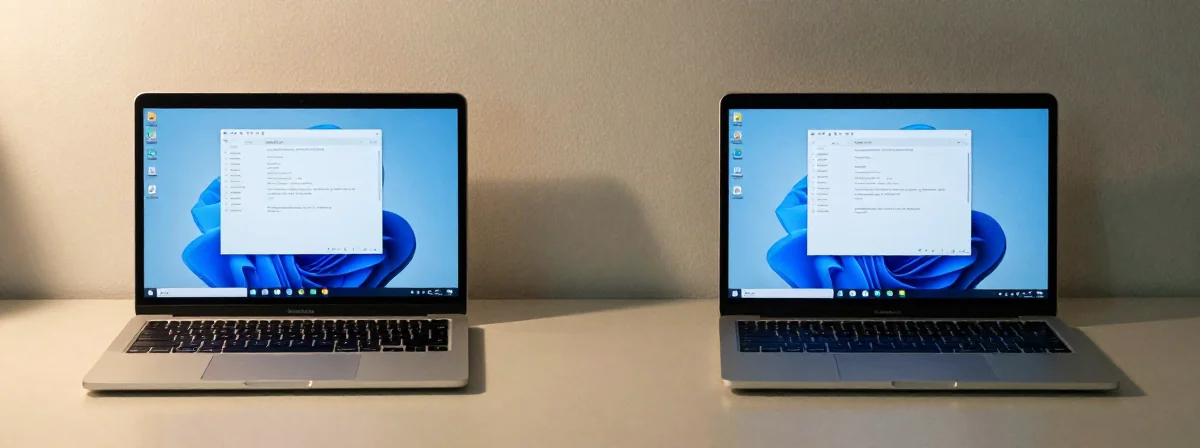
I’ve been using both for years now. People keep asking me—Windows or MacBook? Here’s the thing nobody’s talking about: the answer depends on what you’re actually trying to do. Let me break it down.
What the Data Shows
SIDE A Windows machines, especially gaming laptops like the Victus with an RTX 5060 and Intel Core 7 240H, deliver raw performance. They handle demanding tasks and games that MacBooks can’t touch—full stop. The evidence suggests these systems excel when plugged in, offering power that makes sense for heavy workloads. But what we can verify is that this comes at a cost: battery life suffers, displays often feel less refined, and build quality can be hit-or-miss, especially on budget models. This is where the trade-off becomes clear—power over portability.
SIDE B MacBooks, particularly newer models with M-series chips, shine in efficiency and everyday use. The evidence suggests they offer superior battery life, quieter operation, and a more polished build. What we can verify is that for productivity tasks, coding, and even light gaming via emulation or CrossOver, MacBooks hold their own. The M-series CPUs often outperform their Intel counterparts in specific benchmarks—sometimes by a meaningful margin. This remains unconfirmed but worth noting: for data science and Linux-like environments, macOS feels more natural. The trade-off here is gaming and certain niche software, which remain Windows strongholds.
THE REAL DIFFERENCE Here’s what most people miss: the actual difference isn’t just specs—it’s the ecosystem and use case. After years of using both, I’ve found that Windows laptops are often designed for one purpose: maximum performance when plugged in. The thing nobody talks about is how this compromises everything else—weight, noise, and battery life become afterthoughts. MacBooks, on the other hand, are built for the opposite: they prioritize a seamless experience whether plugged in or not. What truly matters is how you plan to use the machine. A gaming laptop is a “desktop replacement” that you carry—a contradiction in terms. A MacBook is a true portable that can handle a desktop’s workload when needed.
THE VERDICT From experience, if you’re doing serious gaming or need niche software, go with Windows. If you’re doing productivity, coding, or value portability, the MacBook is the clear winner. Here’s my take: don’t buy a gaming laptop if you want a portable machine—build a gaming PC and get a MacBook for everything else. After using both for years, the solution is rarely all-one-device anymore. Choose based on your primary need, not marketing hype.
None
If you’re stuck in the “6-year laptop replacement” cycle with a heavy gaming machine, consider this: maybe you don’t need one device to do everything. Separate your needs—performance at home, portability on the go—and you’ll find the decision becomes much simpler. End with that.