
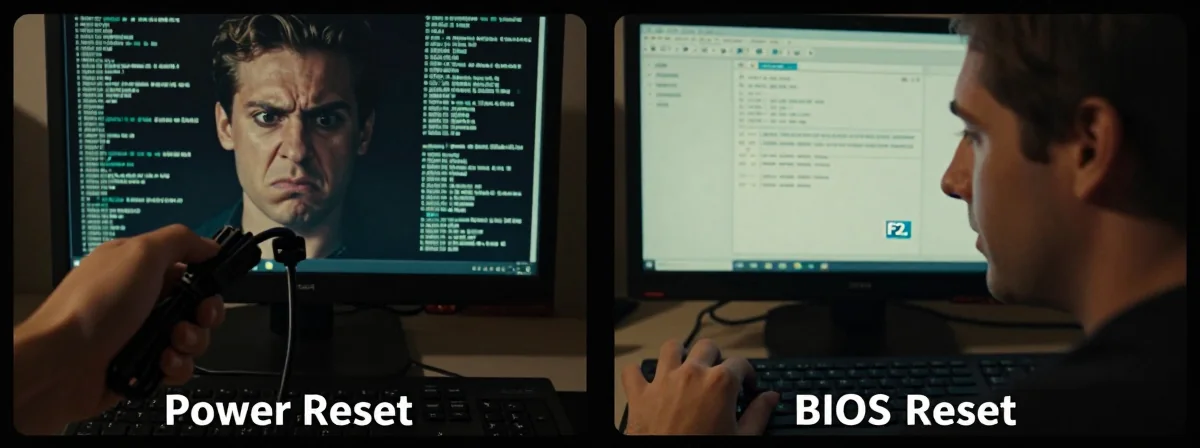
People keep asking me how to fix their devices when they’re stuck in boot loops or won’t power on. Here’s the thing nobody’s talking about—the difference between a power reset and a BIOS reset isn’t just technical—it’s about understanding what your device truly needs.
Looking Deeper
SIDE A The power reset—unplugging the cord, removing the battery, holding the power button for 20 seconds—is a deep cleanse for electronics. It drains residual power that can cause glitches. I’ve seen this save devices from phantom shutdowns and boot loops. It’s simple, universal, and works when your device feels stuck in a cycle. Who needs it? Anyone dealing with erratic behavior or preparing for a fresh start.
SIDE B The BIOS reset—pressing Delete or another key during startup—dives into the device’s core settings. It’s for when the hardware recognizes the OS but something in the configuration is off. This is where you clear firmware issues or restore default settings. It’s less common but essential for advanced troubleshooting. The discussion hint about holding Shift and restarting to access UEFI/BIOS shows how specific this can get.
THE REAL DIFFERENCE After years of using both, I’ve learned the power reset is like emptying a cup before refilling it—it clears the immediate issue. The BIOS reset is like checking the cup’s design—does it have cracks or misalignments? Marketing talks about “quick fixes,” but the truth is, some problems need both. A device that won’t power on might need the power reset first, but if it powers on and still acts weird, the BIOS reset could be next.
THE VERDICT From experience, if your device won’t turn on or is stuck in a loop, start with the power reset. It’s the simpler, more common fix. But if it powers on and you’re getting errors or weird behavior, dive into the BIOS. Don’t jump straight to BIOS—it’s like trying to fix a leaky faucet by rebuilding the pipes. Start simple, then get specific.
In Stillness
Troubleshooting isn’t about finding one magic button—it’s about listening to what the device is telling you. Take a breath before you act. The right reset isn’t about speed; it’s about precision. Trust the process, and you’ll find the calm in the chaos of tech issues.