
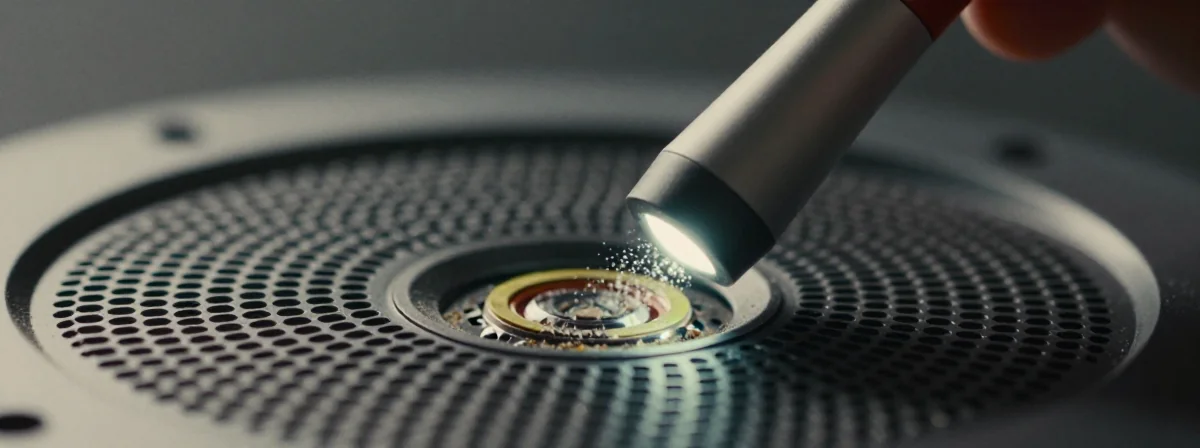
Ever noticed your phone’s speaker sounding like it’s underwater? That muffled, distorted sound is the digital equivalent of a backed-up drain—annoying and frustrating. Most people grab compressed air or give up, but the real solution is far simpler (and weirder) than you think.
Speakers get clogged with dust, lint, and debris because they’re like tiny mechanical systems with open ports—easy targets for gunk. But before you resort to harsh methods, there’s a low-tech, high-efficiency trick that works like a charm.
The secret weapon? A squishy, reusable putty that acts like a digital lint roller.
What Is This Magical Putty, and Why Haven’t You Heard of It?
You might not have heard of Blu-Tack (or its generic equivalents), but it’s a game-changer for speaker cleaning. Think of it as the duct tape of adhesives—sticky enough to grab gunk but soft enough not to damage delicate parts.
Here’s how it works:
- Take a small piece of the putty (about the size of a gum ball).
- Press it gently against the speaker grille.
- Pull it away—the putty will lift the debris like a reverse lint trap.
It’s like using a digital vacuum cleaner that only picks up the bad stuff. And no, it’s not blue everywhere—outside the US, it’s often gray or clear, but the principle is the same.
Why Compressed Air Is a Terrible Idea (And What to Do Instead)
Most people reach for compressed air first, but it’s like trying to unclog a drain by blowing harder—ineffective and messy. Air just pushes debris deeper into the speaker, making the problem worse.
Instead, try these alternatives:
- Soft-bristle toothbrush: Gently scrub the grille to loosen dirt.
- Alcohol-soaked cotton swabs: Dab the edges to dissolve grime.
- Dedicated cleaning apps: Some apps play high-frequency sounds that shake out dust (though results vary).
The putty method, however, remains the most reliable because it physically removes the debris without risking damage.
When to Break Out the Heavy Artillery: Advanced Cleaning Tactics
If the putty and brushes don’t cut it, it’s time for escalation—but proceed with caution.
- Running water (yes, really): For phones with IP ratings, a gentle rinse under lukewarm water can flush out deep-seated grime. Just dry thoroughly afterward.
- Trimmed paintbrushes: Apple Store techs use artist brushes trimmed to a quarter-inch for precision cleaning.
- Vacuuming (carefully): A handheld vacuum on low suction can pull out stubborn particles.
Avoid sharp objects like pins—they’re like using a hammer on a watch; you might win the battle but lose the war.
The Dust-Proof Future: How to Prevent This Problem Entirely
Clogged speakers aren’t just annoying—they’re a symptom of a bigger issue: exposure. If you work in dusty environments (like a lumber mill), consider a waterproof case. It’s like adding a firewall to your phone’s defenses.
Regular maintenance is also key. Think of it like updating software—small, consistent actions prevent major headaches. A quick putty clean every few months keeps your speakers performing like new.
The One Thing That Changes Everything About Speaker Maintenance
Here’s the truth: most speaker problems aren’t hardware failures—they’re maintenance failures. Just like a game console needs occasional dusting, your phone’s speakers need care.
The putty trick isn’t magic; it’s systems thinking applied to a tiny problem. It’s about using the right tool for the job, whether it’s digital or analog. And when you see how well it works, you’ll wonder why you didn’t try it sooner.
Now go clean those speakers—you’ll hear the difference immediately.