
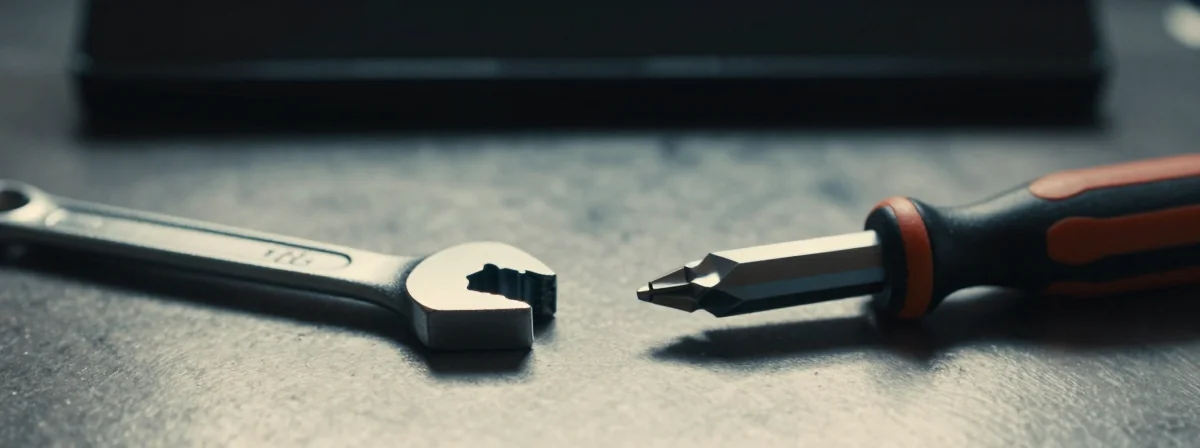
People keep asking me why their cheap laptops fall apart when they try to fix them. They spend hours with the wrong tools, stripping screws, and eventually giving up. Here’s the thing nobody’s talking about—the battle between hex and Torx screws isn’t just about shapes. It’s about access, longevity, and whether you’ll ever see your device working again.
SIDE A Hex screws seem simple—six sides, easy to grip. They work well in consumer electronics where tools are readily available. But when you need precision, hex falls short. As one veteran noted, “You don’t have a Phillips/Torx screwdriver?” The truth is, hex screws are vulnerable to stripped heads when you’re not careful. They’re fine for basic assembly but fail under pressure—literally. If you’re working with standard tools, hex might seem convenient, but it’s a false economy. You’ll find yourself needing specialized bits for anything beyond surface-level repairs.
SIDE B Torx screws—those star-shaped T5 heads in Dell XPS lines—represent a different philosophy. They’re designed for durability and precision. As the discussion revealed, “The XPS line (or at least a ton of models in it) use T5 torx screws. Get yourself a T5 torx screwdriver.” Torx bits distribute pressure evenly, preventing stripping even under torque. They’re the choice for manufacturers who expect their devices to be serviced. But they come with a catch: you need the right tools, and in some regions, those tools are as rare as hen’s teeth. Without a proper T5, you’re truly stuck—no knife, no mallet, no shortcut will save you.
THE REAL DIFFERENCE Here’s what most people miss: the screw type is just the symptom, not the disease. The real divide is between devices designed for repair and those designed to be disposable. Hex screws often hide in products meant to be used, not fixed. Torx screws guard the internals of devices that expect to be opened. But beyond the screws lies a deeper truth—most electronics fail not from physical damage but from human error. As one commenter warned, “why would you try to turn it on, and why would you try to charge it…” The tools matter, but the procedure matters more. You can have every bit in the world, but if you power up a wet device, you’ve already lost.
THE VERDICT From experience, if you’re serious about electronics repair, invest in a proper Torx set—T5 through T20 at minimum. If you’re just opening a device once, maybe hex is fine. But here’s my take: any device worth fixing is worth fixing right. If you’re dealing with premium laptops or anything that costs more than a meal, go with Torx preparation. For throwaway devices, hex might suffice—but why bother? Here’s my advice: buy the tools first, then the device. If you can’t get the right bits locally, that device isn’t worth your time. Simple as that.
The Truth Is Out There
The real battle isn’t between hex and Torx—it’s between preparation and desperation. I’ve seen too many people ruin perfectly fixable devices because they skipped the basics. Don’t be that person. When water meets electronics, the clock starts ticking the moment you power it on. And when you can’t open a device because you lack the right screwdriver, you’re not just stuck—you’ve been set up to fail from the start. The truth is out there, and it’s this: some devices are built to be fixed, and some are built to be replaced. Know the difference before you buy.