
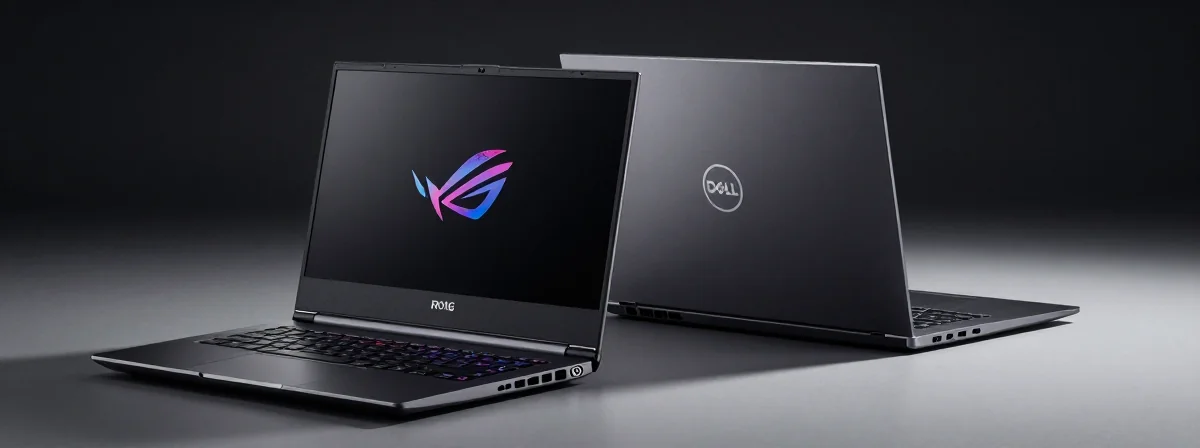
I’ve been using both for years now—gaming rigs that double as workstations. Here’s the thing nobody’s talking about: the gap between brute force and refined elegance is wider than ever. These machines promise power, but only one delivers it with true sophistication.
What Works, What Looks Good
SIDE A The Asus ROG Strix G15 packs a Ryzen 7 6800H and screams performance. It handles intense workloads and gaming sessions with ease—ideal for creators who don’t mind a gamer’s aesthetic. The build is solid, if not premium, and the cooling system actually keeps up with the heat. It’s a no-nonsense machine for those who prioritize raw power over looks.
SIDE B The Dell XPS 15 is the polar opposite—refined, sleek, and built for professionals who value design. Its aluminum chassis and vibrant display make it a joy to use for photo editing or coding. While it doesn’t have the same gaming chops as the Strix, it delivers a smoother, quieter experience for everyday work. It’s the kind of laptop that looks just as good on a coffee table as it does on a desk.
THE REAL DIFFERENCE Here’s what most people miss: the XPS 15’s efficiency is where it truly shines. After years of using both, I’ve found that the Strix G15’s performance spikes are great for bursts, but the XPS 15 delivers steady power without breaking a sweat. The Strix is a beast, but it’s a beast that needs constant attention—fans roaring, temps climbing. The XPS 15, on the other hand, feels like it’s working effortlessly. It’s not just about specs; it’s about how the machine feels day in and day out.
THE VERDICT From experience, if you’re doing heavy gaming or rendering and don’t mind the noise, the Strix G15 is your pick. But if you’re doing creative work and want a machine that feels as good as it performs, the XPS 15’s the clear winner. Don’t let the gamer aesthetic fool you—sometimes, elegance is the real performance booster.
The Design Verdict
The XPS 15 isn’t just a laptop—it’s a statement piece. The Strix G15 has its place, but the XPS 15 proves that performance and design can coexist without compromise. If you’re choosing between the two, ask yourself: do you want a tool, or do you want a masterpiece? The answer will guide you every time.