
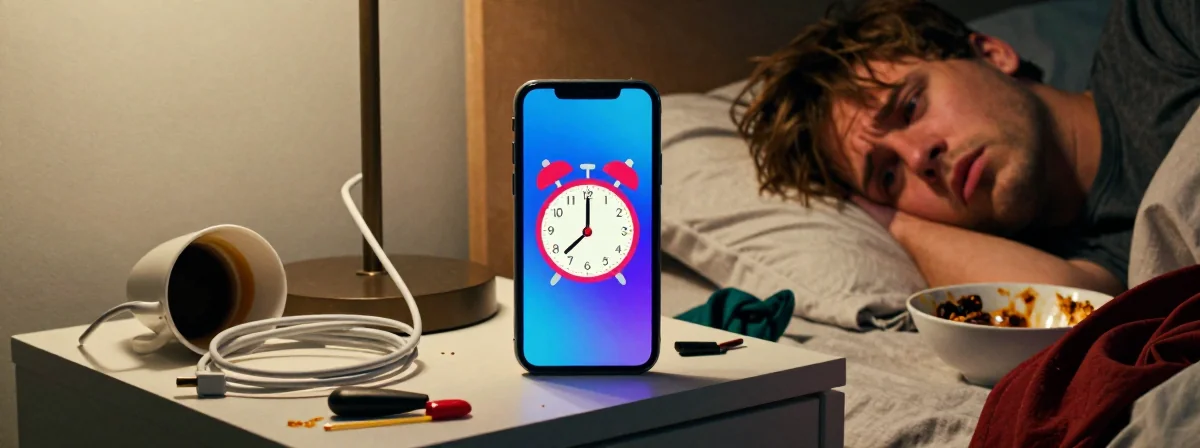
People keep asking me why their phone didn’t wake them up again. Here’s the thing nobody’s talking about—the iPhone alarm isn’t just unreliable, it’s practically a conspiracy theory in hardware form.
The Cold Hard Facts
SIDE A The iPhone alarm promises simplicity but delivers chaos. It occasionally fails to ring at all—sometimes because “Attention Aware Features” thinks you’re already awake, other times because the ringtone volume mysteriously vanishes. Heavy sleepers and early risers have reported missing flights, jobs, and exams because the alarm either went silent or didn’t trigger at all. The phone’s attempt to be “smart” by silencing alarms when it detects your face ends up making it useless as an alarm clock. Even with all settings supposedly correct, the alarm can still fail—leaving users with no choice but to buy backup devices.
SIDE B Every other alarm solution—from dedicated alarm clocks to Android phones to third-party apps like Sleep Cycle or Alarmy—just works. These alternatives don’t try to be “smart” about when you should be woken up; they simply ring at the set time. Android devices, for example, have separate volume controls for alarms that don’t get mixed up with media volume. Even a $50 Android phone used solely as an alarm is more reliable than the iPhone’s built-in option. These devices understand one thing: make noise at the specified time, no questions asked.
THE REAL DIFFERENCE Here’s what most people miss—the iPhone alarm isn’t just a feature, it’s a victim of the phone’s broader design philosophy. Apple prioritizes seamless integration and “smart” features over basic reliability. The same software that dims your screen when you’re not looking can also decide you don’t need an alarm. Meanwhile, other devices treat alarms as a fundamental utility, not a side effect of a multitasking OS. The iPhone’s alarm failures aren’t random glitches; they’re the predictable result of a system that values cleverness over competence. Even when you disable “Attention Aware Features,” the underlying software can still get confused—because making a simple alarm work reliably isn’t a priority when there are more “innovative” features to build.
THE VERDICT From experience, if waking up on time is non-negotiable, the iPhone’s built-in alarm is the clear loser. Heavy sleepers, early risers, and anyone who can’t afford to sleep through an alarm should either use a dedicated alarm clock or an Android device as a backup. If you’re already deep in the Apple ecosystem and can’t bring yourself to use another device, at least keep a cheap backup alarm clock next to your bed—because eventually, your iPhone will fail you. The iPhone might be great at many things, but waking you up isn’t one of them.
None
If you’re someone who’s missed important events because of a silent alarm, you already know what to do. Buy a backup alarm clock. It’s the cheapest insurance policy you’ll ever need. The iPhone’s alarm isn’t just unreliable—it’s actively dangerous for anyone who depends on it. Don’t let Apple’s marketing convince you otherwise.