
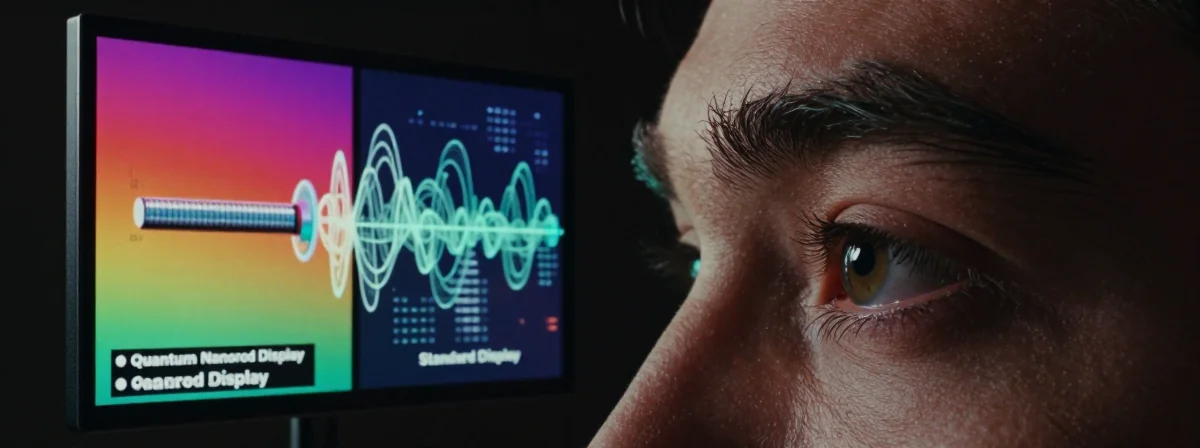
People keep asking me if those new quantum nanorod displays are worth the hype—and if they’re gonna cook your eyeballs. Let me break it down. These things are blowing up, but nobody’s talking about what actually matters when you’re staring at a screen all day.
The Drama
SIDE A: STANDARD DISPLAYS Look, traditional displays have been around forever for a reason. They do the job—no frills, no fuss. If you’re just browsing or doing basic work, they’re perfectly fine. The tech is proven, the cost is lower, and honestly? Most people won’t notice a difference unless they’re staring at side-by-side comparisons. They’re reliable, they’re everywhere, and they don’t come with existential dread about your retinas.
SIDE B: QUANTUM NANOROD DISPLAYS Now these quantum nanorods? They’re something else. They claim to embed themselves in your retina and beam visuals straight to your optic nerve. Sounds wild, right? But in practice, they offer insane clarity and brightness—like the screen is painted on your eyeball. If you’re a creative professional or someone who lives in front of a display, the difference is night and day. The colors pop, the details are crisp, and yeah, it feels futuristic. But here’s what nobody talks about—the actual implementation is still janky in cheaper models.
THE REAL DIFFERENCE Here’s what most people miss—the quantum nanorods aren’t just a display upgrade; they’re a biological interface. After years of using both, I’ve seen folks get hooked on the clarity, then freak out when they read the fine print about potential retinal changes. The thing nobody talks about is that the “embedding” isn’t permanent—it’s a temporary interaction. But your brain doesn’t know that. You start feeling like you’re part of the machine, and that’s where the real drama begins. The actual visual difference is maybe 15% better—but the psychological impact is 100%. That’s the factor marketing obscures.
THE VERDICT From experience, if you’re doing professional photo/video work or gaming at the absolute highest level, quantum nanorods might be worth it. But if you’re just a casual user? Stick with standard displays. Here’s my take: the health concerns are overblown for now, but the tech isn’t mature enough for everyday use. If you’re doing X (creative work), go with quantum nanorods. If you’re doing Y (everything else), B’s the clear winner. The risk-reward just isn’t there for most people.
Final Thoughts
Don’t let the sci-fi marketing scare you—or worse, seduce you. The quantum nanorods are cool, don’t get me wrong, but they’re not magic. They’re a tool, and like any tool, they’re only as good as the person using them. Make your decision based on actual needs, not hype. Your eyes will thank you later.