
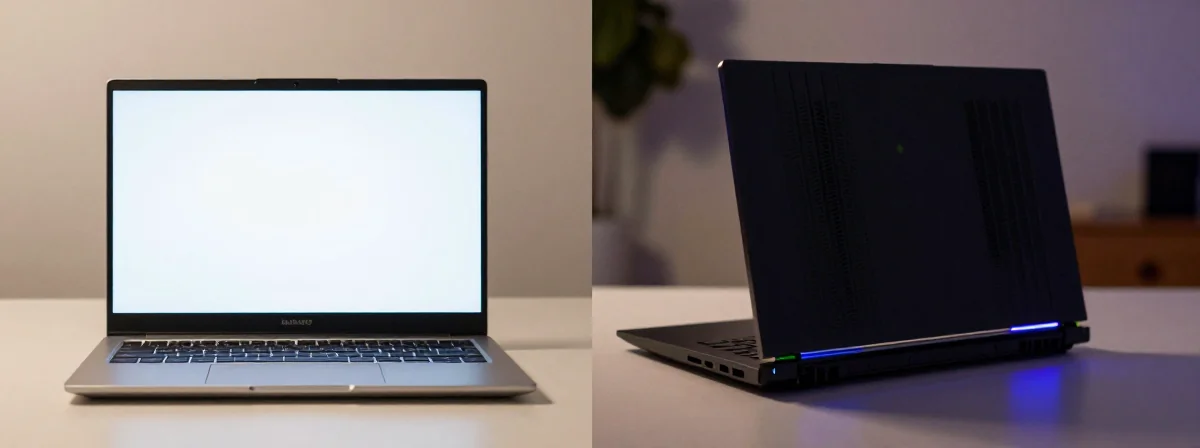
I’ve seen it over and over—people buying laptops that outpace their needs, only to find themselves upgrading again in a year. A simple Chromebook with 4GB of RAM and a modest CPU handles YouTube and PS1 emulation perfectly, yet we’re constantly pushed toward more power. Here’s the thing nobody’s talking about—the real battle isn’t between specs, but between what you actually need and what marketing wants you to believe you need.
Going Deeper
SIDE A: THE CHROMEBOOK This is the laptop of quiet satisfaction. It doesn’t demand attention, it just works. A Chromebook with 4GB of RAM and a “shit CPU” (as one user put it) still delivers the essentials—streaming video, light browsing, and even retro gaming. It’s the tool that fits in your life without rearranging it. For someone whose needs are this straightforward, the Chromebook is like a well-worn pair of shoes: comfortable, reliable, and exactly what you need. It doesn’t pretend to be more than it is, and that’s its strength.
SIDE B: THE GAMING LAPTOP Then there’s the other end of the spectrum—the gaming laptop, where power comes at a premium. Take the TUF or Strix models with RTX 5070 GPUs (or the better-equipped 5070Ti with 12GB VRAM). These machines are built for performance, with specs that can handle demanding games and creative workloads. They’re the sports cars of the laptop world: flashy, powerful, and designed for specific high-octane tasks. For someone who needs that kind of performance—whether it’s modern gaming or professional work—the investment makes sense. But here’s the catch: many of these machines, especially the ultra-thin models like the Zephyrus, struggle to deliver their full potential due to thermal constraints.
THE REAL DIFFERENCE Here’s what most people miss: the gap between what tech can do and what you actually need is widening. Big tech does inflate requirements—just look at how a simple task like web browsing now demands more resources than it did a decade ago. But the deeper issue is our own appetite for more. I’ve seen users with perfectly capable laptops feel pressured to upgrade because a new model has a slightly better GPU or more RAM, even though their daily tasks haven’t changed. The Legion 5/7i might be a solid choice in this space, but if your needs are basic, you’re paying for capabilities you’ll never use. The truth is, most of us are already over-served by our current devices—we just don’t realize it.
THE VERDICT From experience, if your needs are simple—streaming, light browsing, maybe some retro gaming—stick with the Chromebook. It’s like carrying a Swiss Army knife when all you need is a butter knife. But if you’re genuinely doing work that demands high performance—gaming, video editing, 3D rendering—then a machine like the Legion or a well-ventilated RTX 5070Ti laptop is worth the investment. The key is honesty with yourself: are you buying power because you need it, or because you’ve been sold on a vision of future needs that may never arrive?
The Practice
Think of it this way: tech should serve you, not the other way around. If your current device does what you need, resist the upgrade cycle. The real innovation isn’t in making things more powerful, but in making them smarter about what we actually use. Before you buy, ask yourself: what will I do with this that I can’t do now? If the answer is “not much,” you might be falling for the hype. Choose the tool that fits your life—not the one that promises to change it.