
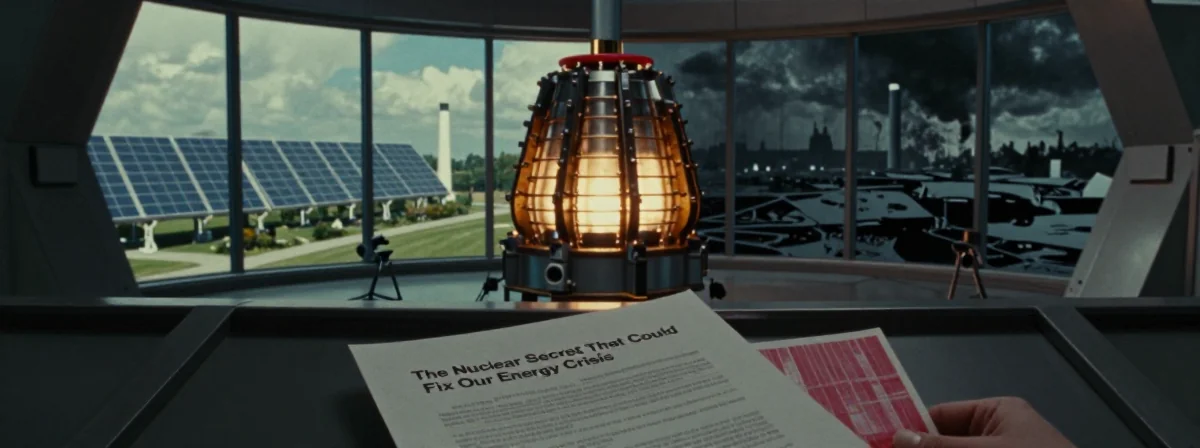
Energy is the lifeblood of civilization, yet we’re still burning ancient fuels like it’s 1850. The math is simple: our current systems are unsustainable, and the alternatives feel either too slow or too risky. But what if the solution has been right under our noses—literally? What if we could mimic the power that fuels stars to solve our energy problems?
The idea of fusing hydrogen into helium isn’t new, but the way we’re approaching it is. Nuclear fusion—the process that powers the sun—could deliver nearly limitless, clean energy. Yet, it’s been relegated to “future tech” status while we continue down a path of diminishing returns. Why?
The truth is, fusion has faced more than just technical hurdles; it’s been held back by outdated fears and a lack of vision. But the tide is changing, and the implications are massive.
Why Haven’t We Already Unlocked Fusion Energy?
If fusion is so powerful, why aren’t we swimming in free energy yet? The short answer: it’s incredibly hard to do. The sun pulls it off effortlessly because it’s a giant ball of plasma with gravity doing all the heavy lifting. On Earth, we have to create those conditions artificially.
The main challenge is containment. Fusion requires temperatures hotter than the sun’s core, and we need to keep that plasma stable without it touching anything that would instantly cool it down. Early experiments struggled with this, leading to skepticism. But recent breakthroughs—like sustained reactions and better magnetic confinement—have shown we’re closer than ever.
Another roadblock has been funding and focus. For decades, fusion research was a side project, overshadowed by more immediate (but ultimately flawed) solutions like fossil fuels and fission reactors. Now, with climate change accelerating, the stakes are higher, and the push is stronger.
What Does “Fusing Hydrogen Into Helium” Actually Mean?
At its core, fusion is about smashing atoms together to release energy. In this case, we’re taking isotopes of hydrogen (like deuterium and tritium) and forcing them to merge into helium. The byproduct? Energy and more helium—a harmless, inert gas.
The beauty of this process is its simplicity and scale. Hydrogen is the most abundant element in the universe, and helium is non-toxic and non-reactive. No CO2, no long-lived radioactive waste (unlike fission), just pure, clean power.
Think of it like this: fission splits heavy atoms (like uranium) into smaller ones, releasing energy but also creating messy leftovers. Fusion does the opposite—it builds something new, cleanly. It’s the difference between tearing down an old building and constructing a new one with precision.
The Economic and Environmental Case for Fusion
Right now, we’re stuck between a rock and a hard place: fossil fuels are destroying the planet, renewables are intermittent, and fission has baggage. Fusion could be the missing piece.
Environmentally, it’s a no-brainer. Fusion doesn’t emit greenhouse gases, and its waste is manageable. A fusion reactor could run for decades on fuel extracted from seawater, making it virtually limitless. Economically, the initial investment is high, but the long-term payoff could dwarf anything we’ve seen.
Imagine a world where energy is so cheap and abundant that scarcity becomes a thing of the past. No more energy wars, no more climate disasters, just reliable power for everyone. That’s the promise of fusion.
Why Are We Still Waiting? The Hurdles Ahead
Despite the potential, fusion isn’t here yet. The biggest hurdle is engineering. We need materials that can withstand extreme conditions, reactors that can sustain reactions continuously (not just for seconds or minutes), and systems that can efficiently capture and use the energy produced.
There’s also the question of scale. Most experiments so far have been small-scale, proving concepts but not yet delivering net energy gain consistently. Projects like ITER (the International Thermonuclear Experimental Reactor) are pushing boundaries, but they’re decades-long endeavors.
Critics argue that by the time fusion is ready, we’ll have other solutions. Maybe. But betting against fusion is like betting against the sun. The technology is inevitable; the question is when.
What Would a Fusion-Powered Future Look Like?
If we crack fusion, the implications are revolutionary. Transportation could be electrified at scale, desalination could become trivial, and industries that rely on massive energy inputs (like steel or fertilizer production) could go green overnight.
Cities might look different too. Instead of sprawling power plants, we could have compact fusion reactors powering entire regions. Energy storage problems would vanish, and the grid could become more decentralized and resilient.
It’s not just about solving the energy crisis; it’s about unlocking a new era of human capability. With fusion, we could finally say we’re living in harmony with the physics of the universe, not fighting against it.
The Final Piece of the Puzzle
Fusion isn’t a silver bullet—it’s the beginning of a new chapter. It won’t magically fix all our problems, but it could give us the breathing room to solve others. Climate change, resource depletion, even space exploration—all could benefit from a clean, abundant energy source.
The nuclear secret isn’t that fusion is impossible; it’s that we’ve been too slow to pursue it. Now, with new approaches and renewed urgency, the stars are aligning. The question isn’t if we’ll fuse hydrogen into helium to fix our energy supply, but when. And when that day comes, it will change everything.