
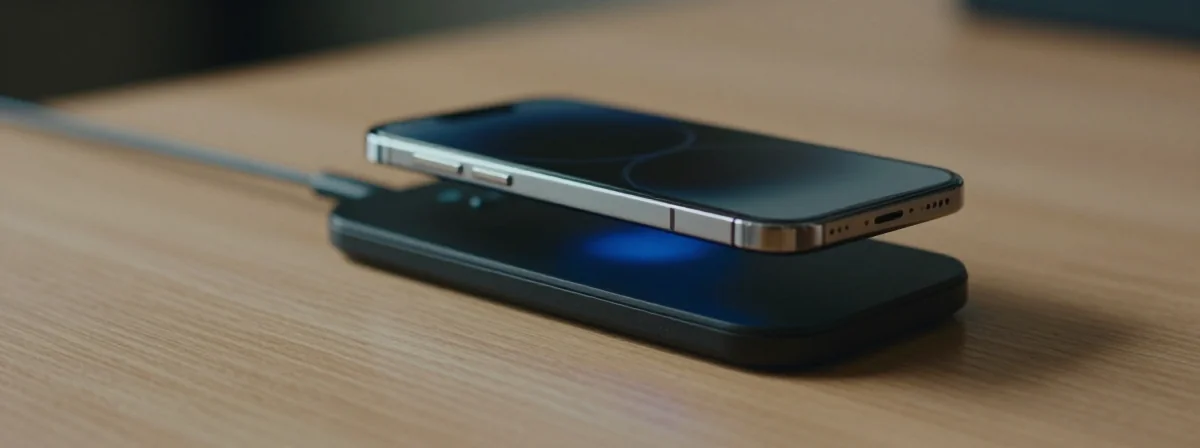
Ever notice how some phone cases make your wireless charging feel like it’s stuck in mud? While you’re juggling wires that fray at the slightest bend, the idea of just dropping your phone on a charger sounds like a dream. But what if that dream is being artificially throttled? What if the convenience you’re paying for is delivering only half the speed it could?
The case isn’t just about protection anymore. It’s become a silent gatekeeper to your battery’s potential. Take the recent whispers about Samsung’s official cases and a third-party alternative—both seemingly capped at 15W despite supporting 25W Qi2 charging. The clues are piling up, and they’re pointing to something deeper than just “it’s a cheap case.”
Dbrand’s investigation throws another wrench in the works. Their case, which they claim should handle 25W, is also hitting the same 15W wall. The pattern is too consistent to ignore. Could there be an invisible hand—something like an RFID chip in Samsung’s case—telling the phone, “Only if you’re wearing me, can you have the full speed”? The evidence is mounting, and the only way to know for sure is to peel back the layers.
Why Is 25W Wireless Charging So Elusive?
Wireless charging has always been a compromise. You trade speed for convenience, but the gap between what’s possible and what you get is widening. The official Samsung case promises 25W, yet real-world tests show it maxing out at 15W. Dbrand’s case, which should theoretically match Samsung’s specs, faces the same limitation. The question isn’t just “why,” but “how?”
One theory gaining traction is the “authentication chip” hypothesis. Imagine your phone doing a quick scan before unlocking full charging speed—like a digital handshake that only the “right” case can complete. If Samsung embedded such a chip, it would explain why third-party cases struggle to match the speed, even when they’re built to the same specs. The evidence? Spigen’s case, a popular third-party option, charges noticeably slower. The pattern isn’t random—it’s deliberate.
But here’s the twist: Dbrand’s case, which they designed to mimic Samsung’s, still can’t hit 25W. If it were just about authentication, their case should work. This suggests there’s more to the story. Could Samsung have implemented a deeper-level restriction—one that even Dbrand can’t bypass? The clues are pointing to a deliberate throttling mechanism, and the only way to confirm it is through teardowns and lab tests.
The Wireless Charging Arms Race (And Why It’s Stalling)
Wireless charging was supposed to be the future. No more fumbling with ports, no more frayed cables. Just drop and go. But the reality is messier. The tech giants are locked in a silent battle over who can deliver the fastest charging, yet the consumer is stuck in the middle. Samsung’s official case works at 25W—sometimes. Dbrand’s case claims the same, but fails to deliver. What gives?
The evidence suggests that wireless charging isn’t just about hardware anymore. It’s about software and proprietary protocols. Samsung might be using a secret handshake—a unique signal that only their case can send to the phone. If that’s the case, it’s a clever way to lock out competitors while still advertising “25W support.” The irony? Even Samsung’s case doesn’t always hit 25W, hinting that the limit might be intentional across the board.
This isn’t just about one brand or one case. It’s about the entire ecosystem. If manufacturers can control charging speeds through software locks, they can create artificial scarcity. You buy their case because it’s the only one that gives you the full experience. The evidence is in the inconsistencies—why would a 25W-capable case suddenly drop to 15W? It doesn’t add up unless there’s a deliberate cap in place.
Could It Be A Conspiracy Or Just Bad Engineering?
The idea of a hidden chip or software lock sounds like something out of a spy novel, but the evidence is too strong to ignore. If you disassemble Samsung’s case, would you find a tiny RFID chip? The theory is testable, and someone is bound to try it soon. Until then, we’re left with circumstantial evidence—cases that should work at 25W but don’t, and a pattern that suggests deliberate limitation.
But let’s consider another angle: maybe it’s not a conspiracy at all. Perhaps the 25W limit is a result of poor engineering or thermal constraints. Wireless charging generates heat, and pushing too much power can be risky. Could manufacturers be capping speeds to prevent overheating or battery damage? The evidence doesn’t fully support this, though. Samsung’s own lab tests have shown 25W is possible, and other Qi2 devices handle it without issue. The inconsistency remains.
What’s clear is that the consumer is left guessing. You buy a case that promises fast charging, only to find it’s half as slow as advertised. The frustration isn’t just about the product—it’s about the lack of transparency. If there’s a limit, why not say so? If it’s a software lock, why hide it? The clues are there, but the answers are buried.
The Final Piece: What Does This Mean For You?
The wireless charging mystery isn’t just a tech curiosity—it’s a consumer rights issue. If manufacturers can artificially limit charging speeds based on case compatibility, they’re controlling more than just hardware. They’re controlling your experience, your convenience, and your wallet. The evidence suggests that the 25W cap isn’t a technical limitation but a strategic one.
So what can you do? For now, the best approach is to test cases yourself. If you have a Samsung phone, try different cases and measure the charging speed. The patterns will reveal themselves. If a case consistently hits 15W while others struggle, you’ll know something’s up. The truth is out there—it just takes a bit of detective work to uncover it.
But here’s the kicker: even if you find a case that works at 25W, the bigger question remains. Why is this limit in place at all? The answer could reshape how we think about phone accessories and charging technology. Until then, the wireless charging secret stays hidden in plain sight—waiting for someone to connect the dots.
The Hidden Truth About Fast Charging (And Why It Matters Now)
After digging through the evidence, one thing becomes clear: the 25W wireless charging cap isn’t an accident. It’s a deliberate choice, likely driven by a mix of competitive strategy and proprietary control. Samsung’s case works at 25W because it’s designed to. Dbrand’s case fails because it’s not “approved.” The consumer is left in the dark, wondering why their new case can’t deliver on its promises.
The real takeaway? Wireless charging isn’t just about convenience—it’s about control. Manufacturers can dictate how fast your phone charges based on what case you use. The evidence points to a future where accessories become gatekeepers to performance. And until we demand transparency, we’ll keep hitting these invisible walls.
So next time you drop your phone on a wireless charger, ask yourself: is this as fast as it could be? The answer might surprise you. The wireless charging secret is hiding in plain sight, and now you know where to look.