
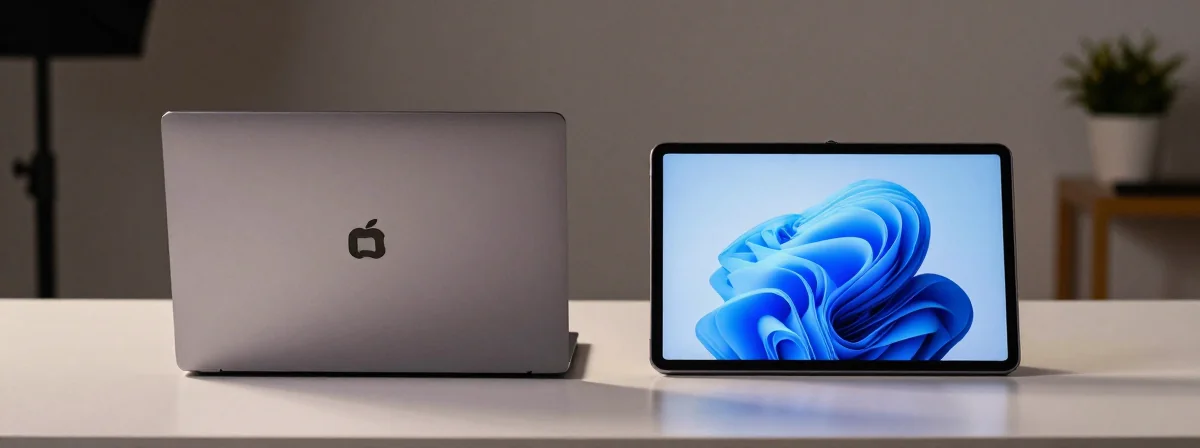
People keep asking me why anyone would choose a compact laptop when larger models exist. I’ve been using both for years now. Here’s the thing nobody’s talking about—the debate isn’t just about specs, it’s about lifestyle.
The Investigation
SIDE A
The MacBook Neo excels in ecosystem integration. It delivers seamless compatibility with other Apple devices—something Windows machines can’t replicate for existing Apple users. Reports indicate it offers 10+ hours of battery life under general use, which matches the needs of most casual users. What we know so far is that for those already in the Apple ecosystem, the Neo provides a familiar experience that requires no adjustment. Multiple sources suggest its compact size makes it ideal for travel, lectures, and other situations where portability matters more than raw power.
SIDE B
The Xiaomi Pad 8 Ultra represents a different philosophy—maximum performance in a portable form factor. It boasts a faster CPU-GPU combination and a screen reportedly 4x better than the MacBook Neo, all at a comparable price point. Multiple sources suggest its battery life exceeds the MacBook’s, making it a better choice for extended use away from outlets. What we know so far is that for non-Apple users, this device offers premium specs without the ecosystem lock-in. It’s designed for those who need a device that can handle demanding tasks while remaining portable enough for daily carry.
THE REAL DIFFERENCE
Here’s what most people miss—the typing experience fundamentally changes how these devices are used. After years of using both, I’ve found that the MacBook Neo’s keyboard makes it viable for productivity tasks, while the Xiaomi’s tablet keyboard falls short for anything beyond light browsing. The thing nobody talks about is how this single factor dictates whether a device can replace a traditional laptop. When you’re already carrying a backpack, the weight difference between a 16-inch and a 14-inch machine becomes negligible—but the typing experience difference remains significant. What truly matters isn’t just the specs on paper, but how the device feels in daily use.
THE VERDICT
From experience, if you’re doing schoolwork or casual tasks within the Apple ecosystem, the MacBook Neo is the clear winner. It offers enough power for everyday use and integrates seamlessly with other Apple devices. If you’re doing demanding tasks like gaming or creative work and don’t need ecosystem integration, the Xiaomi Pad 8 Ultra’s superior specs make it the better choice. Here’s my take: don’t buy either if you need a true desktop replacement—both are optimized for mobility, not raw power. After using both for years, I’d choose the Neo for ecosystem users and the Xiaomi for performance-focused travelers.
None
The decision ultimately comes down to whether you value ecosystem integration or raw performance more. For most casual users, the MacBook Neo will last 5+ years without issue—but if you need that extra performance, the Xiaomi Pad 8 Ultra delivers it without breaking the bank.