
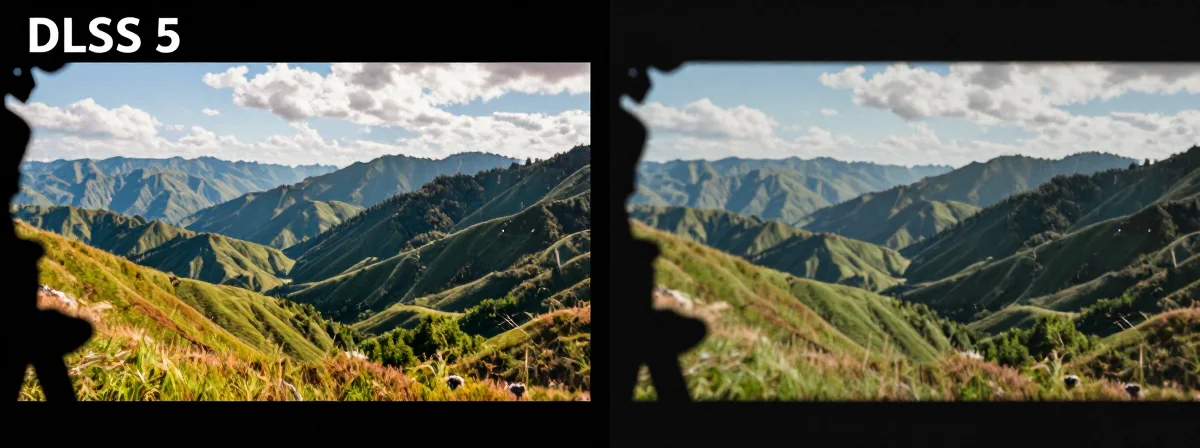
People keep asking me what the real difference is between DLSS 5 and traditional rendering. It’s not just about pixels or performance—it’s about the soul of the technology and where we’re heading. Here’s the thing nobody’s talking about: the debate isn’t just technical; it’s philosophical.
The storm around DLSS 5 has shown us that we’re at a crossroads. On one side, we have cutting-edge neural rendering promising efficiency and visual leaps. On the other, we have the tried-and-true methods that honor the creator’s intent. Let me break it down.
The Practice
SIDE A: DLSS 5 (Neural Rendering) DLSS 5 represents the future of graphics—using AI to generate details that traditional methods can’t. It’s impressive when it works: hair looks more realistic, environments gain depth, and performance gains are significant. For those who prioritize efficiency and cutting-edge tech, DLSS 5 is a game-changer. It’s like a river carving new paths—sometimes beautiful, sometimes unpredictable. The real strength is its potential to push boundaries, but it demands trust in the algorithm.
SIDE B: Traditional Rendering Traditional rendering is the foundation we’ve built on for decades. It’s reliable, predictable, and respects the artist’s vision. When a developer crafts a character or scene, they intend for it to look a certain way—and traditional methods deliver that fidelity. For those who value consistency and artistic integrity, this is the clear choice. It’s like a well-tended garden—everything has its place, and the result is intentional and harmonious.
THE REAL DIFFERENCE Here’s what most people miss: DLSS 5 isn’t just about making things look better; it’s about who has control. Traditional rendering puts the artist first—their vision is preserved. DLSS 5, on the other hand, can override that vision, sometimes in ways that feel intrusive. The technology is powerful, but it’s not always aligned with the creator’s intent. The thing nobody talks about is that DLSS 5’s success depends on the developer’s ability to guide it—something that’s often overlooked in the hype. After years of watching graphics evolve, I’ve seen that the real battle isn’t between tech and tradition; it’s about balance.
THE VERDICT From experience, if you’re developing or playing games where artistic vision is paramount, stick with traditional rendering. If you’re pushing the limits of performance and don’t mind experimenting with new tech, DLSS 5 has its place. Here’s my take: DLSS 5 is a tool, not a replacement. If you’re doing high-fidelity work, go with traditional rendering. If you’re exploring efficiency and don’t mind the trade-offs, DLSS 5’s the clear winner for certain tasks.
None
The key is to approach DLSS 5 with mindfulness—understand its strengths and limitations. Like any powerful tool, it’s only as good as the hands that wield it. Choose the path that aligns with your values, and the technology will serve you well.