
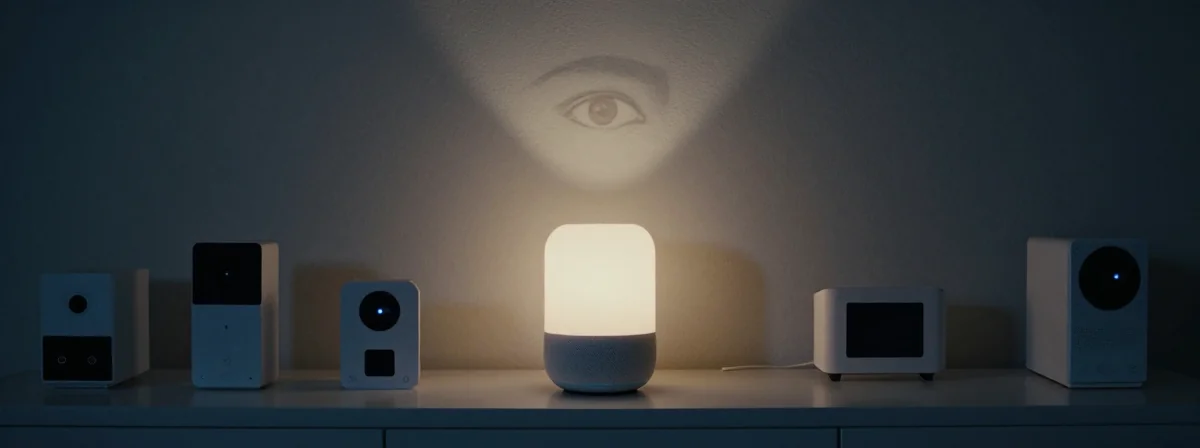
Technology has always been a double-edged sword. It promises convenience, connection, and progress, yet it often carries hidden costs. Today, the devices we bring into our homes—smart speakers, motion sensors, even gaming consoles—are quietly weaving a web of surveillance that could one day become the backbone of authoritarian control. The question isn’t whether this is possible; it’s whether we’re willing to see it before it’s too late.
The devices we trust with our daily routines are increasingly designed to observe, analyze, and report. From motion sensors that track our movements to AI systems that predict our behavior, the line between helpful innovation and invasive monitoring is blurring. What starts as a way to save energy or improve user experience can easily become a tool for control. The story of how everyday tech becomes a weapon for authoritarianism isn’t a dystopian fantasy—it’s already unfolding.
Consider the motion sensor in your living room. It’s meant to turn off lights when you’re not there, right? But what if the same technology is being refined by companies like Facebook and Nvidia to track human behavior at a mass scale? What if the data collected isn’t just about your habits but about everyone’s habits, feeding into systems that could one day decide who gets freedom and who doesn’t?
Why Your Smart Home Could Be the First Step Toward Authoritarian Control
The path from convenience to control is often paved with good intentions. A motion sensor that saves energy today could become part of a network that monitors public spaces tomorrow. Chinese car manufacturers already use Nvidia chips, and China’s government demands access to every device for “security” purposes. This isn’t about hypothetical futures—it’s about how the technology we accept today sets the stage for tomorrow’s possibilities.
The gaming industry offers a stark example. Once seen as harmless entertainment, gaming platforms have increasingly become vectors for ideological influence. The “gaming to fascism pipeline” isn’t just a theory; it’s a documented phenomenon where immersive environments are used to normalize extremist ideas. When you combine this with tech that tracks your behavior—what you click, what you buy, how you move—you create a perfect storm for manipulation.
The Unspoken Alliance Between Tech Giants and Authoritarian Ambitions
Facebook and Nvidia may not be overtly political, but their business models rely on data, and data is power. Peter Thiel, a known advocate of authoritarian ideas, has steered Facebook since its inception. Meanwhile, Nvidia’s chips are everywhere—from gaming consoles to self-driving cars. When you buy a new device, you’re not just purchasing a product; you’re voting for the kind of future you want.
The irony is that most people don’t realize they’re part of this equation. A motion sensor that switches off lights when no one is in the room seems harmless. But what if that same sensor is used in public spaces to track crowds? What if the data is sold to governments looking to suppress dissent? The tech industry’s mantra is “innovation,” but innovation without ethical guardrails is a recipe for disaster.
The Consumer’s Dilemma: Convenience vs. Freedom
You don’t have to buy the latest tech to be affected by it. Companies like “Flock” are already deploying surveillance tech in public spaces, turning streets and malls into monitored environments. The data collected isn’t just about marketing—it’s about control. When you walk past a sensor, you’re being recorded, analyzed, and potentially flagged.
This isn’t about paranoia; it’s about recognizing the direction we’re heading. The tech you reject today might still shape the world you live in tomorrow. That’s why some are choosing to avoid new tech altogether, sticking to devices from 2020 or earlier. They’re betting that the most dangerous changes are still a few years away, but the clock is ticking.
The Hidden Cost of “Smart” Living
Every time you accept a new convenience—voice assistants, smart thermostats, facial recognition cameras—you’re also accepting the infrastructure of surveillance. These devices collect data that can be repurposed in ways you never imagined. A motion sensor that saves energy today could be part of a system that tracks your every move tomorrow. The question isn’t whether this will happen; it’s whether you’ll have a say in it.
The tech industry thrives on the illusion of choice. You can opt out of one product, but you can’t opt out of the system itself. The sensors in public spaces, the data collected by corporations, the algorithms that predict your behavior—they’re all part of a larger ecosystem that’s increasingly beyond your control.
What Can You Do? Small Steps Toward Big Change
The first step is awareness. Recognize that the tech you use isn’t just a tool; it’s a participant in shaping society. Ask questions: Who owns this data? How is it being used? What are the long-term implications?
The second step is choice. You don’t have to adopt every new gadget that comes along. You can choose devices that respect your privacy, companies that align with your values, and technologies that don’t require sacrificing your freedom.
The third step is advocacy. Talk about these issues, share your concerns, and support movements that push for ethical tech. The more people who understand the risks, the more likely we are to create a future where technology serves humanity, not the other way around.
The Real Cost of Ignoring the Signs
Authoritarianism doesn’t emerge overnight. It creeps in through small, seemingly harmless changes. A motion sensor here, a data collection policy there—they’re the building blocks of a system that could one day monitor, control, and punish. The tech you trust today could become the tool that restricts you tomorrow.
The lesson isn’t to reject technology entirely but to engage with it more thoughtfully. Every device you bring into your life is a vote for the kind of world you want to live in. Choose wisely, because the future is being built one sensor at a time.