
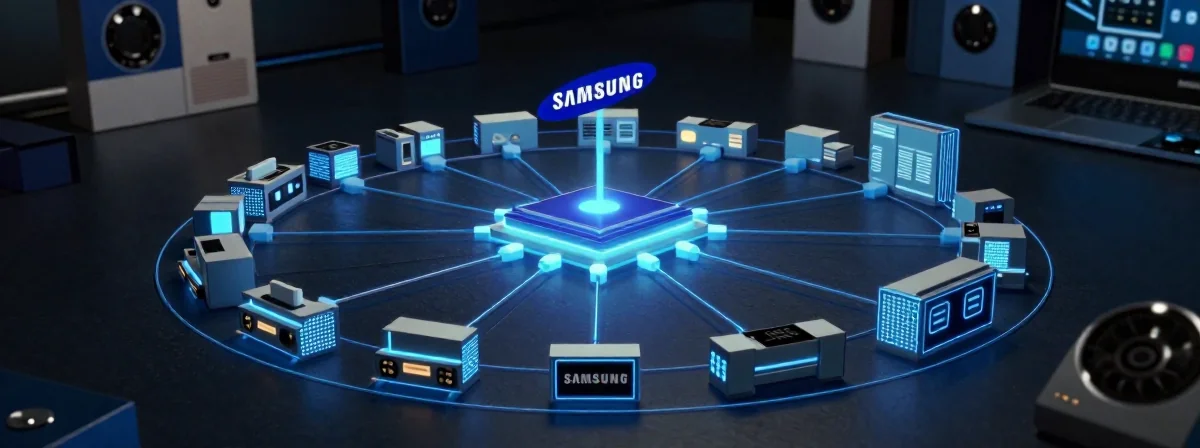
The Note 7 explosion wasn’t just a product failure—it was a symptom of something deeper. When Samsung’s own battery division couldn’t provide safe batteries for its flagship phone, the company turned to multiple suppliers, one of which was Samsung SDI. This paradox isn’t an isolated incident but a pattern woven into the fabric of Samsung’s corporate structure. Like ancient feudal territories under a single crown, Samsung’s divisions operate as independent fiefdoms competing for profit rather than collaborating for collective success.
In the tech world’s version of feudalism, Samsung’s Fabs function as individual corporations that manufacture chips not just for Samsung’s phone division, but for the highest bidder. This structure creates an illusion of vertical integration that’s more mirage than reality. When memory prices rise, Samsung’s memory division finds it more profitable to sell to AI companies than to Samsung’s own phone division—a corporate irony that plays out daily in the tech supply chain.
Why Would a Company Compete With Itself?
Imagine a bakery that grows its own wheat but refuses to use it in its bread because selling the wheat to other bakeries yields higher profits. That’s the Samsung paradox. The company’s divisions operate with their own profit motives, budgets, and leadership teams, creating internal competition that defies conventional business logic. When Samsung Electronics needs memory chips for its phones, it sometimes can’t get them from Samsung’s own memory division because that division has better offers from other companies.
This isn’t about incompetence—it’s about incentives. Each division is evaluated on its own profitability, not on how well it serves the parent company. The memory division’s executives receive bonuses based on their division’s performance, not Samsung’s overall success. This creates a natural tension where internal collaboration becomes secondary to external profit maximization. It’s like a family where each sibling competes to sell the family heirlooms rather than working together to preserve them.
The Illusion of Vertical Integration
Samsung’s brand creates an impression of seamless integration that belies its internal complexity. Looking at Samsung Electronics alone reveals multiple divisions: DX (consumer electronics) splits into MX (mobile), VD (TVs), and DA (appliances), while DS handles “chips” business with Foundry, Memory, and LSI divisions. Add subsidiaries like Samsung SDI (batteries) and Samsung Display, each with their own ownership structures and strategic priorities, and you have a corporate ecosystem that resembles more a constellation of planets than a unified entity.
The ownership web alone tells the story: Samsung Electronics owns 20% of Samsung SDI, while Samsung SDI owns 15% of Samsung Display, which is 85% owned by Samsung Electronics. This circular ownership creates incentives that can work against straightforward business decisions. When Samsung Mobile (MX) sought displays for its phones, it recently contracted CSOT, a competitor to Samsung Display, for cheaper panels—despite Samsung Display being a subsidiary. The profit motive overrides the brand loyalty.
When Profit Trumps Partnership
The most striking example of this internal competition emerged when memory prices rose. Samsung’s memory division, finding more lucrative offers from AI companies, declined to supply Samsung’s phone division. The result? Samsung phones used competitor memory (like Micron RAM) even as Samsung manufactured its own superior memory chips. This isn’t about Samsung not having enough memory—it’s about its memory division choosing not to supply its sister division.
This dynamic creates a strange economic reality where a company’s divisions effectively become competitors in the marketplace. Samsung’s chip division competes with other chip manufacturers—not just for external customers, but for its own parent company’s business. It’s like a parent with multiple children where each child competes to sell the family’s goods to the highest bidder, regardless of whether that bidder is a stranger or another family member.
The Consumer Cost of Corporate Feudalism
This internal competition doesn’t stay contained within corporate walls—it trickles down to consumers in several ways. First, it creates supply shortages for Samsung’s own products, forcing the company to use less optimal components or delay product launches. Second, it inflates costs as Samsung’s divisions can’t leverage the economies of scale that true vertical integration would provide. Third, it leads to inconsistent product quality as different divisions make compromises to secure supplies.
Consider the pricing: a base S26 Ultra starts at £1,279, rising to £1,700 for the fold model and up to £2,100 for premium versions. When consumers question these prices, they’re often told it’s due to component costs—but the reality is more complex. Some of that premium covers the inefficiencies created by Samsung’s fragmented structure, where internal competition prevents the kind of cost optimization that comes with genuine vertical integration.
Beyond Samsung: A Pattern in Tech
Samsung’s structure isn’t unique—it’s a template for modern tech conglomerates. Sony and other large tech companies similarly operate as collections of semi-independent divisions under a single brand. This model offers the institutional benefit of brand recognition without the operational benefits of integration. It’s “privatize the gains and socialize the losses” with a corporate twist: each division captures its own profits while the parent brand absorbs the reputational costs of internal dysfunction.
The result is a paradoxical situation where consumers experience the downsides of competition (higher prices, inconsistent quality) without the benefits (innovation, better products). It’s like living in a world where each city in a country competes to attract tourists rather than collaborating on national tourism strategies. The individual cities may prosper, but the country as a whole suffers from a fragmented approach.
The Future of Fragmented Corporations
As this model continues, we might see more of what some call “corpo-feudalism” in the tech industry. Companies will increasingly operate as collections of independent profit centers rather than unified entities. This has profound implications for innovation, pricing, and consumer experience. When divisions can’t reliably supply each other, product development becomes a game of supply chain roulette rather than strategic planning.
The irony is that in an era where vertical integration is often praised as a competitive advantage, companies like Samsung demonstrate how such integration can be undermined by internal structures that prioritize divisional profits over corporate synergy. It’s a reminder that organizational structure isn’t just about boxes on an org chart—it’s about how incentives align (or misalign) across the enterprise.
The Hidden Lesson in the Chip Wars
What Samsung’s internal structure reveals is a fundamental truth about modern corporations: they’re not monolithic entities but ecosystems of competing interests. The tech that seems so seamless in our hands results from complex internal negotiations that often prioritize short-term divisional profits over long-term corporate health. This isn’t about Samsung being “bad” or “good”—it’s about how large organizations inevitably develop internal dynamics that can work against their stated goals.
The next time you hold a new smartphone, consider the invisible corporate battles that shaped it. The chip in your hand might have been manufactured by a division that actively competed against its parent company to sell that chip. This isn’t just an interesting corporate fact—it’s a window into how modern businesses operate, and how the structures we create to achieve success often create their own, unexpected challenges. The real innovation isn’t just in the products we create, but in how we organize ourselves to create them.