
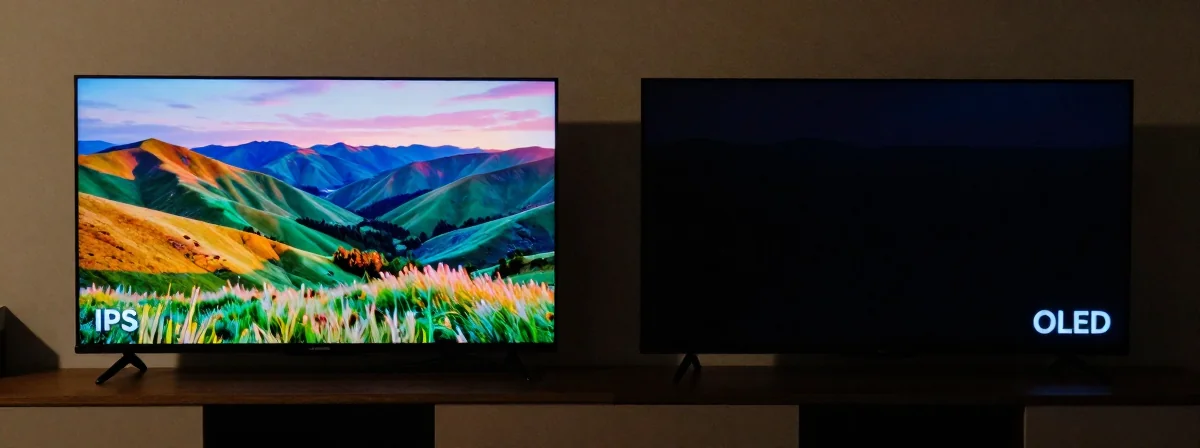
People keep asking me why their new monitor looks weird when there’s black on screen. After years of using both for years now, here’s the thing nobody’s talking about…
Here’s What Matters
SIDE A IPS panels are everywhere for a reason—they offer great color accuracy and wide viewing angles. But they come with a fundamental flaw: backlight bleed. That annoying glow around dark edges? It’s normal because IPS tech can’t turn off individual pixels. You can adjust brightness or even try disassembling the bezel to relieve pressure, but it’s never perfect. It’s fine for most office work and general use—just don’t expect true blacks.
SIDE B OLED screens solve the black-level problem completely by lighting pixels individually. No glow, no bleed—just pure, perfect blacks. They’re why MacBooks look so good and why my old Predator monitor was better out of the box. The tradeoff? They’re more expensive and less common in gaming setups. But if you want what professionals and serious creatives use, OLED is the clear winner—especially for content where dark scenes matter.
THE REAL DIFFERENCE Here’s what most people miss: the difference isn’t just technical—it’s about your actual workflow. Backlight bleed on IPS panels doesn’t bother you when you’re browsing or writing, but it drives you crazy during dark scenes in movies or games. After years of using both for years now, I’ve learned that the “good enough” IPS panels dominate the market because they’re cheaper to make. But if you ever edit photos, watch movies, or play games in dark environments, you’ll eventually hate your IPS monitor.
THE VERDICT From experience, if you’re doing anything beyond basic office tasks, go with OLED. It’s the clear winner for anyone who cares about image quality. If you’re on a budget or need a monitor for casual use, IPS is fine—just accept the compromises. Here’s my take: don’t buy an IPS panel for anything more than $200 unless you’ve seen it in person and the bleed is acceptable to you.
What Now?
Stop chasing perfect specs and look at the screens yourself. The difference between IPS and OLED isn’t theoretical—it’s what you see every day. If you can’t live with the compromises of IPS, save up for OLED. Don’t waste money on a monitor that’ll annoy you in a month. Make your choice based on what actually matters to your eyes, not just what the specs say.