
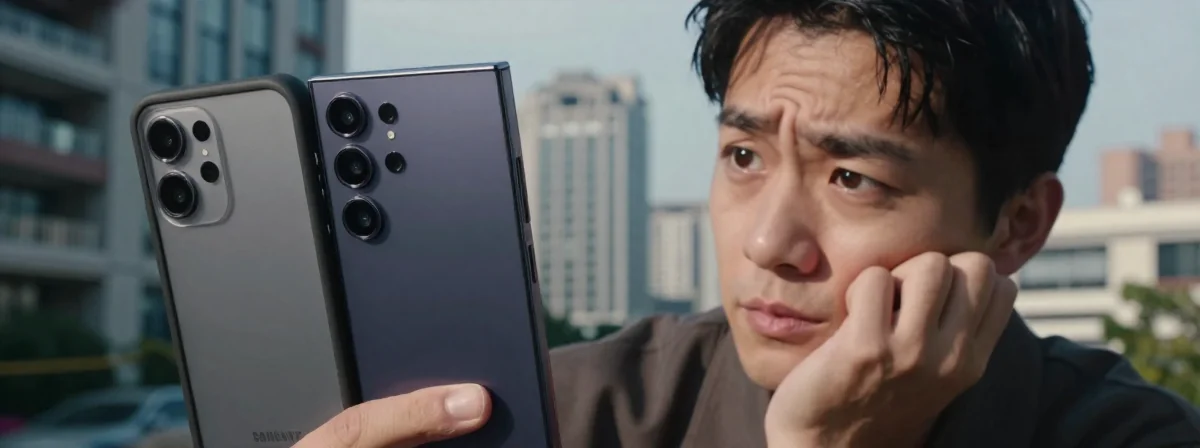
People keep asking me why anyone would stick with a cracked phone when a new one is just a purchase away. I’ve been using both high-end and budget phones for years now, and the answer isn’t as simple as “get a new one.”
Here’s the thing nobody’s talking about—premium phones often feel like a trap. You pay top dollar for incremental upgrades, then what? You’re stuck with repair costs that could buy you a decent mid-range phone. Let me break it down.
Let’s Be Honest
SIDE A: THE PREMIUM ROUTE (SAMSUNG S25 FE OR A56) Premium phones like the S25 FE or A56 look great on paper—Samsung’s ecosystem, good software support, and that familiar feel. They handle everyday tasks smoothly, and if you’re coming from an S23+, the transition is seamless. But here’s the catch: you’re paying for the brand, not necessarily for features you actually need. The screen size, battery life, and performance are all solid, but do you really need the latest processor to check emails and scroll through Reddit? Probably not. And when that screen cracks again, you’re back to square one with another £200 repair bill. It’s like buying a luxury car just to commute to the grocery store—overkill and financially questionable.
SIDE B: THE PRACTICAL ROUTE (PIXEL 10A, ONEPLUS, MOTOROLA) Mid-range phones like the Pixel 10a, OnePlus, or Motorola offer a refreshing change. They do 90% of what premium phones do, minus the price tag and the anxiety of accidental damage. The Pixel 10a, for instance, runs smooth as silk, even with “Google bloatware” (which, let’s be real, you barely notice unless you’re actively looking for it). OnePlus and Motorola phones are durable, often with replaceable batteries—something the EU is finally forcing manufacturers to consider. For someone who mostly uses their phone for browsing, messaging, and light gaming, these phones are more than enough. And when (not if) you drop it, you won’t feel the financial sting as much.
THE REAL DIFFERENCE Here’s what most people miss: durability and long-term value. Premium phones are built to impress, not necessarily to last. They’re sleek, thin, and fragile—qualities that look good in ads but suck in real life. Mid-range phones, on the other hand, often prioritize practicality. They might not have the “premium” feel, but they’re built to survive accidental drops and don’t force you into expensive repairs. After years of using both, I’ve found that the mid-range phones hold up better over time. They don’t push you into upgrade cycles, and they’re more forgiving when you inevitably make a mistake (like dropping your phone on concrete).
THE VERDICT From experience, if you’re doing light to moderate use—Reddit, Discord, emails, occasional gaming—you don’t need a premium phone. Go with a mid-range option like the Pixel 10a or a durable OnePlus/Motorola model. If you’re someone who absolutely must have the latest features, can’t live without a seamless ecosystem, and has the budget to handle repairs, then the S25 FE or A56 is your ride. But let’s be real—most of us fall into the first category. Here’s my take: unless you’re a power user or a tech enthusiast, skip the premium and save yourself the headache and the expense.
Food for Thought
If you’re still on the fence, ask yourself this: what’s the last premium feature you actually missed on a mid-range phone? Chances are, the answer is nothing. Mid-range phones have caught up so much that the only real difference is the price tag—and that’s a difference that actually matters. So next time you’re considering a new phone, think practical, not premium. Your wallet will thank you.