
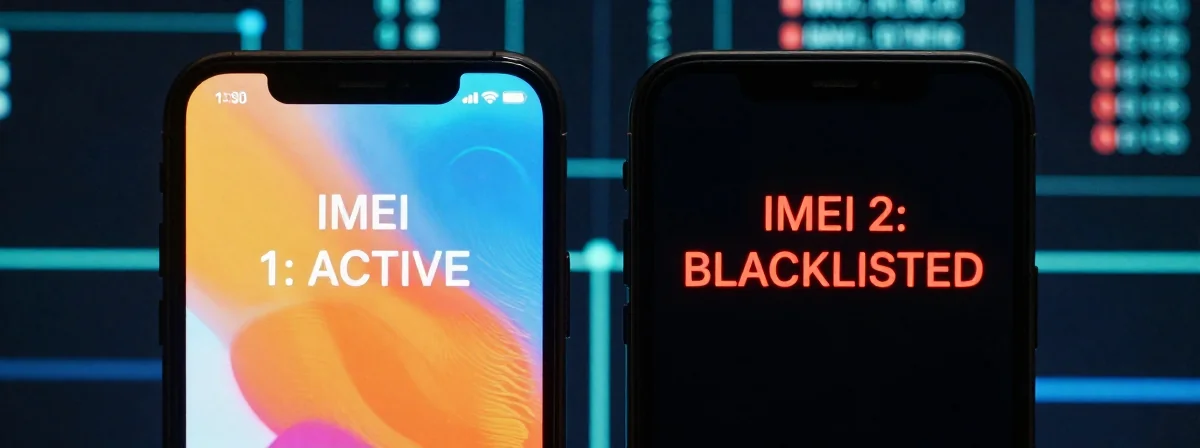
People keep asking me why a phone would get blacklisted on one IMEI but not the other. It’s like a dual-core processor where one core gets bricked while the other keeps running—confusing until you understand the system. Here’s the thing nobody’s talking about—the IMEI duet isn’t equal, and that asymmetry is the key.
Under the Hood
SIDE A: IMEI 2 BLACKLISTING This is the more common scenario—IMEI 2 gets flagged while IMEI 1 remains clean. It’s like having a backup account that gets locked while your primary stays open. Carriers often only block one IMEI when dealing with lost devices, especially in regions where dual-SIM usage isn’t universal. The phone still functions on the primary IMEI, which is why many sellers push these devices as “partially usable.” It’s a stopgap solution that keeps the hardware somewhat functional while dodging a full ban.
SIDE B: IMEI 1 BLACKLISTING IMEI 1 being blacklisted is the nuclear option—like getting your main gaming account permanently banned. This typically happens when fraud is involved, not just loss. The phone becomes completely unusable with any carrier, turning it into an expensive paperweight. The fact that IMEI 1 was blocked in this case suggests the seller was dealing with stolen goods, not just a lost device. It’s the difference between a soft ban and a hard brick.
THE REAL DIFFERENCE Here’s what most people miss: IMEI 1 is the primary identifier tied to the device’s original contract and carrier registration. IMEI 2 is often an optional dual-SIM feature that carriers don’t always monitor as strictly. When fraud is involved, the original owner knows IMEI 1 and can flag it through their carrier. But IMEI 2 might be unknown to them or not monitored in the same way. This creates a loophole that unscrupulous sellers exploit—selling phones that technically work on one SIM while hiding the permanent ban on the other. It’s like selling a car with a revoked title but a working VIN plate.
THE VERDICT From experience, if you’re buying a used phone and one IMEI is blacklisted, you’re playing with fire. If you absolutely need the device to work on any carrier, walk away from IMEI 1 blacklisted phones. For IMEI 2 blacklisted devices, proceed with extreme caution—only if you can verify the unlock code and don’t need dual-SIM functionality. Here’s my take: if you’re not a tech expert who can work around these issues, don’t buy phones with any blacklisted IMEI. The risk isn’t worth the potential savings.
None
The IMEI system is designed to track devices, not protect buyers. Always verify both IMEIs through your carrier before purchase—treat it like checking the motherboard serial number before buying a used PC. This one verification step could save you from a $1000 paperweight.