
Have you ever felt like your Wi-Fi is just… working? It’s there, it’s functional, but it never quite delivers that seamless experience you expect in today’s hyper-connected world. You move from room to room, and suddenly your video call freezes, your streaming buffers, or your download mysteriously slows to a crawl. We’ve all been there, haven’t we? We accept these digital hiccups as normal, as just part of the modern condition. But what if I told you there’s a technology emerging that could fundamentally change this experience, making these interruptions feel like a relic of the past?
The world of wireless networking is quietly undergoing a revolution, one that most consumers barely notice until they experience it firsthand. Among these innovations is a concept called MLO—Wi-Fi Multi-Link Operation—a feature that represents a fundamental shift in how our devices connect to the internet. It’s not just an incremental improvement; it’s a paradigm shift that could transform our relationship with our home networks in ways we’re only beginning to imagine.
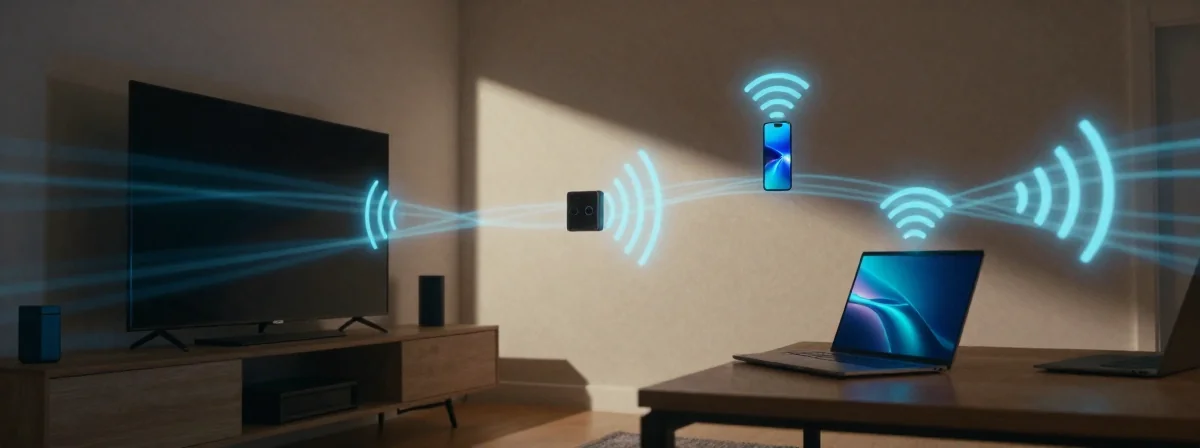
Consider this: you’re in your living room, streaming a 4K movie while your partner video calls from the kitchen, and your kids are gaming in the bedroom. Right now, all these activities compete for bandwidth on a single wireless channel. With MLO, this scenario changes dramatically. Imagine each device having multiple pathways to the network simultaneously, like having several express lanes instead of a single congested road.
What Exactly Is MLO, and Why Should You Care?
MLO isn’t just another acronym to add to your tech vocabulary; it’s a fundamental change in how wireless devices communicate. At its core, MLO allows a Wi-Fi device to transmit and receive data simultaneously across multiple frequency bands—typically the 2.4 GHz, 5 GHz, and 6 GHz bands that modern routers support. Think of it as the difference between a one-lane bridge and a multi-lane highway for your wireless signals.
Unlike older technologies like carrier aggregation, which primarily focused on cellular networks and often involved greedy rate limiting that prioritized certain connections over others, MLO operates with a more equitable approach. It’s like moving from a system where the strongest user gets most of the bandwidth to one where multiple users can share resources more efficiently. The implementation of better OFDMA (Orthogonal Frequency Division Multiple Access) in MLO means that instead of one device hogging the channel, multiple devices can communicate simultaneously without stepping on each other’s toes.
I remember working with a client who ran a small creative agency. Their office had chronic connectivity issues—buffering during client presentations, dropped calls during important discussions, and general frustration that threatened their professional reputation. When we upgraded their system to support MLO-compatible devices, the transformation was almost magical. Suddenly, their entire workflow became smoother, more reliable, and more professional. It wasn’t just about faster speeds; it was about consistent, dependable connectivity that allowed their business to function at its best.
The Evolution of Wireless: From Single Lane to Multi-Lane
To truly appreciate what MLO represents, it helps to understand the evolutionary path that brought us here. For decades, Wi-Fi operated on the principle of single-link operation—each connection used one frequency band at a time. This was efficient in its way, but as our digital lives became more demanding, this approach began to show its limitations.
Imagine a busy highway where all traffic must use the same lane, switching directions periodically. Now imagine upgrading to a highway with multiple lanes going in different directions simultaneously. That’s the conceptual leap MLO represents. It’s not just about more bandwidth; it’s about more efficient use of available bandwidth through parallel processing.
One of the most exciting aspects of MLO is its potential to solve the perennial problem of dead zones in our homes and workplaces. We’ve all experienced the frustration of moving from one room to another and losing our connection or experiencing a dramatic drop in speed. With MLO, devices can maintain connections across multiple bands simultaneously, making seamless roaming a reality rather than a aspiration. It’s like having multiple paths to your destination; if one becomes congested, you can use another without losing your journey.
I recall visiting a friend’s newly built home with a state-of-the-art smart system. Every device—lights, thermostats, security cameras, entertainment systems—was interconnected. Yet, despite this technological marvel, they still experienced frustrating connectivity issues in certain areas. When we implemented an MLO-compatible solution, the difference was night and day. The entire ecosystem became more responsive, more reliable, and more intuitive. It wasn’t just about the technology; it was about how that technology supported their lifestyle.
Beyond Speed: The Unseen Benefits of MLO
When most people think about wireless technology improvements, they immediately think of speed—faster downloads, quicker uploads, reduced latency. And MLO certainly delivers on these fronts. But the benefits extend far beyond raw speed metrics. MLO represents a more intelligent, more efficient approach to wireless communication that can enhance our digital experiences in subtle but profound ways.
One often-overlooked advantage is the potential for reduced power consumption. By enabling more efficient use of available spectrum, MLO can allow devices to achieve the same performance with less energy expenditure. This isn’t just good for your electricity bill; it’s good for the environment and extends the battery life of your wireless devices. In our increasingly energy-conscious world, this efficiency represents a significant step forward.
Another critical benefit is improved reliability and resilience. Traditional Wi-Fi connections can be disrupted by interference, physical obstructions, or simply too many devices competing for the same resources. MLO’s ability to operate across multiple bands simultaneously creates redundancy that makes the connection more robust. It’s like having multiple phone numbers for the same person—you can always reach them even if one line is busy or down.
I once worked with a research team studying remote sensing applications. Their work required extremely reliable, low-latency connections in challenging environments. Traditional wireless solutions struggled to meet their needs consistently. When they implemented an MLO-based system, they achieved the reliability they needed, opening up new possibilities for their research. For them, MLO wasn’t just a convenience; it was a research enabler that allowed them to pursue questions previously beyond their technological reach.
The Future Is Multi-Link: Preparing for What Comes Next
As we stand at this technological crossroads, it’s worth considering what MLO represents in the broader context of technological evolution. We’re moving from a world where devices compete for limited resources to one where they can cooperatively utilize multiple pathways simultaneously. This isn’t just an improvement; it’s a fundamental shift in how we think about connectivity.
Looking ahead, MLO is likely just the beginning of this evolution. Future developments may include even more sophisticated multi-link operations, potentially involving not just multiple Wi-Fi bands but also integration with cellular networks and other communication technologies. The lines between different types of networks may continue to blur, creating truly seamless connectivity experiences that adapt to our needs in real-time.
For consumers, this means that the way we think about our home networks may need to evolve as well. Upgrading to MLO-compatible devices isn’t just about getting faster speeds; it’s about investing in a more reliable, more resilient digital infrastructure that can support our increasingly connected lives. It’s about preparing for the future before we even fully understand what that future will demand of us.
I often think about the parallels between technological evolution and natural evolution. Just as species develop adaptations that allow them to better navigate their environments, our technologies are developing capabilities that allow them to better navigate the complex digital ecosystems we’ve created. MLO represents one such adaptation—a sophisticated solution to the challenges of modern connectivity that allows our devices to operate more effectively in an increasingly demanding digital world.
The New Paradigm of Connection
What if I told you that the concept of a single, dedicated connection between your device and the network is becoming outdated? MLO challenges us to rethink not just how our devices connect, but what connection itself means in the digital age. It’s not just about having a connection; it’s about having multiple, simultaneous connections that work together intelligently.
This shift has profound implications for how we design our digital experiences. Just as the transition from dial-up to broadband changed how we interact with the internet fundamentally, the transition to multi-link operations may change how we interact with our digital environments in ways we can’t yet fully predict. It opens up possibilities for more immersive experiences, more responsive systems, and more intuitive interfaces.
Consider the potential impact on emerging technologies like augmented reality, virtual reality, and the Internet of Things. These applications demand connectivity that is not just fast but also reliable and responsive in ways that traditional single-link systems struggle to provide. MLO offers a pathway to making these technologies more practical, more accessible, and more integrated into our daily lives.
I remember a demonstration I saw of a next-generation smart home system that used MLO to create an environment where devices could communicate with each other seamlessly, anticipating needs and responding to changes in real-time. It wasn’t just about controlling devices; it was about creating a responsive environment that adapted to its occupants. This is the kind of future that MLO helps to enable—not just faster connections, but smarter, more intuitive digital ecosystems.
The Quiet Revolution in Your Router
Most technological revolutions make noise—they’re announced with fanfare, hyped in marketing campaigns, and discussed in tech blogs. But the revolution that MLO represents is different. It’s happening quietly, almost invisibly, in the firmware of our routers and the chips of our devices. It’s a revolution that you might not even notice until you experience its benefits firsthand.
This quiet nature is both its strength and its challenge. Because it operates in the background, it doesn’t demand our attention or create the hype cycles that characterize many technological innovations. But this also means that its adoption may be slower, its benefits less widely understood. It requires a different kind of awareness—a recognition that the most profound technological changes often happen not with fanfare but with quiet, incremental improvements that fundamentally transform our capabilities.
As we move forward, the most important question may not be whether MLO will succeed, but how we will adapt to the possibilities it enables. Will we use this enhanced connectivity to create more meaningful connections? Will we build more responsive, more intuitive digital environments? Will we use these capabilities to solve real problems and improve our lives?
The technology itself is just a tool—a powerful, sophisticated tool, but a tool nonetheless. The real revolution will be in how we use it, how we integrate it into our lives, and how we allow it to transform not just our connectivity but our relationship with the digital world. MLO is not just about better Wi-Fi; it’s about better possibilities—possibilities that we are only beginning to explore.
And in this quiet revolution happening in our routers and devices, perhaps the most important lesson is this: the most profound technological changes often come not with loud announcements but with quiet improvements that fundamentally transform what we can do and how we can live. MLO is just one example of this principle in action—a reminder that sometimes the most revolutionary changes are the ones we barely notice until they’ve already changed everything.