
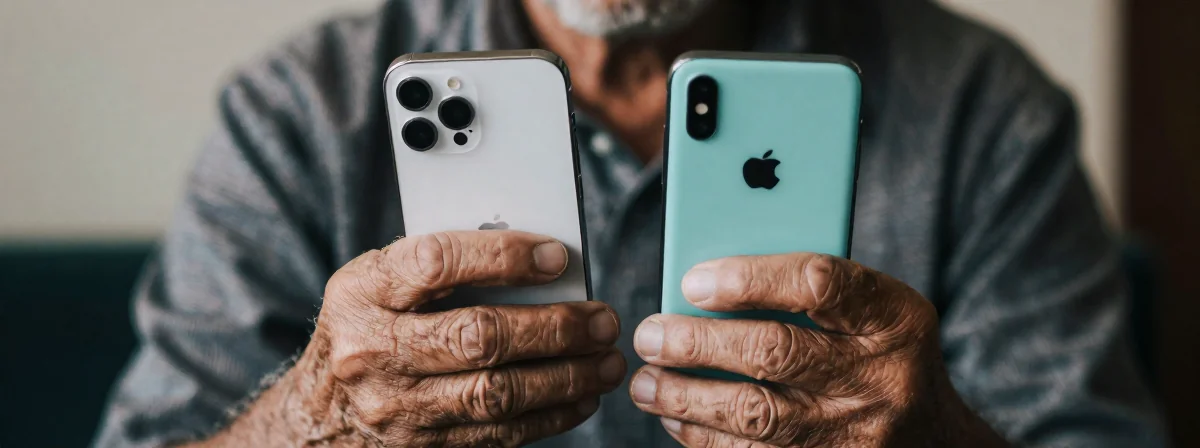
People keep asking me—after years of using both ecosystems—what really matters when choosing between iPhone and Android. The debates rage on about cameras, speakers, and screen tech, but here’s the thing nobody’s talking about: it’s less about specs and more about the rhythm of your daily life.
Here’s the real comparison that cuts through the hype.
The Lesson
SIDE A
The iPhone offers a seamless, predictable experience. Its strengths lie in consistency—speakers that deliver rich bass, cameras that produce reliably good photos, and a battery life that holds steady. Some find the keyboard and navigation clunky at first, but those who stick with it often reach a point where the system just works without constant tinkering. The ecosystem integration is like a well-pruned garden—everything has its place, and it requires minimal maintenance. Even the lens caps, despite complaints, serve to protect what many consider the most valuable feature of the device.
SIDE B
Android provides a customizable, flexible experience. Its strengths are in adaptability—whether it’s tweaking settings like disabling rendering updates for smoother scrolling, or mapping the action button to personalized functions. The variety means you can optimize it precisely to your needs, from file management to notification styles. Those who come from Android often miss certain freedoms, but many eventually find themselves comfortable in the iPhone’s more contained environment once they adapt their habits. The ability to fine-tune every aspect is like having a workshop instead of a finished product.
THE REAL DIFFERENCE
Here’s what most people miss: the iPhone is like a well-tuned instrument that plays beautifully with minimal effort, while Android is like learning to compose your own music. The veteran insight is that neither is inherently better—what matters is whether you want a tool that works immediately or one you can shape over time. After years of using both, I’ve realized the true divide isn’t technical capability, but psychological comfort. The iPhone demands patience to appreciate its subtleties, while Android rewards those who enjoy configuring their environment. The battery drain from optimizing performance, the learning curve of new navigation, these aren’t flaws—they’re choices about how you want to interact with technology.
THE VERDICT
From experience, if you value time above all else, the iPhone is the clear winner. If you enjoy the process of making technology work exactly how you want, Android will serve you better. Here’s my take: if your phone is just a tool to get things done, go with iPhone. If it’s an extension of your personality and workflow, Android’s the clear winner. After using both for years, I’ve seen people who can’t go back either way—not because one is objectively superior, but because they’ve found their rhythm.
The path forward is simple: consider how much energy you want to invest in your device. If it’s a source of frustration, perhaps it’s not the device but the mismatch between your needs and its design. Like the lens caps that some throw away—what seems unnecessary might actually be protecting something valuable. Choose the ecosystem that aligns with how you naturally engage with technology, and the rest will fall into place.