
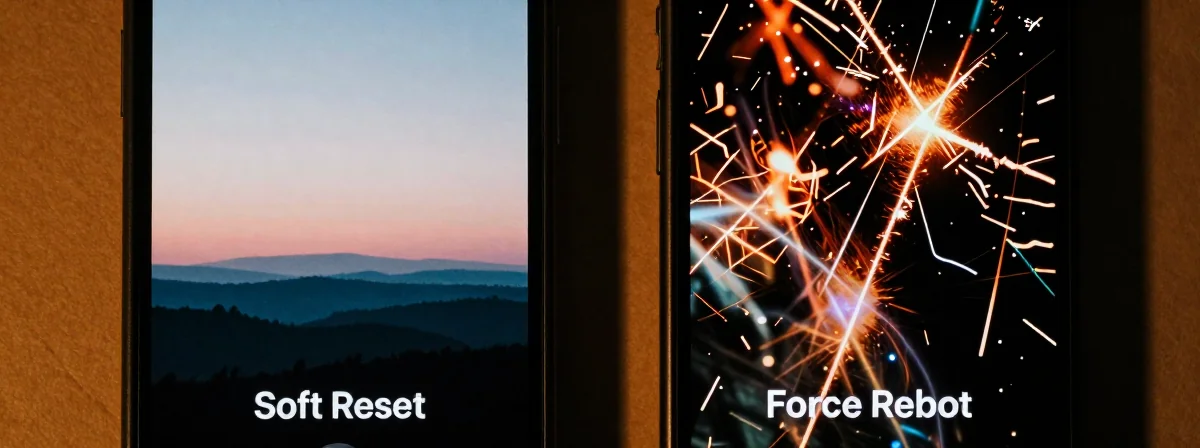
People keep asking me which reset method actually fixes their device issues. The confusion between soft resets and force reboots creates more problems than it solves. Here’s the thing nobody’s talking about—the system-level differences that matter.
Under the Hood
SIDE A: SOFT RESET A soft reset is like hitting Ctrl+S in your operating system—saving state but keeping everything running. It clears temporary glitches without disrupting core functions. This method works well for minor hiccups, like apps freezing or minor UI lag. It’s the equivalent of a clean shutdown in gaming—preserving your progress while fixing small bugs. The discussion points hint at this when mentioning “99% of issues,” assuming a soft reset handles most cases.
SIDE B: FORCE REBOOT A force reboot is the digital equivalent of unplugging your PC during a kernel panic—hard but effective when the system is completely unresponsive. It bypasses all running processes and forces a cold start. The step-by-step guide in the discussion—volume up, volume down, power button—reveals this is Apple’s emergency protocol. It’s the nuclear option for devices that have locked up completely, similar to how gamers force-close a game that’s crashed to desktop.
THE REAL DIFFERENCE Here’s what most people miss: the distinction isn’t about effectiveness but about diagnosis. A soft reset assumes your device is still partially functional, while a force reboot acknowledges total system failure. After years of using both, I’ve noticed that users jump straight to force reboots when a soft reset would have sufficed—like trying to RMA a graphics card when all you needed was to reseating the RAM. The actual issue often lies in whether the problem is software-state-related (soft reset) or hardware-level (force reboot).
THE VERDICT From experience, if your device is still responsive—just slow or buggy—stick with the soft reset. But when you’re met with black screens or complete unresponsiveness, the force reboot is the clear winner. If you’re dealing with minor performance issues, go with the soft reset. If your device has become a paperweight, B’s the clear winner.
Bottom Line
The choice between these methods should be a diagnostic step, not a random guess. Think of it like debugging code—you don’t start with a kernel panic when a simple variable reset would do. When your device acts up, first assess whether it’s breathing—then decide whether to give it a gentle nudge or a full restart. This approach saves time and prevents unnecessary escalation in troubleshooting.