
I’ve been asked more times this year than I can count: why are storage prices so wild? And what’s actually worth buying when you need serious capacity? Here’s the thing nobody’s talking about—the gap between what marketing promises and what your wallet actually gets.
What Research Shows
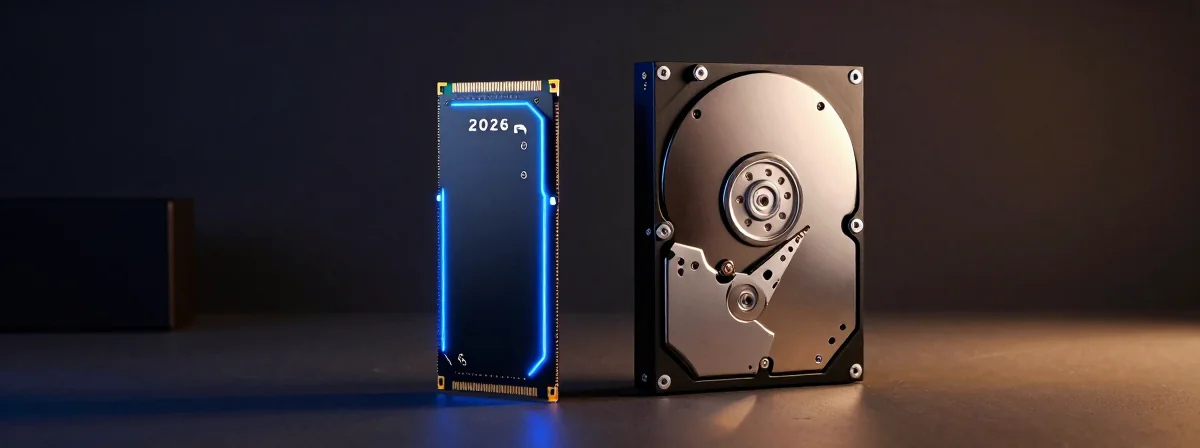
SIDE A HDDs still dominate the high-capacity market for one simple reason: they’re cheap per gigabyte. A 4TB drive can be had for around $400 USD these days—though prices have jumped dramatically in the last six months. They’re the workhorses for media libraries, backups, and anything where raw storage matters more than speed. I’ve built dozens of NAS systems around 8TB and 12TB drives because you just can’t beat the density for the price. The spinning disks might seem ancient, but they’re the backbone of affordable storage.
SIDE B SSDs, especially NVMe drives, have transformed how we use computers—but at a premium. A 4TB Gen 5 NVMe drive that cost $450 just months ago now runs closer to $2,500. These drives deliver lightning-fast performance that makes your entire system feel new again. They’re essential for gamers who want instant load times, creative professionals who need to access large files quickly, and anyone who’s tired of waiting for their machine to wake up. The latest PCIe 5.0 drives can read data at over 14GB/s—faster than most CPUs can even process it.
THE REAL DIFFERENCE Here’s what most people miss: the performance gap between modern drives has narrowed significantly, but the price gap hasn’t. A SATA SSD from 2020 performs almost as well as today’s Gen 4 NVMe drives for everyday tasks—and costs a fraction of the price. Meanwhile, HDDs have added features like helium-filled cases and shingled magnetic recording that boost capacity without proportionally increasing costs. After years of using both, I’ve found that the sweet spot for most users is a hybrid approach: fast SSD for your OS and apps, massive HDD for archives and media.
THE VERDICT From experience, if you’re building a gaming rig or creative workstation, start with at least 1TB of NVMe storage—today’s prices make it worth the investment. For everything else, especially media storage and backups, stick with HDDs unless you absolutely need the speed. Here’s my take: go with SSDs for your active workspace and HDDs for your digital archives. If you’re self-hosting a media library or have a collection of games that fills drives quickly, consider a 4TB NVMe for your system drive and a 10TB+ HDD for everything else.
Prices will continue to fluctuate, but the fundamental economics won’t change anytime soon. SSDs are still catching up to HDDs in cost-per-gigabyte, while HDDs struggle to match SSDs in responsiveness. The smartest approach? Build your system with both. You’ll thank yourself every time you launch an app without waiting.