
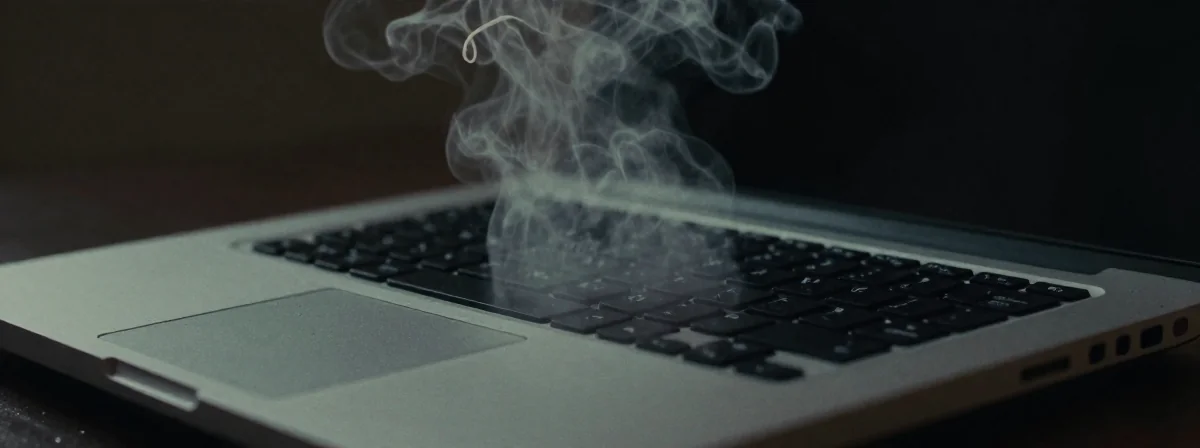
I’ve been doing this since the 80s, back when we had to clean our computers with a toothbrush and hope for the best. Overheating? That was a daily battle. Today, laptops are sleeker, but the same old demons haunt them. You’ve got a Ryzen 7 5825U with 16GB DDR4, and it’s been running hot for three years. Does it hurt the computer? Let me tell you something nobody tells you—because they think you already know.
Overheating isn’t just about discomfort. It’s about longevity, performance, and sometimes, pure luck. I’ve seen CPUs die from it, and I’ve seen people侥幸 survive because they happened to use their laptop on a table instead of their bed. The difference? A few simple habits nobody bothered to teach you.
Why Does Your Laptop Get So Hot, Even at Low Usage?
Back when we had to manually adjust every fan speed with toggle switches, we learned early on: heat kills. Your Ryzen 7 5825U shouldn’t be hitting 80°C at 18% usage. That’s not normal. It’s a symptom. The first thing I ask: have you cleaned the fans? Not the outside—inside. Dust bunnies are the silent assassins of electronics. They insulate heat, block airflow, and turn your laptop into a toaster.
I remember a client who brought me a machine that was so hot, the battery was swelling. We opened it up, and the fans were caked in dust. After a quick clean and a repaste with PTM7950, the temps dropped by 20°C. That’s not a fluke—it’s physics. Heat needs a path out, and dust blocks it. If you’re not letting your device breathe, you’re cooking it slowly.
Silent Mode vs. Performance: The Silent Killer
You don’t like fan noise, so you restrict airflow. I get it—I’ve been there. Back in the day, we’d underclock our CPUs just to avoid the whine of a loud fan. But here’s the truth: silent mode isn’t saving your ears; it’s killing your hardware. A CPU that runs hot under low load is like a car idling at redline—it wears out faster.
I’ve seen this time and again. People think they’re being smart by limiting fan noise, but they’re actually forcing the CPU to work harder to stay cool. It’s a vicious cycle: the more you restrict airflow, the hotter it gets, the harder the CPU works, and the louder the fan eventually gets anyway. It’s like putting a blanket over a fan—you’re solving the wrong problem.
The Bed-Table Hack: Why Your Laptop Hates Fabric
You mentioned using a small table for your laptop in bed—that’s smart. Back when we had to prop laptops on books to keep them cool, we learned that surfaces matter. Fabric, carpet, even your lap—they all trap heat. A rigid surface lets air flow underneath, which is half the cooling battle.
But here’s the kicker: even a table isn’t enough if the fans are clogged. I once fixed a machine that was running 95°C because the user kept it on a table—but the heatpipe was bent from dropping it. The heat had nowhere to go. Always check for physical damage, too. A bent heatpipe is like a blocked artery—it stops the flow, and the damage spreads.
When to Repaste: The Forgotten Maintenance Ritual
Repast? You might think that’s for overclockers, but it’s for anyone who cares about their hardware. Thermal paste dries out over time—three years is pushing it. I’ve seen machines where the paste had turned to dust, creating a thermal insulator instead of a conductor. A fresh application of PTM7950 isn’t just a fix; it’s an insurance policy.
Don’t be intimidated. Back when we had to solder our own components, repasting was child’s play. Today, it’s even easier. Just make sure you don’t use too much—less is more. And if you’re not comfortable doing it, take it to someone who is. A $20 fix can save you from a $500 replacement.
The Macbook Air Temptation: Is It Worth the Switch?
You’re tempted by a Macbook Air. I get it. They’re cool, quiet, and they just work. But here’s the secret: they don’t magic away overheating. They just hide it better. Apple’s thermal design is brilliant, but even they have limits. I’ve seen Macs throttle just as badly as PCs when pushed.
The real question isn’t whether a Mac is better; it’s whether you’re willing to maintain your current machine. If you clean the fans, repaste, and use it on a proper surface, your Ryzen laptop can outperform a Macbook in many tasks. The difference? You actually know what’s inside yours.
The Final Fix: Stop Fighting the Machine, Work With It
Overheating isn’t a mystery. It’s a problem with a clear solution. Stop restricting airflow, clean the fans, repaste if needed, and use your laptop on a hard surface. It’s not rocket science—it’s basic physics. I’ve fixed hundreds of machines this way, and I’ve never lost a CPU to overheating when the owner followed these steps.
Your laptop isn’t out to get you. It’s just doing its job under the conditions you give it. Treat it right, and it’ll last longer than you think. Back when we had to rebuild our computers every year, we knew this. Today, we’ve forgotten. But the principles haven’t changed. Heat is the enemy, and you’ve got the power to beat it.