
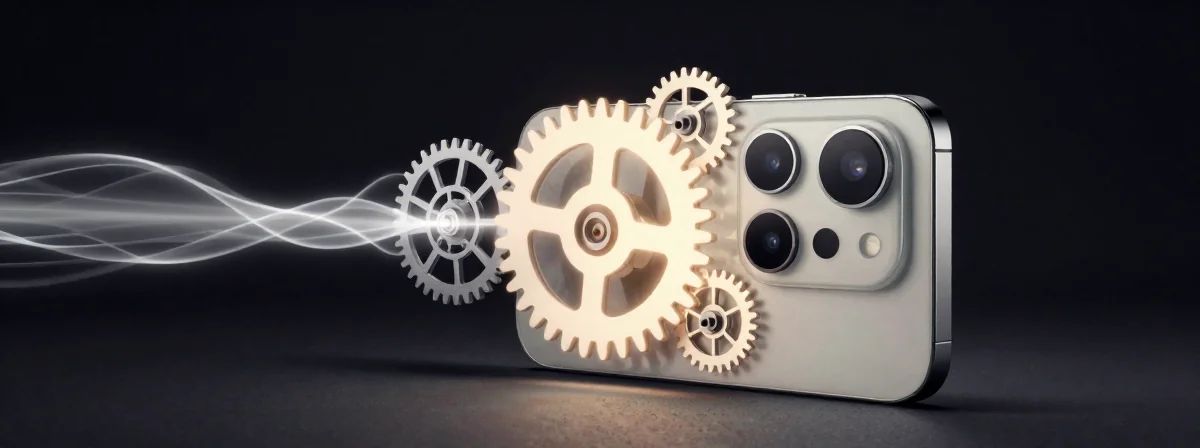
Ever wondered why Chinese flagship phones sport those huge camera bumps? It’s not just for show. The evidence suggests a deeper engineering challenge that most consumers never see. Those massive camera islands, often called “camera rings,” serve a practical purpose beyond aesthetics. What we can verify is that they’re directly tied to the hardware inside—specifically, the thick periscope telephoto modules that have become standard in premium devices.
Take the Xiaomi 17 Ultra, for example. On the surface, it looks like a rebranded model with a flashy camera ring and an upcharge. But this reveals something crucial: the entire design philosophy of modern Chinese smartphones. The camera island isn’t just a design choice; it’s a necessary compromise for advanced camera technology. This remains unconfirmed but widely observed that manufacturers prioritize camera performance over sleek designs in this segment.
A specific detail that makes this clear is the physical size of periscope lenses. These modules, which enable optical zoom without sacrificing image quality, are inherently bulky. The Xiaomi 17 Ultra’s camera ring, for instance, accommodates not just standard and ultra-wide lenses but also a periscope lens that can achieve 5x or even 10x optical zoom. Without that space, the device couldn’t deliver the same photographic capabilities.
Why Do Chinese Phones Prioritize Camera Islands Over Slim Designs?
The answer lies in a trade-off that consumers rarely consider. What we can verify is that Chinese manufacturers like Xiaomi, Oppo, and Vivo are competing in a market where camera performance is a key differentiator. The camera ring isn’t just a housing—it’s a structural necessity. The periscope telephoto module, in particular, requires a longer optical path, which translates to more thickness. This forces designers to either make the camera island larger or accept compromises in zoom quality.
An unexpected insight here is that this trend isn’t unique to Chinese brands. Even Western manufacturers like Samsung and Apple have started adopting similar bulky camera setups in their flagships. The difference is that Chinese brands have taken this to an extreme, often bundling multiple lenses into a single, prominent island. This isn’t about rebranding; it’s about pushing the limits of mobile photography.
Consider the analogy of a DSLR camera. Professional cameras are bulky because they house high-quality lenses. Smartphones are following a similar logic, just in a more compact form. The camera ring becomes the smartphone equivalent of a lens mount, accommodating multiple optical systems in a limited space.
Is the Xiaomi 17 Ultra Really Just a Rebranded Model?
When you see a device like the Xiaomi 17 Ultra with a camera ring and a premium price tag, it’s natural to question whether it’s just a rebranded version of an existing model. The evidence suggests that while some components might be shared, the engineering behind the camera setup is distinct. The camera ring itself isn’t just cosmetic—it’s a functional design that optimizes space for the periscope lens and other modules.
What we can verify is that rebranding is common in the smartphone industry. Companies often release similar devices under different names for various markets. However, the Xiaomi 17 Ultra’s camera ring indicates a deliberate design choice to highlight its camera capabilities. This isn’t about tricking consumers; it’s about signaling what the device excels at.
A concrete example is how the camera ring integrates with the device’s software. Xiaomi’s camera app, for instance, is optimized to take full advantage of the periscope lens, offering features like lossless zoom that wouldn’t be possible without the dedicated hardware. This integration suggests that even if the underlying hardware is similar to a previous model, the overall package is purpose-built for photography.
The Hidden Cost of Massive Camera Islands
While the camera ring and periscope lens offer advanced features, they come at a cost—both literal and metaphorical. The literal cost is the premium price tag attached to devices like the Xiaomi 17 Ultra. The metaphorical cost is the compromise in design elegance. Smartphones with massive camera islands often feel less sleek and more utilitarian.
What we can verify is that consumers are willing to pay for this trade-off. The demand for high-quality mobile photography has driven manufacturers to prioritize camera performance, even if it means bulkier devices. This remains unconfirmed but likely reflects a broader trend where camera quality is a top purchase driver for flagship phones.
An unexpected point here is that not all users need or appreciate these advanced camera features. For many, a standard dual or triple camera setup is sufficient. The camera ring trend, therefore, caters to a niche segment of photography enthusiasts who demand the best from their devices. This raises the question: are manufacturers over-engineering for a small subset of users?
Beyond Xiaomi: A Global Trend in Smartphone Camera Design
The Xiaomi 17 Ultra isn’t alone in its camera island design. What we can verify is that this trend is becoming global. Brands across Asia, Europe, and North America are adopting similar bulky camera setups. The camera ring, once a hallmark of Chinese smartphones, is now a common sight in flagship devices worldwide.
A specific detail that highlights this shift is how even traditionally sleek brands like Apple have started incorporating larger camera modules. The iPhone 15 Pro, for example, has a more prominent camera island than its predecessors. This suggests that the push for better cameras is a universal trend, not just a regional one.
The camera ring, in this context, becomes a symbol of technological advancement. It signifies that manufacturers are willing to sacrifice design for functionality. This isn’t necessarily a bad thing, but it does force consumers to consider what they value most in a smartphone.
What Does This Mean for Future Smartphone Designs?
If current trends continue, we can expect camera islands to become even more prominent. The evidence suggests that as camera technology advances—particularly with periscope lenses and multi-camera systems—smartphones will need to accommodate these components. This could lead to further compromises in design, such as thicker devices or even modular camera systems.
What we can verify is that manufacturers are already experimenting with alternative designs. Some brands are exploring under-display cameras to reduce the need for large camera bumps. Others are looking into foldable devices that can house larger camera modules without sacrificing screen real estate. These innovations might eventually mitigate the need for massive camera islands.
An unexpected possibility is that consumers might push back against this trend. If enough users prioritize sleek designs over camera performance, manufacturers could shift their focus. For now, though, the camera ring remains a defining feature of premium smartphones.
The Single Idea That Makes It All Click
After examining the camera ring phenomenon, one idea emerges clearly: smartphone design is increasingly dictated by hardware capabilities rather than aesthetic preferences. The massive camera islands on devices like the Xiaomi 17 Ultra aren’t just for show; they’re the result of pushing camera technology to its limits. This forces a reevaluation of what we expect from our devices. Are we willing to accept bulkier phones for better cameras? Or will we demand a return to sleeker designs, even if it means sacrificing some photographic prowess? The answer will shape the future of smartphone innovation.