
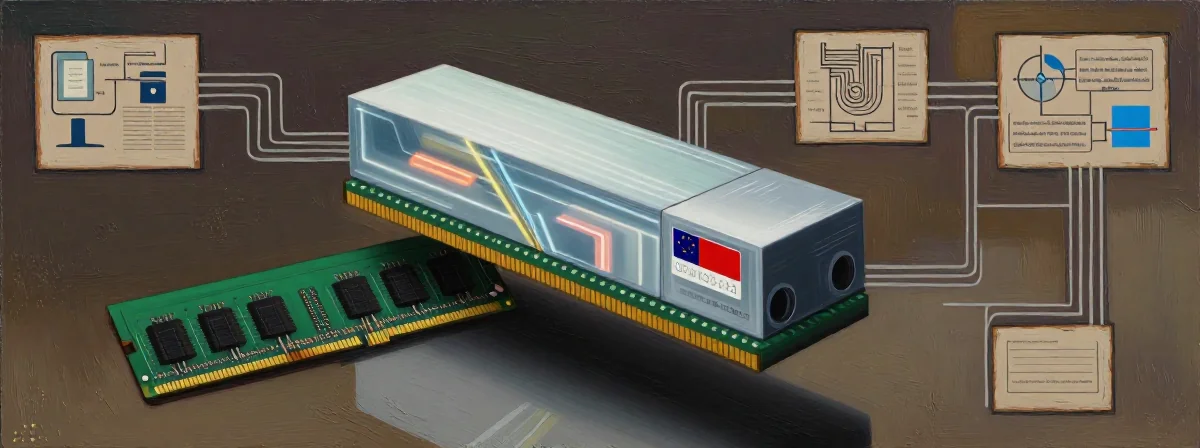
PC hardware development has always been a delicate dance between innovation and practicality. While we’ve seen remarkable advancements in processing power, the memory landscape has remained relatively static for years. Yet, beneath the surface of our familiar DDR modules lies a brewing revolution that could fundamentally change how we build and use computers. The question isn’t if memory technology will evolve, but when and how it will reshape our computing experiences.
The current state of hardware development reveals a fascinating paradox. Despite unprecedented challenges—including chip shortages, manufacturing disruptions, and market volatility—new hardware continues to emerge. We’ve witnessed the introduction of DDR5-7000 validated motherboards on Alder Lake platforms, with native support for speeds approaching DDR5-8000 just around the corner. These developments suggest an industry pushing boundaries, even as economic factors create headwinds for widespread adoption. The real question, however, lies in what comes next for memory technology.
Why Haven’t We Seen Wider CAMM2 Adoption Yet?
CAMM2 technology represents a significant leap forward in memory design, offering shorter traces and better stability at high frequencies. Yet its implementation remains limited to high-end systems despite several manufacturers designing OC motherboards with CAMM2 support as far back as Z790 platforms. The evidence suggests a complex interplay of technical, economic, and spatial considerations that have slowed its mainstream adoption.
The physical constraints of desktop motherboards present a formidable challenge to CAMM2 implementation. Unlike laptops where memory space is at a premium and soldered LPDDR offers cost advantages through automated assembly, desktop platforms require more flexible solutions. CAMM2 modules, while offering electrical advantages and 128-bit bandwidth comparable to dual-channel UDIMM setups, simply take too much space in traditional desktop configurations. This spatial mismatch creates a fundamental barrier to immediate widespread adoption.
What Makes CAMM2 Such a Promising Alternative?
A single SOCAMM2 module occupies approximately the same space as two UDIMM slots while delivering comparable bandwidth through its 128-bit interface. This efficiency doesn’t just save space—it opens possibilities for improved system design. Engineers have noted that CAMM2 implementation allows for better clearances around CPU coolers, potentially enabling more effective thermal solutions and paving the way for true monoblock cooling solutions that span VRM to CPU to RAM components.
The electrical advantages of CAMM2 shouldn’t be underestimated. With shorter signal paths and improved stability at high frequencies, this technology represents a natural evolution from current DDR implementations. Memory experts have observed that even with current DDR5 technology, high-quality modules like Hynix A-die or 24GB M-die can often exceed their marketed speeds, sometimes hitting 8000MHz on overclocked configurations. This suggests that the underlying silicon is capable of higher performance, and CAMM2 could unlock these potential without requiring extreme overclocking.
Where Will We First See Widespread CAMM2 Implementation?
Historical patterns suggest that revolutionary technologies typically enter the market through premium segments before trickling down to mainstream systems. Given this trajectory, it’s reasonable to predict that CAMM2 will first appear in high-end 16+ inch gaming laptops, where space constraints and performance demands create a perfect use case. The laptop market’s acceptance of soldered LPDDR solutions demonstrates an existing preference for compact memory implementations, making CAMM2 a natural evolution rather than a radical departure.
Desktop implementations, however, face more significant hurdles. While some enthusiasts have speculated about mounting CAMM2 directly under CPU slots, current motherboard designs lack the standardized placement needed for true monoblock cooling solutions. Until manufacturers can overcome these design challenges, desktop adoption will likely remain limited to specialized high-performance systems rather than becoming the standard.
How Do Current Memory Solutions Compare to CAMM2?
The current state of memory technology reveals an interesting paradox: we’re pushing DDR5 to its limits while simultaneously developing its successor. Many users have reported that even their 6000 CL30 and 6400 CL32 kits (often containing Hynix A-die or M-die) can achieve impressive overclocks, sometimes exceeding 8000MHz. This phenomenon suggests that memory manufacturers are intentionally underrating their products to ensure stability across diverse platforms.
In contrast, CAMM2 offers several theoretical advantages:
- Improved electrical characteristics through shorter traces
- Equivalent bandwidth to dual-channel DDR setups in a single module
- Better compatibility with high-performance cooling solutions
- Potential for more compact system designs
These advantages don’t come without trade-offs, however. The current cost of CAMM2 implementations remains prohibitive for mainstream systems, and the ecosystem of compatible components is still developing. Evidence suggests that even high-end motherboards have only begun experimenting with CAMM2 support, indicating that we’re still in the early adoption phase of this technology.
What’s The Most Likely Timeline for CAMM2 Mainstream Adoption?
Industry analysis suggests a gradual rather than sudden adoption pattern for CAMM2 technology. Given the current economic climate where hardware prices reflect production challenges and market conditions, widespread implementation seems unlikely in the immediate future. However, the continued development of CAMM2-compatible motherboards and the demonstrated electrical advantages of the technology indicate that we’re moving toward a future where this memory solution becomes more prevalent.
The most plausible timeline places limited desktop implementations within the next 2-3 years, with more widespread adoption following in the subsequent 3-5 years. This projection accounts for the typical development cycles of hardware components, the need for standardized form factors, and the economic factors that influence manufacturing decisions. Memory technology evolution has historically followed this pattern of gradual adoption, with each generation building upon the successes and addressing the limitations of its predecessor.
Could CAMM2 Ultimately Replace DDR in Desktop Systems?
The fundamental question remains: will CAMM2 eventually supplant DDR as the standard memory technology for desktop systems? The evidence suggests a qualified yes, but with important caveats. The electrical advantages, space efficiency, and potential for improved cooling solutions make CAMM2 an attractive long-term solution. However, the transition will likely be gradual and influenced by factors beyond technical superiority alone.
Manufacturers will need to address several key challenges before CAMM2 can become mainstream:
- Developing standardized form factors and placement
- Creating cost-effective production methods
- Building a compatible ecosystem of components
- Overcoming existing design constraints in desktop platforms
Until these challenges are addressed, DDR technology will likely continue to evolve alongside CAMM2, with the two technologies coexisting in different market segments. The eventual replacement of DDR in desktop systems isn’t a question of if, but when and how manufacturers navigate these implementation challenges.
The memory revolution is coming, but like all technological transformations, it will unfold in fits and starts rather than a single dramatic shift. CAMM2 represents not just a new memory standard, but a fundamental rethinking of how we approach system design. As manufacturers continue to experiment with implementations and work through the technical challenges, we’re witnessing the birth of a new era in computer memory—one that promises to deliver both performance improvements and design innovations that we’re only beginning to imagine.