
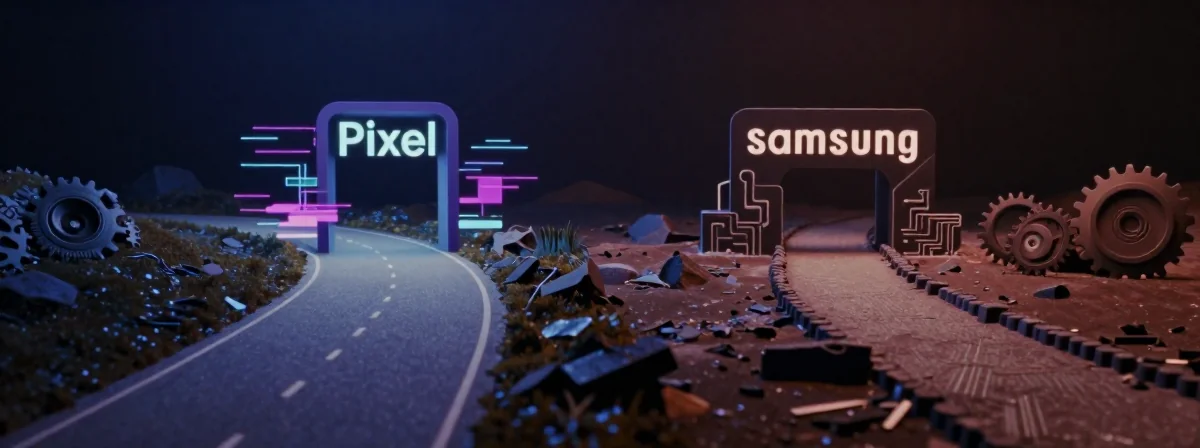
People keep asking me—after years of using both—what’s the real difference between Pixel and Samsung. Is one just better than the other? Or is it all hype? Here’s the thing nobody’s talking about…
The debate isn’t just about specs or brand loyalty. It’s about what’s hidden beneath the surface—and what they’re hiding from you.
The Pattern Emerges
SIDE A: PIXEL Pixel phones have their moments. The cameras are undeniable—algorithmic photography that’s hard to beat. The software is clean, and for some, that “pure Android” experience is worth its weight in gold. But here’s the catch: the hardware often feels like an afterthought. The modems are notoriously weak, Bluetooth can be buggy, and overheating isn’t uncommon. The Tensor chip? Most people don’t care, and for good reason—it’s midrange at best. The displays are bright, but the curved screen on the 7 Pro was the last time they felt truly premium. The battery life? At least one generation behind Samsung’s best. What’s the point of “pure Android” if the phone itself struggles to keep up?
SIDE B: SAMSUNG Samsung, on the other hand, is a beast. The S26 series shows that even Exynos isn’t the liability it once was—benchmarks are higher than some Snapdragon chips now. The software? One UI has evolved into something truly useful, with quality-of-life features that Pixel can only dream of. The displays are consistently top-tier, and the brightness—3300 nits on the Pixel 10? Samsung hits that too. The modems are strong, wireless speeds are solid, and overheating? Not an issue. Even the Tensor chip can’t compete with Samsung’s hardware implementation—Exynos or Snapdragon. Samsung’s phones feel like advanced tech, not just a collection of parts.
THE REAL DIFFERENCE Here’s what most people miss: the gap between Pixel and Samsung isn’t just about specs. It’s about execution. Pixel relies on software to make up for hardware shortcomings, while Samsung delivers the whole package. The Tensor chip is a gimmick, but Samsung’s chips—Exynos or Snapdragon—actually perform. The modem issues on Pixel are real, and they drive users crazy. The overheating? Samsung doesn’t have that problem. Even the “pure Android” argument falls apart when you realize Samsung’s software is more useful and polished. After years of using both, I’ve seen the pattern: Samsung keeps improving, while Pixel stays stuck in a cycle of “good enough.”
THE VERDICT If you’re doing basic tasks and care mostly about the camera, Pixel might still work for you. But if you want a phone that just works—fast, reliable, and with features that matter—Samsung is the clear winner. From experience, the S26U feels like a piece of advanced military tech compared to the Pixel. If you’re doing anything beyond casual use, go with Samsung. If you’re just browsing and snapping photos, Pixel’s “mid” hardware might not bother you. But don’t say I didn’t warn you.
The Truth Is Out There
The hype around Pixel is just that—hype. The “pure Android” and camera advantages are overshadowed by real-world performance issues. Samsung, meanwhile, keeps delivering the complete package. Don’t let the marketing fool you. If you want a phone that doesn’t disappoint, the choice is clear. Trust the pattern—don’t trust the promises.