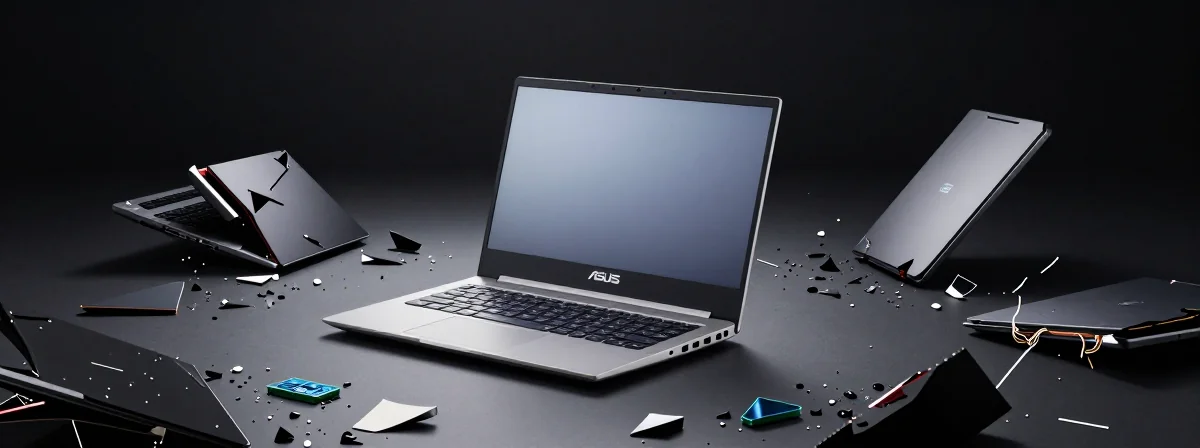
I’ve been in this game since the 90s—when a motherboard meant actual craftsmanship, not just solder and silicon. People keep asking me why some brands seem to struggle with firmware while others nail it. It’s a question that gets to the heart of modern tech: what happens when the invisible software that powers our hardware becomes the weak link? Here’s the thing nobody’s talking about—the real battle isn’t between brands, but between the relentless pressure to cut costs and the complexity that modern firmware demands.
Under the Hood
SIDE A
Asus has always been a brand that pushes boundaries. Their Zephyrus line, for example, delivers hardware that can genuinely compete with premium machines—lighter than some MacBooks, with OLED screens that hit over 1,000 nits of brightness. I remember when achieving that kind of display quality meant custom-built panels; now Asus is mass-producing it. The build quality on their higher-end models is undeniable. But here’s the catch: the software that manages all that power is often an afterthought. Firmware bugs that cause sleep-mode malfunctions, stuttering GPUs, and erratic brightness controls aren’t just annoyances—they’re symptoms of a deeper issue. Back in the 90s, a BIOS update was a rare, carefully tested event; now it’s a monthly scramble to patch something that broke last week.
SIDE B
Then there’s the rest of the industry, which isn’t exactly blameless. ThinkPads, once the gold standard for stability, now struggle with their own firmware quirks. HP’s Envy line has notorious audio crackling issues traced to power-management drivers. Even Dell, often seen as a more reliable alternative, has been caught charging premium prices for machines that occasionally glitch under pressure. I recall troubleshooting a Dell server in the early 2000s where a firmware update fixed a critical issue—but only after months of customer complaints. The pattern is clear: across the board, manufacturers are shipping firmware that’s “good enough” rather than bulletproof. The race to market means QA is often the first thing to get trimmed. It’s not just Asus—it’s an industry-wide problem.
THE REAL DIFFERENCE
Here’s what most people miss: the decline in firmware quality isn’t just about coding skill; it’s about the entire ecosystem. Modern laptops are far more complex than the machines we built in the 90s. They have to juggle power states, thermal management, multiple GPUs, and a dozen different standards like Modern Standby—all in firmware that’s often written by teams stretched thin. I’ve seen it firsthand: a CFO demands quarterly results, so the company replaces experienced engineers with cheaper overseas contractors and cuts QA. Sound familiar? It’s the same story that nearly sank Chrysler in the 70s—except now, the consequences are invisible until your laptop hangs in sleep mode. The truth is, no brand has truly solved this yet. Asus’s bugs are just more public because their gaming laptops are under heavier load and scrutiny.
THE VERDICT
From experience, if you’re buying a machine for heavy workloads—gaming, video editing, or development—you need to weigh the risks. Asus’s hardware is often top-notch, but their software support is a gamble. If a firmware bug could cost you time or data, you might be better off with a brand that has a reputation for stability, even if it means sacrificing some cutting-edge features. On the other hand, if you’re a casual user who just needs a reliable machine for browsing and light tasks, you might not encounter the worst of these issues—until you do. Here’s my take: for critical work, choose a brand with a proven track record in firmware (Lenovo’s ThinkPads still lead here). For everything else, do your homework—check forums for recent BIOS updates and known issues before you buy. Don’t assume premium pricing means premium firmware.
The Final Word
The state of firmware today is a cautionary tale of how we’ve prioritized speed over reliability. We’re living with the consequences of an industry that treats firmware as a commodity rather than the foundation of a machine. Until that changes, we’ll keep seeing high-end hardware hampered by low-end software. The next time you’re tempted by a sleek new laptop, remember to look beyond the specs—check the firmware history. It might save you from a headache down the line.