There is a specific weight that settles in the chest when you realize history has lied to you. My grandfather, a man who treated skepticism like a religious sacrament, used to sit by the fire and whisper that the most dangerous lies are the ones we tell ourselves to feel safe. We crave simple stories, clean narratives where the villain wears a black hat and the victim is pure. But reality? Reality is a jagged, bloody mess that refuses to fit into the files of a police report.
When you look closely at the Connell case, you don’t see justice. You see a gaping wound that a family has been forced to stare at for decades, desperate for a salve that never comes. It is a profound shame, a scar on the very fabric of our moral landscape, that they have been left to rot in the vacuum of uncertainty. We have failed them, not just by failing to catch a killer, but by failing to ask the right questions.
We have been seduced by the easy answer. We looked at Connell—a man with a violent streak, a man who courted danger like a lover—and we decided the script was already written. We stopped looking. We stopped digging. And in that silence, the real monster slipped away into the dark.
The Myth of the Saintly Victim
Let us tear down the idol of the innocent victim first, for it blinds us to the truth. Connell was no saint. My grandmother taught me that the dead do not magically transform into angels just because the heart stops beating; they remain exactly who they were. Connell was a violent man, a creature of chaos who undoubtedly burned bridges and threatened lives. It is tempting to look at his history and say, “He brought this on himself.”
But to say that is to be intellectually lazy. Being a violent man makes you a target; it does not make you the author of your own execution. The clues do not point to a rival thug or a settling of scores. They point somewhere else, somewhere far more sinister. We have allowed Connell’s own darkness to act as a smokescreen, obscuring the light that should be falling on the true culprit.
The Shadow in the Background
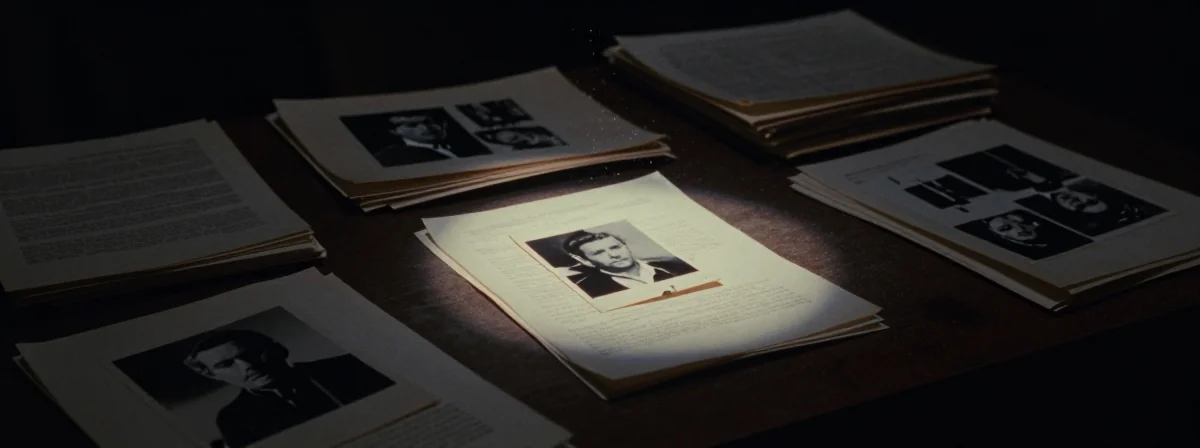
If you peel back the layers of corruption and incompetence, a figure emerges from the fog. Not a brawler, not a known associate, but a phantom. A young man with a quiff. Think about that image. A hairstyle is trivial until it becomes the only thing you can see. In a sea of forgettable faces, this detail stands out like a scream in a library.
Why has this man been ignored? Because he does not fit the profile of a brute who would tangle with Connell. He is an anomaly. In my family, we learned to fear the anomalies more than the patterns. The young man with the quiff was there, hovering on the periphery, watching. He was the variable that the authorities could not quantify, so they chose to erase him from the equation entirely.
A Fetish for Silence
Here is where the darkness becomes absolute. It is one thing to kill in the heat of passion; it is another thing entirely to kill for a twisted, consuming need. Whispers in the underground speak of a strangulation fetish. This is not the crime of a man defending his honor. This is the ritual of a predator.
Could the young man with the distinctive hair be the same man driven by this horrific compulsion? The pieces fit together with a terrifying precision. The violence Connell knew was blunt and forceful. The violence that took him out was intimate, controlled, and steeped in a specific, perverse psychology. We are hunting a different beast entirely—one who wears a mask of normalcy but hides a hunger for the very breath in a man’s lungs.
Why the Truth Remains Buried
You must ask yourself why we are still debating this. Why the family is still weeping into empty pillows. The answer is uncomfortable. The authorities are terrified of the unknown. It is easier to close a file with a shrug than to admit a monster is walking the streets, unidentified and hungry.
I have spent my life learning to read the silences between the words. The silence here is deafening. They do not want to find the man with the quiff because to find him would be to admit they let him slip through their fingers for decades. It is a crime of negligence as much as it is a crime of blood.
The Cost of Our Willful Blindness
We are complicit in this tragedy as long as we accept the official story without a fight. The Connell case is not a closed book; it is a screaming testament to our failure to see what is right in front of our noses. The clues are there—the violent past of the victim, the distinctive hair of the stranger, the dark sexual current that binds them.
We owe the family more than pity. We owe them the truth, no matter how sharp it cuts, no matter how deep it bleeds. The man with the quiff is out there. The truth is out there. And until we have the courage to stop looking at the easy suspect and start looking at the terrifying reality, justice will remain a ghost story we tell ourselves to make the night less dark.